Nongshim, Paldo, Ottogi, Samyang Raised Prices Last Year in Succession
Ramen Industry "Cost Burden Remains, Various Measures Under Review"
Deputy Prime Minister and Minister of Economy and Finance Choo Kyung-ho recommended lowering ramen prices in response to the decline in international wheat prices. Accordingly, domestic ramen companies are expected to face increased challenges.
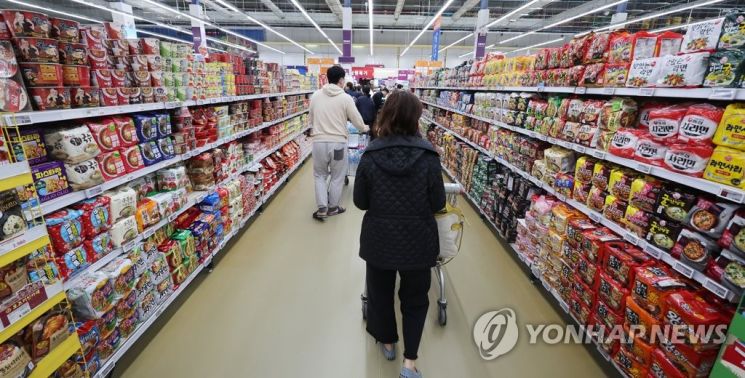
The companies stated that considering ramen is a representative food for the common people, they will explore various measures to reduce the burden on the public. However, despite the fall in international wheat prices, the price of flour used by companies remains high, and prices of other ingredients besides wheat are actually rising, causing continued cost pressures and difficulties.
On the morning of the 18th, Deputy Prime Minister Choo appeared on KBS Sunday Diagnosis and, when questioned about the appropriateness of ramen price increases, said, "Companies raised prices significantly in September to October last year, but the current international wheat price has dropped by about 50% compared to then," adding, "I hope companies appropriately lower prices in line with the reduced wheat prices."
In fact, ramen companies raised prices in the second half of last year. Nongshim increased the ex-factory price of ramen by an average of 11.3% in September last year. Paldo and Ottogi raised their product prices by 9.8% and 11.0%, respectively, the following month. Samyang Foods raised ramen prices by an average of 9.7% in November last year. The companies stated that the price hikes were inevitable due to increased production costs, including major imported raw materials such as flour and palm oil, as well as logistics and labor costs.
They also explained that cost pressures remain high. Although international wheat prices surged due to the Russia-Ukraine war and have recently stabilized, they are still at a high level compared to the average year.
According to the Ministry of Agriculture, Food and Rural Affairs, wheat futures prices soared to $419 per ton in May last year and fell to $276 per ton in February this year, but remain more expensive than the average price of $201. The impact of fluctuations in wheat futures prices is reflected in import prices with a lag of 4 to 6 months. Wheat import prices hit a record high of $496 per ton in September last year and dropped to $449 per ton as of February this year, but this is still about 1.6 times the average price of $283.
Flour prices have also risen; last month, the consumer price index for flour increased by 10.0% compared to a year ago and by 38.6% compared to two years ago. While flour prices remain strong, the price of starch, another key ingredient in ramen, is rising, and logistics costs are also increasing, adding to the industry's burden.
However, the industry’s common stance is to seek measures to alleviate the burden on the public.
According to Yonhap News Agency, an industry official said regarding ramen price reductions, "We have not received any official request from the government," but added, "Although conditions are difficult, we will explore various options." Another industry official reportedly said, "We are reviewing various measures to minimize the burden on the public."
© The Asia Business Daily(www.asiae.co.kr). All rights reserved.
















