Regarding the controversy over the safety of contaminated water from the Fukushima nuclear power plant in Japan, the Seoul Metropolitan Office of Education will expand radiation inspections on school meals to a full-scale survey.
On the 17th, the Seoul Metropolitan Office of Education stated, "Students and parents may feel psychologically anxious about the risk of contaminated water discharge," and added, "To supply safe ingredients, we will request a full-scale inspection of school meals instead of the current level of sampling tests."
Currently, radiation inspections on school meals are divided into two stages: on-site inspections conducted by the education office and detailed inspections by the Health and Environment Research Institute, an affiliate of Seoul City. The Seoul Metropolitan Office of Education plans to expand the on-site inspections at the education office level to a 100% full-scale survey as the discharge of contaminated water becomes imminent.
In addition, they plan to request Seoul City to conduct full-scale detailed inspections by its affiliated institutions.
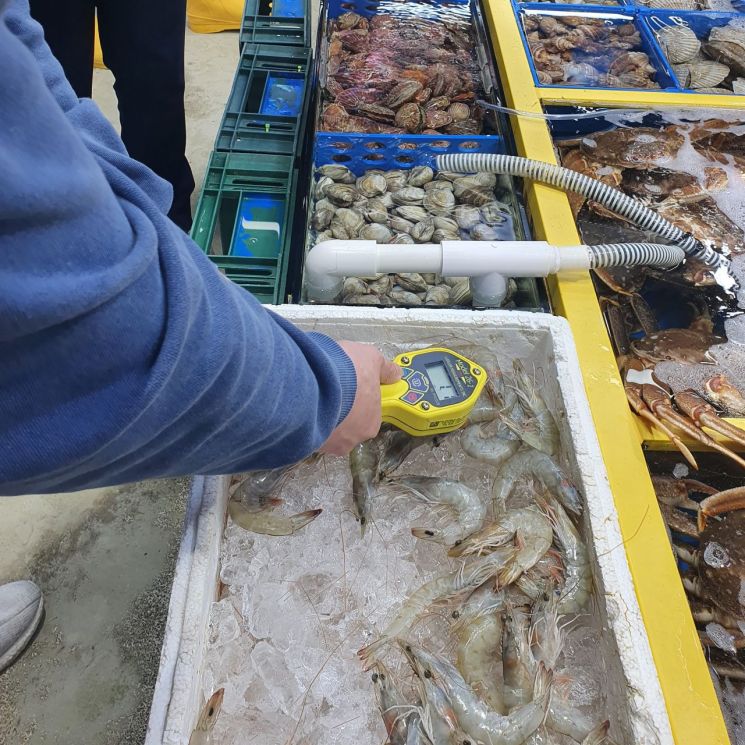
According to the education office, for seafood distributed domestically, imported products undergo radiation quarantine by the Ministry of Food and Drug Safety, while domestic products go through the National Fishery Products Quality Management Service to ensure only normal products are brought in.
Furthermore, seafood that may be served in Seoul students' meals undergoes an additional 2 to 3 stages of inspection.
If meals are distributed through the Eco-friendly Distribution Center, they go through a total of three stages: ▲preliminary radiation inspection by a government-certified radiation inspection agency ▲on-site inspection by the education office ▲detailed inspection by the Seoul Health and Environment Research Institute.
For general distribution not through the Eco-friendly Distribution Center, two stages are conducted: on-site inspection by the education office and detailed inspection by the Seoul Health and Environment Research Institute.
Until now, it was generally agreed that there was no concern about radiation because seafood served in students' meals undergoes multiple stages of inspection including those by the Ministry of Food and Drug Safety, the National Fishery Products Quality Management Service, and the education office's own inspections. Currently, seafood from Fukushima and eight neighboring prefectures is banned from import altogether.
However, as Japan announced plans to discharge contaminated water, concerns have been raised that the education office's on-site inspections and detailed inspections by Seoul City’s affiliated institutions may not adequately detect contaminants.
On-site and detailed inspections are not conducted for all schools in Seoul but are sequentially performed on 100 to 200 schools annually.
According to the Seoul Metropolitan Office of Education, in 2022, radiation inspections were conducted on 370 schools (168 on-site and 202 detailed), and in 2021, on 267 schools (165 on-site and 102 detailed), with no abnormal products found.
© The Asia Business Daily(www.asiae.co.kr). All rights reserved.

















