On the 15th, a 0.12%P rise in KOFIX
puts a damper on hopes for loan interest rate cuts
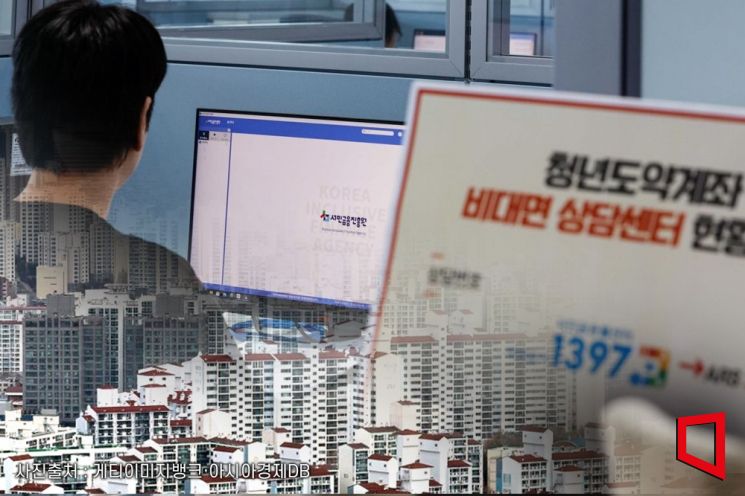
From the 16th, the variable interest rates on mortgage loans at commercial banks rose. Although there had been expectations that rates would decrease, the COFIX (Cost of Funds Index) poured cold water on those hopes. On that day, interest rates at Kookmin Bank (4.11~5.51% → 4.23~5.63%), Woori Bank (4.22~5.42% → 4.34~5.54%), and NH Nonghyup Bank (4.07~5.57% → 4.34~5.85%) all increased simultaneously.
The day before, the Korea Federation of Banks announced that the COFIX based on new transaction amounts in May was 3.56%, up 0.12 percentage points from the previous month. The variable mortgage loan interest rates were affected by this increase. COFIX is an indicator showing how much it costs for eight domestic banks to raise funds through deposits, savings, or bank bonds. When COFIX rises, it means banks are paying more interest to secure funds. Since these funds are used for lending, loan interest rates also increase.
COFIX surged sharply in the second half of last year but showed signs of stabilizing this year by dropping nearly 1 percentage point. The direction quietly began to shift starting last month. A commercial bank official explained, "During May, the one-year bank bond interest rate rose by about 0.2 percentage points. As market interest rates increased, deposit and savings rates also rose, which impacted COFIX and triggered a domino effect causing loan interest rates to jump."
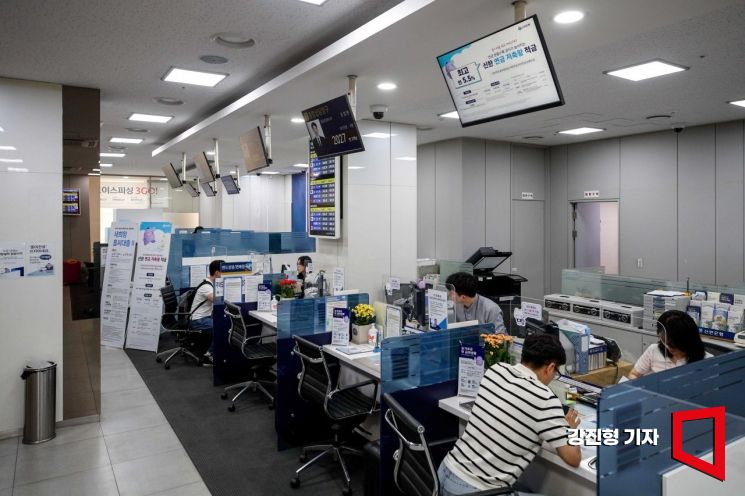 A customer is receiving consultation at the bank loan consultation desk. Photo by Kang Jin-hyung aymsdream@
Banking circles say that attention should be paid to future signals of interest rate hikes. The external factor is the U.S. Federal Reserve's indication that it will raise rates twice more this year. Although rates were held steady this month, if hikes begin next month, the Bank of Korea is expected to respond with its own rate hikes. However, the market currently places a higher probability on the Bank of Korea maintaining its current rate.
Internally, the 6% interest Youth Leap Account is a variable. Banks expect that since the Youth Leap Account offers much higher interest than other deposit and savings products, COFIX will rise as more people subscribe. Another commercial bank official said, "When the Youth Hope Savings was launched in February last year, it was immediately reflected in COFIX. The Youth Leap Account could also be a factor in COFIX increases, so we are monitoring it closely." The Youth Leap Account, which allows saving up to 700,000 KRW monthly for five years to accumulate a lump sum of up to 50 million KRW, was launched on the 15th at 11 banks. It has attracted significant interest, gathering 77,000 subscribers on the first day of applications alone.
© The Asia Business Daily(www.asiae.co.kr). All rights reserved.
![User Who Sold Erroneously Deposited Bitcoins to Repay Debt and Fund Entertainment... What Did the Supreme Court Decide in 2021? [Legal Issue Check]](https://cwcontent.asiae.co.kr/asiaresize/183/2026020910431234020_1770601391.png)
















