The scope of individuals eligible to receive parking permits for disabled-only parking spaces as guardians of persons with disabilities will be expanded to include the entire group of 'family members under civil law' of the disabled person.
On the 15th, the Ministry of Health and Welfare announced that it will publicly notify partial amendments to the Enforcement Rules of the "Act on Welfare of Persons with Disabilities" and partial amendments to the Enforcement Decree and Enforcement Rules of the "Act on the Promotion of Convenience for Persons with Disabilities, the Elderly, Pregnant Women, etc." (Disabled Convenience Act) reflecting this content.
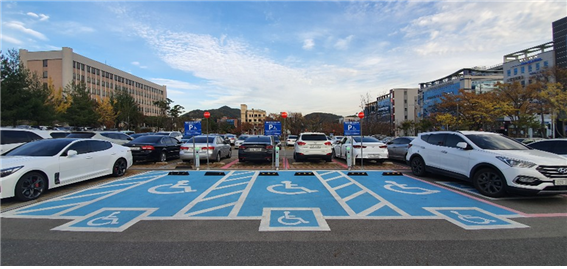
Currently, the enforcement rules define the issuance of disabled parking permits as being registered under the name of a registered disabled person or a family member who "shares the same address on the resident registration and lives together" with the disabled person, for vehicles used by the disabled. The scope of family is limited to the disabled person's "spouse, lineal ascendants and descendants, spouses of lineal descendants, siblings, spouses of siblings, and children."
This scope is narrower than the family range defined under civil law, leading to controversy over fairness with other systems. The Anti-Corruption and Civil Rights Commission has also recommended improvements. This amendment expands the scope to include the entire family under civil law.
Accordingly, from now on, vehicles registered under the names of spouses of lineal relatives living with the disabled, lineal relatives of the spouse, and siblings will also be eligible to receive disabled parking permits if used by the disabled person. Disabled-only parking permits are issued at one permit per disabled person per vehicle.
The amendment also includes the establishment of a new specific type of residential facility for persons with disabilities called an "Independent Residential Service Provider," which guarantees private space for persons with disabilities and aims for integration with the local community.
Among accessibility facilities for persons with disabilities, the amendment allows continuous handrails installed on corridor and passageway walls to be installed not only in circular shapes but also in non-circular shapes such as oval forms that comply with international standards.
© The Asia Business Daily(www.asiae.co.kr). All rights reserved.

















