JR East Introduces Platform Clinics at Train Stations
Emerging as a Solution to Medical Disparities and Revitalizing Local Communities
Japan, experiencing regional extinction due to low birth rates and aging population, is promoting local medical services by placing clinics on train station platforms. Residents living near train lines can easily access these so-called 'platform clinics,' which are seen as a solution to bridge regional medical disparities.
On the 14th, Nihon Keizai Shimbun (Nikkei) reported on a platform clinic located in the JR East Japan Nishikokubu area. According to the report, this clinic, situated on the JR Chuo Line upbound platform, is a 'hybrid hospital' equipped with both a testing room and booths dedicated to online non-face-to-face medical consultations.
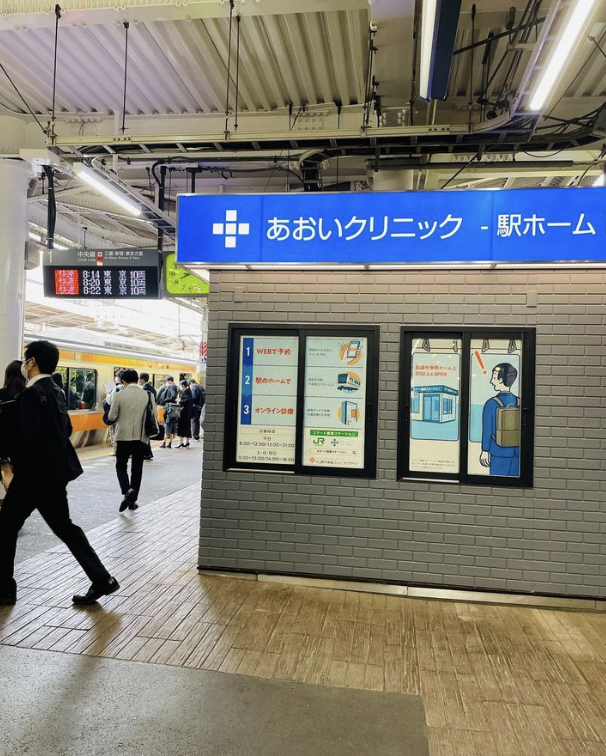
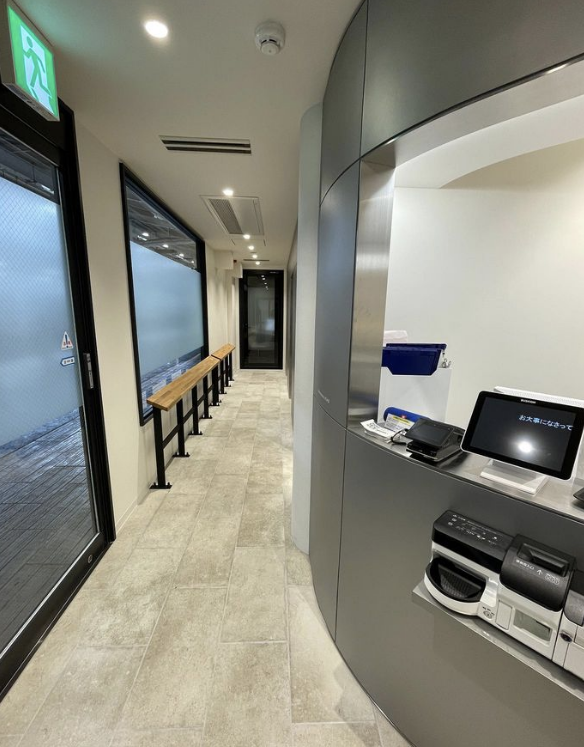
Inside the clinic, signs such as '5-minute waiting time' and 'Pollen allergy medication available' are posted throughout. The interior is structured like a general hospital, including the testing room. Nikkei noted, "It creates the illusion of being in a city hospital, but the sound of train brakes reminds you that you are actually on a station platform."
The clinic is operated by the medical corporation Souseikai. It receives an average of 30 to 40 visitors per day. Since internal medicine consultations are conducted face-to-face, various treatments such as vaccinations are possible. Dermatology, otolaryngology, and obstetrics and gynecology services are available through online booths, allowing patients to receive remote consultations from doctors in other regions. A Souseikai representative stated, "By introducing high-performance medical cameras, we can assess patients' conditions more accurately than during online consultations from home."
The clinic's operating hours are extended from 8 a.m. to 8 p.m. on weekdays to accommodate commuters and students before and after travel, as it is located in a train station. It is also open on holidays and public holidays, providing medical services even when patients' usual hospitals are closed. Taro Kuwai, director of Souseikai, said, "General clinics are limited to treating residents within a 2 to 3 km radius, but a clinic on a station platform can expand its user base to the entire train line."
The expansion of JR East Japan, a railway company, into the medical field was influenced by COVID-19. Until now, JR East Japan had generated revenue by placing commercial facilities such as shopping centers in major stations where many people gather. However, with the decrease in passengers due to COVID-19, the company began seeking new ways to utilize station spaces. One of these methods was establishing clinics inside stations.
Nikkei expressed a positive outlook, stating, "The clinic business seems promising," as regional medical disparities have become a social issue in Japan. The 2021 Japan Land, Infrastructure, Transport and Tourism White Paper pointed out that by 2050, 66% of municipalities nationwide will find it difficult to operate hospitals due to population decline. JR East Japan also recorded an operating loss of 67.9 billion yen (616.9 billion won) in 2021 on local lines connecting rural areas and has been considering solutions to this problem.
JR East Japan plans to expand this clinic business by creating non-face-to-face clinics at unmanned stations. A related business official from JR East Japan said, "In depopulated areas, many elderly people travel several hours to urban hospitals. We believe there is demand for at least initial consultations to be conveniently available at nearby stations."
Online medical consultations allow clinics to be established at low cost, and when linked with large urban hospitals, users can enjoy high-quality medical services. Ultimately, this leads to reducing medical disparities and enhancing the value of cities around stations, which is JR East Japan's vision.
However, online consultations at unmanned stations inevitably need to consider elderly people who are not familiar with digital devices such as kiosks. Nikkei added, "Simplifying reservation sites and remote medical equipment operation will be key challenges determining the success of this new business."
© The Asia Business Daily(www.asiae.co.kr). All rights reserved.


















