Despite Government's February Measures Announcement,
Widespread Distrust Grows Across Medical Sector
It has been four months since the government announced the 'Pediatric Medical System Improvement Measures' last February to address blind spots in pediatric care, but medical professionals still report not feeling any changes on the ground. While the government is preparing and implementing measures, pediatricians have declared their 'escape,' and children's hospitals are calling for fundamental improvements, citing the inevitability of reduced clinic hours. The voices from the medical field emphasize the need for the government to accelerate the implementation of improvement plans while also addressing existing shortcomings.
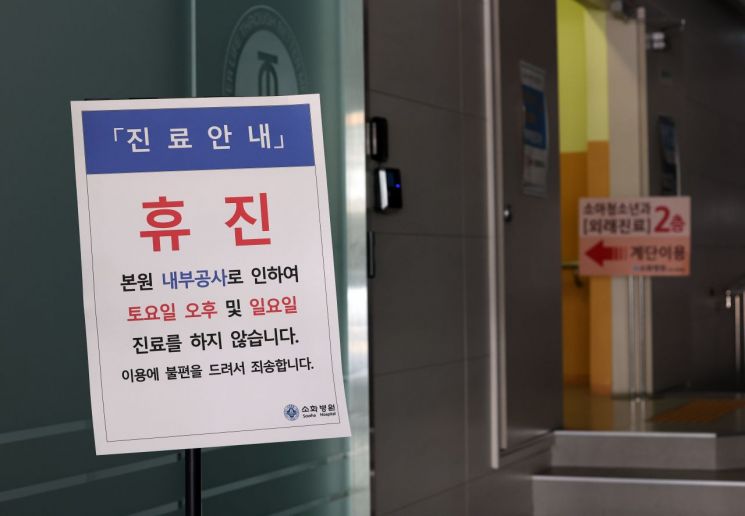 Seoha Hospital, located in Yongsan-gu, Seoul, the first pediatric specialty hospital in Korea, has temporarily suspended holiday medical services starting in June due to a shortage of doctors. [Image source=Yonhap News]
The previously announced pediatric medical system improvement measures mainly focused on ▲expanding the severe pediatric medical system ▲eliminating blind spots in pediatric care ▲securing pediatric medical personnel through appropriate compensation. However, the medical field still feels a significant shortage of personnel. According to a survey conducted by the Korea Association of Children's Hospitals targeting 108 children's hospitals nationwide, 90% of the approximately 60 hospitals that responded said it is 'very difficult' to find doctors.
In particular, 71.4% indicated plans to reduce weekday night and holiday clinic hours in the future. The most common reason for reducing clinic hours was a decrease in the number of doctors (34.2%), followed by staff turnover (32.9%) and difficulties in transferring emergency severe patients (24.1%). Park Yang-dong, president of the Korea Association of Children's Hospitals, pointed out, "The situation in pediatric medical sites is not improving but worsening. Despite the ongoing vicious cycle of insufficient personnel not being replenished, the government is focusing only on hardware expansion policies and failing to present fundamental solutions." In fact, Sohwa Hospital in Yongsan-gu, Seoul, the country's first specialized children's hospital, temporarily suspended holiday clinics this month due to a shortage of doctors.
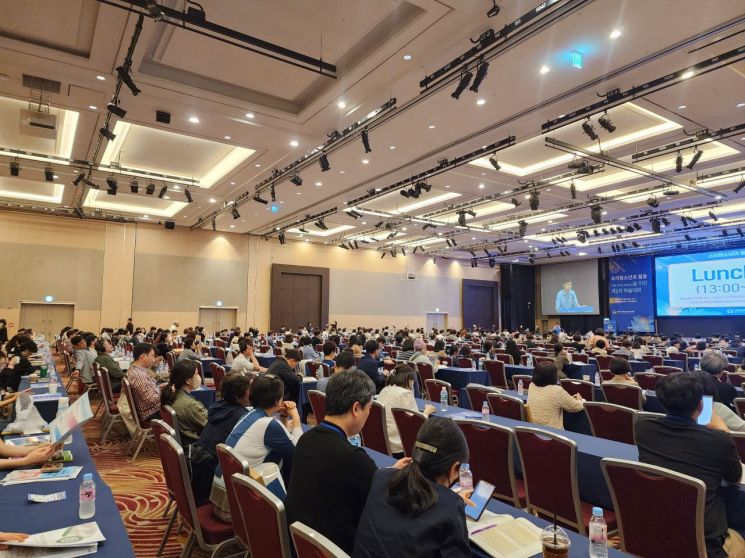 Pediatricians attended the "Academic Conference for Escaping Pediatrics" held on the 11th. [Image source=Yonhap News]
Meanwhile, pediatricians are actively moving to 'escape' from pediatrics. The Korean Pediatric Society held the '1st Academic Conference for Escaping Pediatrics' on the 11th at a hotel in Seoul, following their declaration to abolish pediatrics in March. At this conference, 600 pediatricians gathered to learn know-how for treating conditions such as hyperlipidemia, botulinum toxin (Botox), obesity, diabetes, and varicose veins.
The Pediatric Society previously stated, "Among approximately 3,500 active members, about 90%, or 3,100, want to switch to other specialties or are actively preparing to do so," and added, "We will provide education and training according to members' demands." At the conference, President Lim Hyun-taek said, "We have repeatedly urged the urgent need for measures, but the government has implemented policies that make it impossible for us to operate pediatrics. I chose pediatrics because I like children, but under these circumstances, I feel I can no longer provide care, which makes this a very bitter occasion."
The medical community is directly targeting the government's announced measures, demanding their abolition or supplementation. The government promoted the expansion of 'Moonlight Children's Hospitals,' which handle pediatric night and holiday care, but the Children's Hospital Association argues that it is ineffective and calls for its abolition. Lee Hong-jun, the association's policy director, criticized, "There has been no concrete evaluation for over ten years, the inpatient and backup care systems are inadequate, and regional disparities are severe. It is a showy administration disconnected from the public demand for night and holiday care within residential areas." The association urges the abolition of Moonlight Children's Hospitals and a comprehensive fee restructuring to redefine the roles of primary, secondary, and tertiary pediatric medical institutions proportional to regional populations. They also proposed mid- to long-term plans to replenish pediatric human resources and institutional improvements to bring back doctors who have left pediatric medical fields.
© The Asia Business Daily(www.asiae.co.kr). All rights reserved.
!["The Woman Who Threw Herself into the Water Clutching a Stolen Dior Bag"...A Grotesque Success Story That Shakes the Korean Psyche [Slate]](https://cwcontent.asiae.co.kr/asiaresize/183/2026021902243444107_1771435474.jpg)

















