Interview with Go Seon-ung, Director of Seoul City Theater
"In an Era of Upheaval, Reconsidering the Essence of Theater"
Play 'Getting Out' Opening on the 23rd, Reflecting on Theatricality Restoration and Compassion
“In these turbulent times, I am contemplating what charm theater must maintain to preserve its analog culture, and the essence of theater as a distinguishing and competitive art form.”
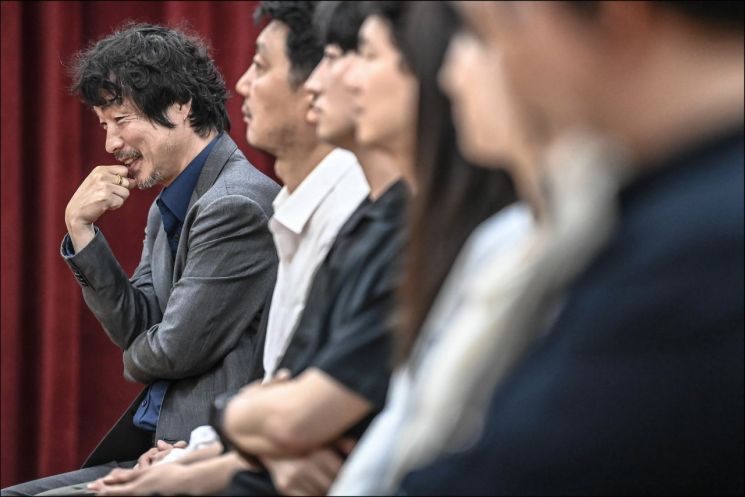
Since the announcement last September of the 'star director' Go Seon-ung (55) joining the Seoul Metropolitan Theater Company, the theater community and audiences have expressed great anticipation. Having worked across plays, changgeuk (traditional Korean opera), and musicals?from 'The Orphan of Zhao', 'Hongdo', 'Macbeth by Knife', the musical 'Gwangju', to the recent 'Hwirangi'?people are curious about what kind of productions he will present at the Seoul Metropolitan Theater Company. He explained, “Until now, I was mainly focused on my own and my troupe’s works, but after COVID-19, I saw the theater world losing its intrinsic value, and I felt a sense of crisis as the fun, happiness, and satisfaction that theater brings were disappearing. The Seoul Metropolitan Theater Company is fully funded by citizens’ taxes, so with stable resources and a stage, I thought I could present a variety of works aimed at cultivating citizens’ cultural awareness, which is why I joined.”
"In an Era of Upheaval, Reconsidering the Essence of Theater"
The first play Go directed at the Seoul Metropolitan Theater Company was 'Getting Out', the debut play by American playwright Marsha Norman from 1977. The play interweaves the past and present of Ali, who has just been released after serving eight years in prison. He cited 'character' as the main reason for choosing this work. “Although 'Getting Out' is a play from the 1970s, it remains faithful to themes and theatrical enjoyment that today’s audiences can relate to. I thought it would be good for audiences to rediscover the original charm of theater by returning to the character, seeing what choices the character makes, how they overcome problems, endure, seek new ways, and find reasons to live.”
The protagonist Ali in 'Getting Out' dreams of a new life after being released and settling in a shabby apartment. Having suffered horrific violence inside and outside the home and even in prison during his youth, living as a delinquent, he changed his name from 'Ali' to 'Alin' to forget his unhappy past. Using skills learned in prison, he finds a job and wants to raise a son entrusted to him by others, but Alin faces harsh realities from the very first day of release. His mother, who should be his greatest support, breaks his will for a new life with distrust and harsh words about his daughter, and those around him torment him by bringing up the past he wants to forget. His boyfriend, a former pimp, escapes prison before completing his sentence and appears before Alin, urging him to return to prostitution.
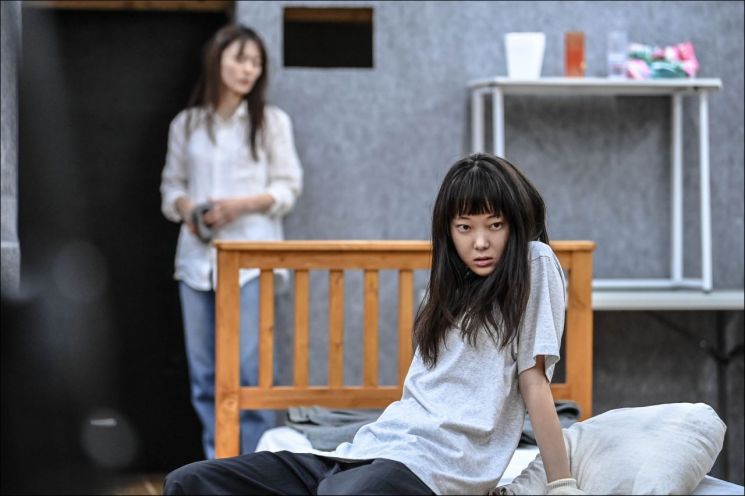 At the rehearsal room open event for the play 'Getting Out,' Lee Kyung-mi (playing Alin) and Yoo Yoo-jin (playing Ali) are performing.
 [Photo by Sejong Center for the Performing Arts]
Focusing on this harrowing day in Alin’s life, Director Go said, “Ali, a woman who has paid her dues, must re-enter society, build relationships, and find meaning in life, but the situation on the day of her parole seems bleak. It’s heartbreaking that the past she wants to forget is holding her back. I wanted to embrace her with kindness, which is why I chose this work.”
The Play 'Getting Out': A Reflection on Theatricality and Compassion
As Director Go pointed out, theater represents an analog culture. Since COVID-19, media has undergone rapid changes, and theater, as always, faces another crisis. He emphasized, “The competitors for theater could be Netflix or SUVs. As leisure options have expanded and diversified, it’s meaningless to talk about what theater’s enemies are. Rather, my role and the important task for theater practitioners today is to convince the 2023 audience why theater exists and why they should watch it.”
Just as important as the characters, audience reactions weigh heavily on Director Go. “I really like the book 'The Man Who Plants Trees.' Just as planting one tree at a time can create a forest, I am optimistic that by producing one good play after another, theater’s base can expand. Despite AI and OTT platforms and the rapidly changing world, humans still experience joy, anger, sorrow, and pleasure, and the cultural lag where intangible culture cannot catch up with material culture continues. Many people may be suffering from this shock, hiding depression or violent tendencies. I believe theater is unmatched as a genre that soothes these emotions and helps people find their own value. It warms the heart and teaches us to view the world more positively. That’s why people create theater, and theater creates people.”
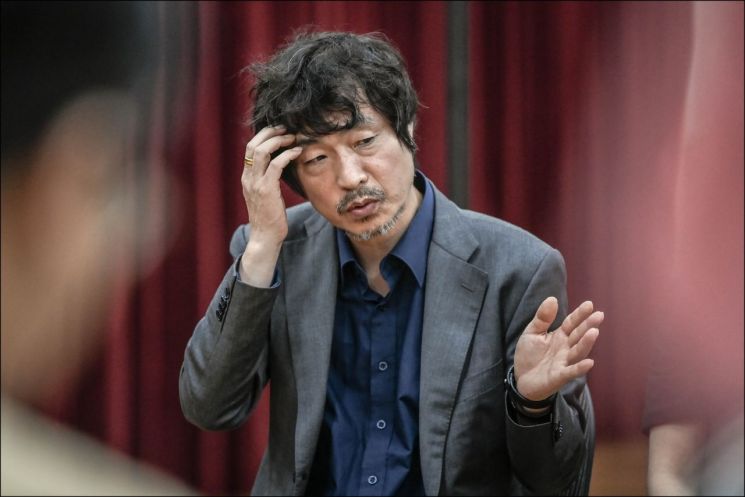 Goseon-ung, Director of Seoul City Theater Company.
 [Photo by Sejong Center for the Performing Arts]
While preparing the play, Director Go said he spent a lot of time reflecting on 'compassion.' Watching Russia’s invasion of Ukraine, he found it hard to understand how anyone could think of starting a war in 2023. He said, “After Putin declared war, it’s not just a matter of pressing a button on a machine. The ground troops and air forces sent to battle are all young people in their twenties, who have families, lovers, and are someone’s sons or future fathers. It’s hard to comprehend that they must kill or be killed on the battlefield. If you think of it as your own child’s story, could you do it so easily? Similarly, 'Getting Out' is not about forgiving everyone or condoning crime, but about asking whether it is right to save and help someone who has paid a sufficient price and is trying to rehabilitate and start anew with good intentions.”
“Isn’t today’s world a merciless place that doesn’t forgive even a single mistake?” Director Go’s question prompts us to reconsider humanity’s restoration and the desperate need for mercy for some. Wanting to create 'good theater,' he said, “I hope the Seoul Metropolitan Theater Company’s plays become works that audiences are willing to invest two hours in. There is a line in 'The Orphan of Zhao' that says life is a brief dream, and if you play along with the sound of drums and flutes, the dream passes quickly... Theater is play. I hope both I and the audience enjoy a good dream and have a great time.”
© The Asia Business Daily(www.asiae.co.kr). All rights reserved.



















