As large-scale reconstruction projects in the Yeouido area of Yeongdeungpo-gu, Seoul, gain momentum, the number of sites opting for the trust method is increasing. This trend is analyzed to have formed because, recently, frequent conflicts over construction cost increases between associations and contractors in maintenance projects have made it difficult to proceed, leading to a consensus to entrust negotiations to experts.
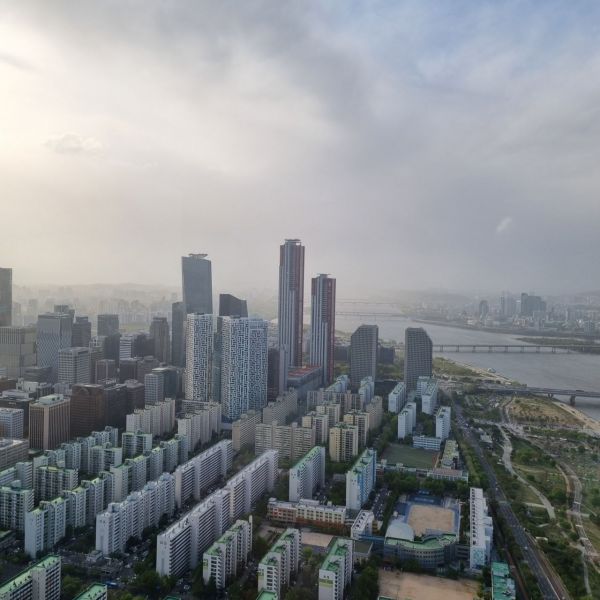
According to the maintenance industry on the 14th, Samik Apartment in Yeouido-dong, Yeongdeungpo-gu, Seoul, recently approved a memorandum of understanding (MOU) for the selection of Korea Land Trust as a preliminary trustee. As a result, among the 16 apartment complexes pursuing reconstruction in Yeouido, the number of places choosing the trust method has increased to seven. Three sites?Sibeom, Sujeong, and Gwangjang (Buildings 3 to 11)?selected Korea Asset Trust; two sites?Hanyang and Gongjak?selected KB Real Estate Trust; Samik selected Korea Land Trust; and Eunha selected Hana Asset Trust as their respective trustees.
The reason the trust method has emerged as the mainstream in Yeouido reconstruction projects is to prevent difficulties faced by associations due to contractors’ demands for increased construction costs. It reflects the expectation that trustees, composed of personnel from construction and financial companies, will carry out the projects more smoothly than associations lacking expertise.
Another reason trustees are gaining attention is their competitiveness in loan interest rates. In fact, some complexes are known to have had ‘financial holding company-affiliated’ trustees set lower interest rates for relocation loans or interim payment loans. Additionally, it is easier to obtain guarantees from the Housing and Urban Guarantee Corporation (HUG) for project financing loans, and interest rates are lowered through credit enhancement by financial holding companies, which is highlighted as an advantage.
Of course, the trust method is not without drawbacks. Typically, trustees take 1-2% of the pre-sale proceeds as fees, which can amount to hundreds of billions of won. Furthermore, registering trust for more than one-third of the land area is also an obstacle. After completing trust registration, it becomes inconvenient to conduct sales, and once the trust method is chosen, it is difficult to cancel. Simply put, if the trustee fails during the project, the land entrusted by the owners could be at risk.
For these reasons, five sites in Yeouido?Mokhwa, Sambu, Daegyo, Miseong, and Gwangjang 1-2-dong?have established or plan to establish associations, while four sites?Jangmi, Hwarang, Jinju, and Chowon?have not yet decided on their approach.
Meanwhile, the trust method in urban maintenance projects is gradually expanding in scale. Since the related law was amended in 2016 to allow trust-based urban maintenance projects, the cumulative contract amount has reached 47 trillion won. The number of cases has also sharply increased. While there were only six cases in 2016, the number exceeded 30 annually for the first time in 2020 with 31 cases, followed by 36 cases in 2021, 30 cases in 2022, and eight cases from January to May this year. From 2016 to May this year, about 161 projects have been pursued or are about to be pursued using the trust method over approximately seven years.
© The Asia Business Daily(www.asiae.co.kr). All rights reserved.
!["The Woman Who Threw Herself into the Water Clutching a Stolen Dior Bag"...A Grotesque Success Story That Shakes the Korean Psyche [Slate]](https://cwcontent.asiae.co.kr/asiaresize/183/2026021902243444107_1771435474.jpg)
















