Worst Drought in 70 Years... Reservoir Levels at 6.6%
Supplying Salty River Water... Twice the WHO Recommended Level
Prices Soar 5 Times Due to Stockpiling of Bottled and Mineral Water
In Uruguay, South America, which is experiencing the worst drought in 70 years, the price of bottled water has surged nearly fivefold. The capital city is facing a water resource depletion crisis within the next week.
According to Yonhap News and local media on the 11th (local time), the water storage rate of the 'Paso Severino' reservoir supplying drinking water to Montevideo, the capital of Uruguay, is currently only about 6.6%, or 4.4 million cubic meters.
The average daily water consumption near Montevideo is 550,000 cubic meters. If new drinking water sources are not secured, the drinking water could be depleted within a week. Uruguay’s state water company (OSE) estimates that there will be problems supplying water from the source around the 23rd to 24th of this month.
The water resource crisis reportedly began at the end of April. Uruguay is currently experiencing an extreme drought. According to the local meteorological agency, there is no forecast of rain until the 17th.
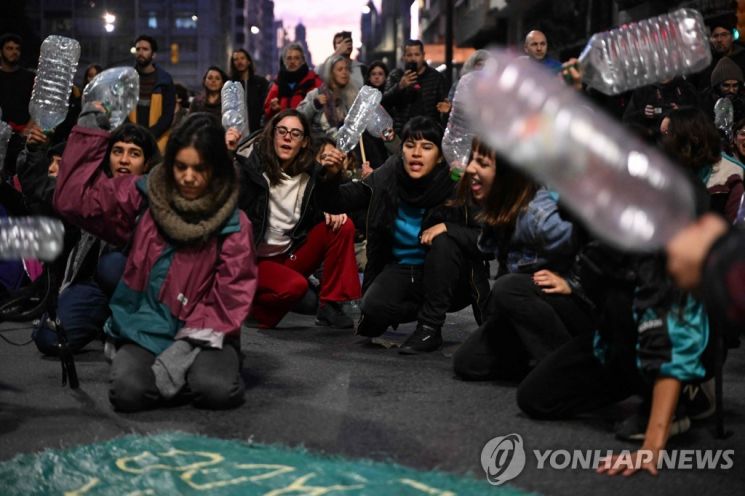
As a desperate measure, the authorities have introduced a policy to supply both drinking water and 'salty water' together. They are drawing water from near the Rio de la Plata river, where the freshwater of the Uruguay River mixes with the seawater of the Atlantic Ocean.
However, this policy raises concerns about adverse health effects on citizens drinking the water. According to the U.S. media outlet The Washington Post (WP), the sodium content in Uruguay’s tap water is currently 421 mg per liter, which is twice the amount recommended by the World Health Organization (WHO).
In response, Karina Rando, Uruguay’s Minister of Public Health, stated, "It will not affect the health of the general public," but added, "People with hypertension, kidney disease, or those on medically recommended salt-restricted diets should not neglect blood pressure control and medical care, and should drink bottled water if possible."
As concerns over drinking water shortages grew, panic buying of bottled and packaged water also occurred. As a result, the price of bottled water around Montevideo surged 224% compared to the same month last year. The price of bottled water sold in bottles rose by 467%, nearly five times higher.
Currently, Uruguayan authorities are making every effort to secure water resources. According to the local daily newspaper El Observador, OSE is pumping groundwater from city parks, purifying it, and prioritizing supply to schools and hospitals. They have also signed new contracts with four companies capable of delivering water by truck.
Separately, the use of desalination equipment at combined cycle power plants is also being considered. However, considering the city’s average daily water consumption, this is far from sufficient. An OSE official told the media, "Considering daily consumption, it’s like dropping a single drop of water into the ocean."
© The Asia Business Daily(www.asiae.co.kr). All rights reserved.
![Clutching a Stolen Dior Bag, Saying "I Hate Being Poor but Real"... The Grotesque Con of a "Human Knockoff" [Slate]](https://cwcontent.asiae.co.kr/asiaresize/183/2026021902243444107_1771435474.jpg)
















