Funding for Nuclear and Missile Development Covered 50% by Hacking
#. Singapore-based blockchain gaming company Sky Mavis was hacked by a North Korean hacker group last year, losing more than $600 million (about 775.5 billion KRW) in digital assets. One of the company’s engineers received a recruitment offer from a hiring manager via the job platform LinkedIn, but it turned out that the hiring manager was a member of North Korea’s cyber attack unit. The email sent by this unit impersonating the hiring manager contained a malicious code called a 'Trojan horse,' and the entire company system was hacked, resulting in a massive theft of virtual assets by North Korea.
North Korea is increasingly relying on virtual asset hacking to fund its nuclear and ballistic missile development, the Wall Street Journal (WSJ) reported on the 11th (local time), citing senior U.S. officials.
According to blockchain analytics firm Chainalysis, North Korea has amassed more than $3 billion (about 3.87 trillion KRW) through digital theft over five years since it began large-scale virtual asset attacks around 2018. U.S. officials report that about 50% of these funds have been used to finance North Korea’s ballistic missile program, including nuclear development.
According to the U.S. Department of State, North Korea currently spends about $4 billion annually on its defense budget. Anne Neuberger, Deputy Assistant to the President for Cyber and Emerging Technology at the White House National Security Council (NSC), estimated that roughly 50% (about $2 billion) of the foreign currency used by North Korea to purchase foreign components necessary for its ballistic missile program is procured through such cyber operations.
She specifically stated, "Last year, North Korea’s virtual asset attacks rampaged against virtual asset hubs worldwide, resulting in a surge of large-scale thefts."
Deputy Assistant Neuberger previously stated in an interview last month, "We estimate that North Korea is funding about half of its missile program through virtual assets and cyber efforts."
This is interpreted as an upward revision of the estimate following the November announcement last year that "North Korea covers about 30% of the funds needed for its missile program through cyber attacks."
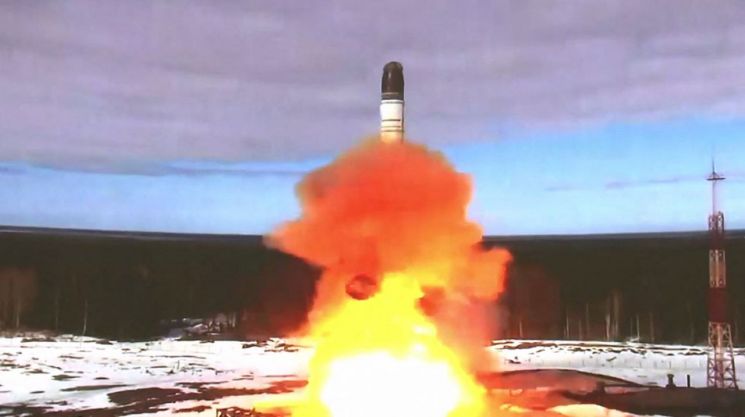
According to the James Martin Center for Nonproliferation Studies (CNS) at the Middlebury Institute of International Studies in the U.S., since North Korea began large-scale virtual asset hacking activities in 2018, the number of missile launch attempts and successes has surged, with more than 42 missile launches observed last year.
In particular, U.S. officials estimate that North Korea operates thousands of IT personnel worldwide as shadow units, including in Russia and China, earning as much as $300,000 annually. These operatives disguised themselves as employees of Canadian IT companies, government officials, and freelance blockchain developers from Japan to carry out attacks.
Nick Carlsen, an analyst at blockchain tracking firm TRM Labs and former FBI agent, said, "(With the rising rate of cybercrime) North Korea looks like a modern-day pirate state," adding, "They are raiding wherever they can overseas."
Carlsen and other virtual asset industry insiders pointed out that "eliminating such fake IT personnel from North Korea remains a persistent challenge."
Experts view North Korea’s development of such digital bank robbery units as an effort to evade international sanctions. A 2020 United Nations report noted that North Korea’s hacking activities have been "proven to be low risk, high reward, and difficult to detect."
Deputy Assistant Neuberger said, "Generally, national cyber programs focus on espionage for geopolitical purposes, but North Korea is focused on (hardened) theft to circumvent international sanctions."
© The Asia Business Daily(www.asiae.co.kr). All rights reserved.

















