Interview with Lee Seungjeong, President of the Korean Culture and Arts Center Association
Connecting Art and Stage, Focus on Strengthening Planning Skills
Jeju Haevichi Art Festival, Growing into an International Event through Exchange with Overseas Institutions
Operating Various Educational Programs for Enjoyment of Culture and Arts
In ancient times when shamanism and art were indistinguishable, and sacred altars were the very stages, these customs have continued to the present day, permeating modern society where religion and art are separated. For artists, the most sacred ‘stage’ is where they struggle the most. Lee Seung-jeong, president of the Korea Cultural and Arts Centers Association (KoCACA, hereafter KoCACA), who works tirelessly to secure and expand content for more and diverse stages, voluntarily acts as a bridge connecting local residents and artists through cultural and arts centers. Thanks to these efforts, the sacred stage has become a stage of everyday life, addressing a wide range of stories and themes closely linked to daily living. His ambition to deepen the public’s opportunities to enjoy culture and arts is yielding tangible results through the Jeju Haevichi Art Festival. The following is a Q&A with President Lee.
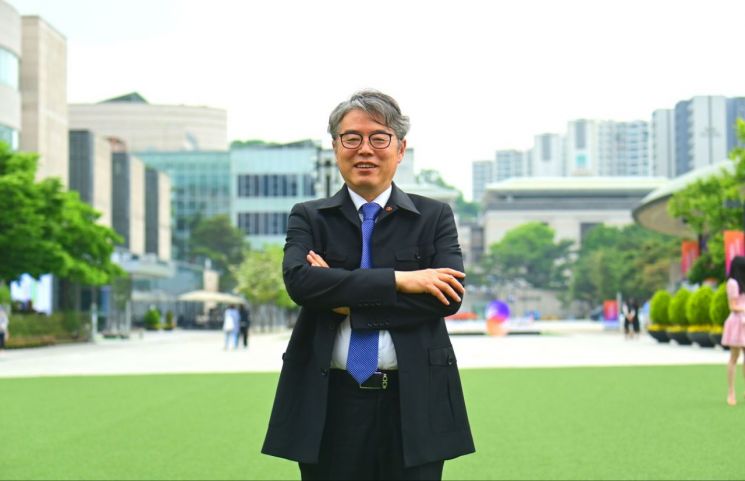 Lee Seung-jeong, President of the Korea Cultural and Arts Centers Association. [Photo by Korea Cultural and Arts Centers Association]
-It seems that many people still do not know much about the institution called KoCACA.
▲ We are still struggling to raise awareness. (laughs) In fact, most cultural and artistic content and art organizations are concentrated in the metropolitan area. On the other hand, in local areas, due to aging populations, it is difficult for artists on site alone to plan performances. KoCACA operates projects that assist in the joint production and distribution of performance content between local cultural and arts centers and private art groups. KoCACA’s role is to realize what individual local cultural centers cannot do on their own through a nationwide network and platform, and to create synergy between institutions and artists.
-The alienation of young artists has emerged as an important issue in the art world. What efforts is KoCACA making for them?
▲ Since 2021, we have established a program for art groups composed of young artists (aged 19 to 39), moving beyond just supporting general programs, to actively support the dreams of young people. This year, 26 programs were selected and assigned to 50 cultural and arts centers, providing young people with broad opportunities to participate in cultural projects, and the institution is taking the lead in helping them grow as main agents of cultural and artistic activities.
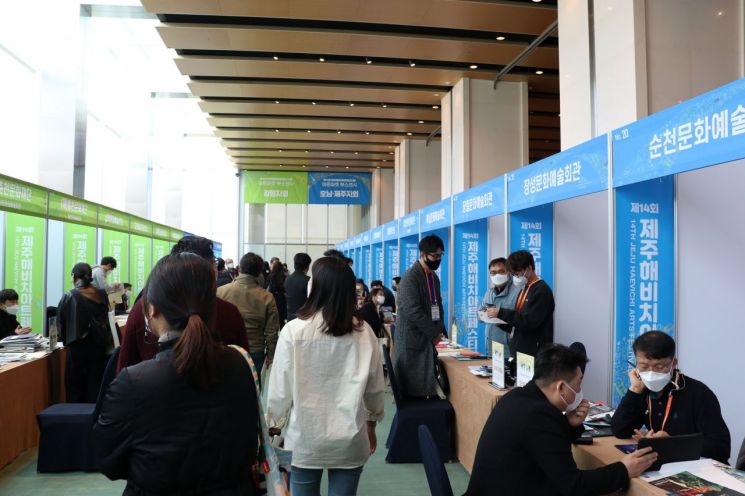 Jeju Haevichi Art Festival Art Market booth exhibition view. This event strengthens the necessity and importance by providing an opportunity for local cultural centers and art organizations to meet directly through the Art Market.
 [Photo by Korea Culture and Arts Centers Association]
-In local areas, demand for related education is increasing even more than for cultural and artistic enjoyment.
▲ Just as you need to know the rules of baseball or soccer to properly enjoy the games, the same applies to art. To cultivate the ability to appreciate art, KoCACA is currently promoting four educational projects. In particular, the ‘Cultural and Arts Education Program Support Project’ that realizes lifelong education, and the ‘Dream Darak Saturday Cultural School Arts Appreciation Education Operation Project’ aimed at enhancing voluntary cultural and artistic appreciation abilities among youth, have been running for 10 years and have greatly contributed to revitalizing local culture centered on cultural and arts centers.
Through the newly launched ‘Cultural and Arts Education Support Project for Culturally Vulnerable Areas’ last year, cultural and arts education was provided to residents in geographically disadvantaged areas such as county-level, island, remote, and border regions, focusing on cultural and arts centers located there, actively working to reduce cultural disparities. Additionally, the ‘Technology-Integrated Cultural and Arts Education’ project was praised for fostering artistic creativity in future generations through art and technology convergence education that uses technology as a creative tool. Expanding the target audience from youth to young adults, it received an even warmer response in the field. Accordingly, we plan to establish continuous planning support criteria to develop it into a long-term specialized program for cultural and arts centers.
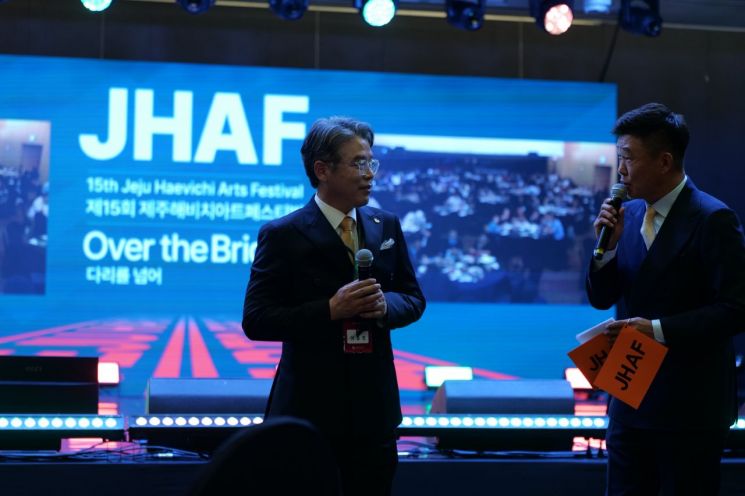 Chairman Lee Seung-jeong participating in the Jeju Haevichi Art Festival event. [Photo by Korea Arts & Culture Centers Association]
-Unlike the metropolitan area, many local cultural and arts centers lack planning or production capabilities. What efforts are being made to address this?
▲ To revitalize the operation of local cultural and arts centers and enhance their self-sustainability, we are strengthening support for consulting on performing arts planning and production. To specialize individual cultural and arts centers, professional consultants are dispatched nationwide to provide consulting support for three years, focusing on strengthening practical capabilities such as investigating local performing arts demand and environment, planning and producing programs, securing funding plans, and participating in public projects.
Now, cultural and arts centers must move beyond simply renting out performance venues and strive to discover content that reflects their unique characteristics and strengthen their planning and production capabilities. To this end, we have increased the maximum subsidy amount per project for the Bangbanggokgok Project’s cultural and arts center planning and production programs and the joint production and distribution program for performance content, helping cultural and arts centers plan and produce higher-quality programs. Without artists, cultural and arts centers cannot survive. Therefore, we are making efforts to find ways to coexist and thrive together by preparing various supports and programs.
-What is the main focus among activities connecting local cultural and arts centers and artists?
▲ The Jeju Haevichi Art Festival is a representative event. At last year’s festival, we repeatedly heard words of gratitude about how important the art market, held once a year, is as an opportunity for performing arts groups to promote their works in a situation where there are no face-to-face opportunities. This made us realize the significance of the event. While the festival is also a celebration, it was ultimately planned as a place for exchange connecting cultural and arts centers and art groups, and as a communication platform for cultural and artistic stakeholders nationwide. KoCACA plans to expand this not only domestically but also into an art market festival representing Asia. Last year, 475 institutions and organizations participated, and a total of about 24,000 participants joined both online and offline to enjoy the festival. As the status of K-content rises day by day and the world pays attention, we are also considering ways to introduce contemporary artists more diversely.
© The Asia Business Daily(www.asiae.co.kr). All rights reserved.



















