Woo Jeonghun BW Biomed CEO
Former Pharmaceutical Industry Professional, Former Head of Promotion Agency Branch
"Bio Industry, Emphasizing Clusters is Inevitable"
"Diverse Overseas Expansion and Cluster Development are Necessary"
"Overseas expansion requires reducing risks first to determine whether it is the right move. In that regard, the establishment of the C&D Incubation Center seems to have boosted the confidence of pharmaceutical and bio companies in going global."
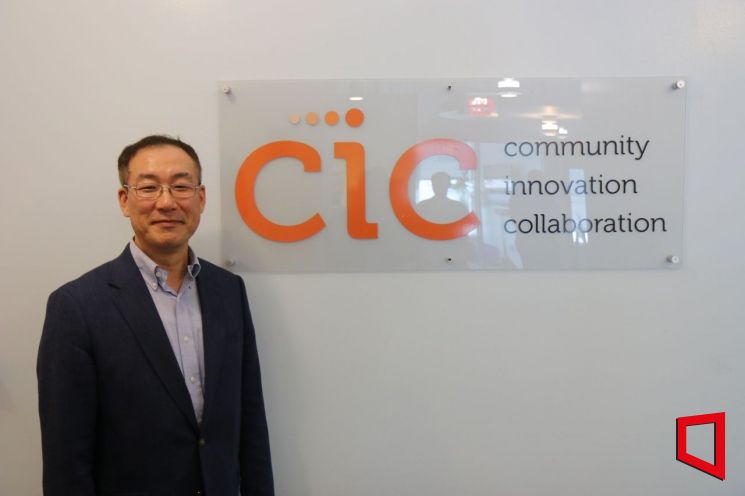
Woo Jeong-hoon, CEO of BW Biomed, has a diverse background, having built his career in the pharmaceutical industry at JW Pharmaceutical and Handok, served as the head of the Singapore and U.S. branches at the Korea Health Industry Development Institute (KHIDI), and later founded BW Biomed, a medical industry specialized consulting firm. He explained his reason for joining KHIDI by saying, "Being in the pharmaceutical industry, I felt the focus was too heavily on drugs rather than the entire healthcare system," and added, "Since healthcare systems and industries are shaped by various social and historical backgrounds, I wanted to work on creating healthcare systems specialized for Korea." While working as a branch head at KHIDI, he mainly focused on benchmarking overseas clusters and attracting foreign patients through medical tourism projects.
BW Biomed is co-located at the Cambridge Innovation Center (CIC), where the shared office 'C&D Incubation Center'?established jointly by the Ministry of Health and Welfare and KHIDI near Boston?is situated. CEO Woo cited 'confidence' as the greatest advantage of the C&D Center. He said, "What is needed for overseas expansion is to minimize risks and first determine whether overseas expansion is appropriate," and added, "However, just a few years ago, companies were hesitant to open overseas branches, often renting offices directly for 4 to 5 people, which was burdensome." But with the establishment of the C&D Center, "It became possible to try first, then if things look promising, establish a corporation and dispatch resident staff, enabling an expansion model," he explained. He also noted, "Especially CIC is a place that provides solid credibility and where casual interactions, like making coffee together in the kitchen, foster communication and increase collaboration opportunities."
CEO Woo emphasized that for overseas expansion, "If there are methods from A to Z, companies need to combine them in various ways such as 'A+C' or 'B+C+D'." He said, "Since each company has a different philosophy, blindly following what others do is not advisable," and added, "Recently, there seems to be an increasing number of cases where companies find effective methods on their own." He explained that recently, some domestic companies have directly acquired factories in the U.S., incorporated publicly listed biotech firms as subsidiaries or affiliates, and increased direct investments.
 Exterior view of the Cambridge Innovation Center (CIC) located in Cambridge near Boston, USA
 [Photo by Lee Chunhee]
Regarding the Boston bio cluster where CIC is located, he pointed out, "We first need to understand why bio inevitably emphasizes clusters." He explained that for the bio industry to develop, various elements such as workforce, universities and research institutes, hospitals, and capital must come together, making cluster formation essential. He said, "Depending on how you define the scope, there are up to 200 universities in the Boston cluster," and added, "There are countless research institutes, hospitals, and capital markets." He continued, "Last year, all the Massachusetts bio companies that went public were within a 2.7-mile (about 4.3 km) radius," and noted, "With so many people concentrated in one area, it is easy to meet directly at various events, and if communication stalls, you can quickly arrange a meeting, creating many opportunities."
He also mentioned that diversity is important for cluster development. CEO Woo said, "I believe the Osong cluster should benchmark the Maryland cluster rather than Boston," and advised, "Since the Ministry of Food and Drug Safety, the Korea Disease Control and Prevention Agency, and KHIDI are all gathered there, it needs to develop with a focus on approvals and clinical trials like Maryland, where the National Institutes of Health (NIH) and the Food and Drug Administration (FDA) are located." To this end, he suggested, "A platform where the government can coordinate so that clusters can divide their roles is also necessary."
He also shared that the reason for establishing BW Biomed was his dream to create a 'better world' through various startups in the future. CEO Woo said, "The name BW stands for 'Better World,'" and added, "It embodies the dream of becoming a company that makes the world a better place and has an impact." Through this, he said, "My goal is to live a second life running a company while helping new startups grow by sharing my knowledge, growing together."
Regarding BW Biomed’s consulting, he explained, "Incubating startups is similar to raising a child," emphasizing, "It is important to align perspectives." In addition, they are also directly acquiring and selling pipeline rights. CEO Woo said, "We are currently exploring technology transfers of oncolytic virus assets to Korean companies," and added, "The goal is not just to transfer rights but to enable joint research with Korea so that 'first-in-class' drugs within the group can be developed domestically, contributing to the advancement of the Korean industry."
© The Asia Business Daily(www.asiae.co.kr). All rights reserved.


















