Declining Competition Rate for National Civil Service Exam
Talent Drain to Private Sector Amid Overtime and Low Pay
The competition rate for the National Public Service Comprehensive Examination, the pathway to becoming a bureaucrat in Japan's central government ministries, continues to decline. This is analyzed to be due to the increasing aversion to public service jobs. As the number of applicants from the University of Tokyo, Japan's top university, who once flocked to the civil service exam hoping for high-ranking positions, sharply decreases, the reluctance of talented individuals to pursue bureaucratic careers is intensifying, raising a sense of crisis within the bureaucratic community.
On the 9th, the National Personnel Authority of Japan (the National Personnel Agency) announced the successful candidates for the 2023 spring National Public Service Comprehensive Examination. The number of successful candidates was 2,027, with a competition rate of 7.1:1. This is significantly lower compared to last spring's 8.2:1.
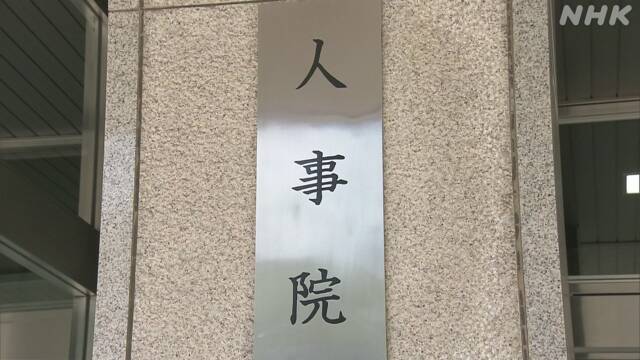
The Comprehensive Examination selects candidates for executive positions in central ministries such as the Ministry of Finance, Ministry of Economy, Trade and Industry, and Ministry of Foreign Affairs. Passing this exam is the path to becoming a 'career (executive) bureaucrat.' For Japanese people, working as an executive bureaucrat after passing this exam was considered a family honor, comparable to passing the Korean Administrative Examination in Korea.
However, this has become a thing of the past. Notably, the application rate from the University of Tokyo, regarded as one of Japan's prestigious universities, has decreased. According to the university-specific successful candidate statistics announced this time, the number of successful candidates from the University of Tokyo was 193, the lowest ever. Over the past decade, applicants from the University of Tokyo have decreased by more than half, and this is the first time the number has fallen below 200. In the 2015 spring exam, University of Tokyo graduates accounted for 26% of successful candidates, but this year the ratio sharply dropped to 9.5%.
This is because the aversion to central government bureaucratic jobs is deepening. Due to long working hours and frequent overtime, central ministries are referred to as 'black workplaces' within government circles. The term is derived from 'black companies,' which in Japan refers to companies that impose unreasonable working conditions.
In fact, a 2021 public opinion survey conducted by the National Personnel Authority targeting students found that among those who said they would not become national public servants, 76% cited "difficulty in studying and preparing for the entrance exam," and 55% responded that they expected "a lot of overtime and late-night work."

Because of this, talented individuals are choosing to work in private companies. The National Personnel Authority moved the exam date about two weeks earlier than usual this year, anticipating that overlapping with private companies' recruitment periods could further reduce the number of applicants. Despite efforts to maximize applicants in this way, the number of applicants for this year's Comprehensive Examination was 14,372, the second-lowest ever. Nikkei pointed out that "there is a possibility that talent has been drained to private companies." According to the employment list of graduates compiled by the University of Tokyo newspaper last March, the Rakuten Group employed the most undergraduate graduates, with 25 hires.
The National Personnel Authority commented on the decline in University of Tokyo applicants, saying it is "a result of the diversification of talent." However, an official added, "The decrease in successful candidates from national universities, which have traditionally produced many successful candidates, can also be analyzed as the entire student body moving away from government service."
Experts pointed out that this was a predictable development. Hiroaki Inatsugu, a professor at Waseda University, said, "The persistent lack of improvement in the working style of public servants and the decline in authority have further accelerated this trend. If reforms are not undertaken, young and talented individuals will not enter. The entire government must take action to resolve this in order to maintain national competitiveness."
© The Asia Business Daily(www.asiae.co.kr). All rights reserved.


















