With the implementation of the pilot project for non-face-to-face medical consultations, calls to strengthen access to purchasing medicine are growing louder. This is because it is necessary to be able to conveniently purchase emergency medicine even during vulnerable medical access times such as late at night or on weekends. However, opinions differ among the medical community, civil society, and industry regarding solutions. While the pharmacist community demands the expansion of 'public late-night pharmacies' where medicines can be safely obtained through medication guidance, some civil society groups argue for the expansion of safety over-the-counter drugs available at convenience stores and the introduction of non-face-to-face 'medicine vending machines.'
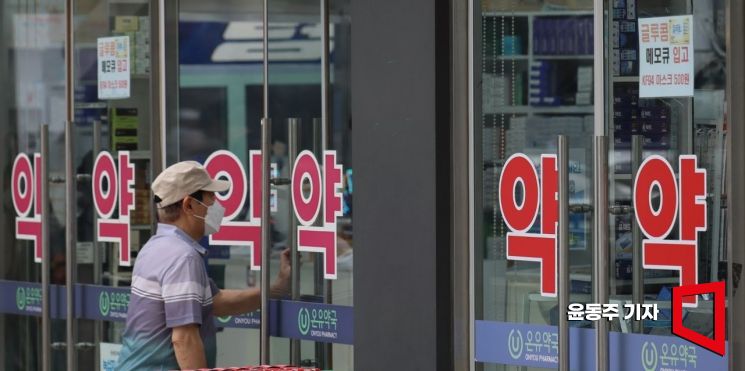 An elderly person wearing a mask is visiting a pharmacy street in Jongno-gu, Seoul, on the 1st, when the COVID-19 crisis alert level was downgraded from "Severe" to "Alert." Photo by Dongju Yoon doso7@
'Public Late-Night Pharmacies' Legalized: "Safe Medication Use Possible During Late-Night Hours"
Earlier in March, the National Assembly plenary session passed an amendment to the Pharmaceutical Affairs Act, which establishes the legal basis for the designation and budget support of public late-night pharmacies. Specifically, it allows local government heads to designate pharmacies that sell pharmaceuticals and quasi-drugs during late-night hours and holidays, and designated public late-night pharmacies can receive operational funding within the budget limits of the Ministry of Health and Welfare and local governments. The official implementation is set for one year after promulgation, which is expected to enable stable operation of public late-night pharmacies with government and local government support.
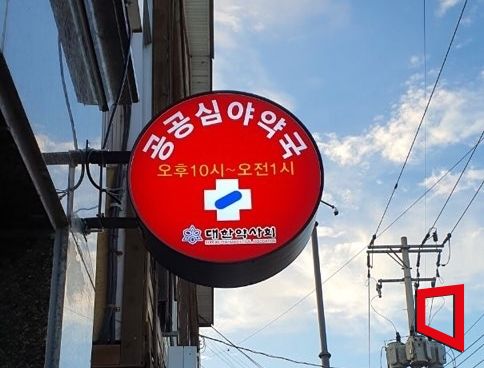
Public late-night pharmacies operate from 10 p.m. to 1 a.m. the next day, a time when it is difficult to find medicine. Currently, 132 locations in 79 local governments are operating with government and local government budget support. They have the advantage of resolving the inconvenience of purchasing medicine at night while enabling safe medication use through pharmacists' medication guidance. The Korean Pharmaceutical Association has actively promoted the legalization of public late-night pharmacies and saw results this year. The association stated, "With the institutionalization of public late-night pharmacies, the inconvenience of purchasing medicine during holidays and late-night hours for local residents is alleviated, and it provides an opportunity for appropriate medication counseling and proper medication use intervention services through pharmacists, who are pharmaceutical experts." They added, "With the establishment of a stable budget support basis from the government and local governments, the continuity and stability of public late-night pharmacy operations are guaranteed, and it is expected that proper medication use and counseling will be provided to the public during late-night hours and holidays."
Despite the legalization of public late-night pharmacies, calls to further strengthen access to medicine continue. From March 18 to April 2, a survey was conducted on 2,433 people through the 'KCCI Communication Platform' to find solutions for improving access to medicine. The most common response, at 46.2%, was the need to designate regional hub 24-hour pharmacies. This reflects opinions that pharmacies operating 24 hours, beyond public late-night pharmacies that operate until 1 a.m., are necessary. Next were 'introduction of safety over-the-counter medicine vending machines' at 33.7%, 'extension of pharmacy operating hours until 9 p.m.' at 13.9%, and 'expansion of remote video medication dispensers' at 6.2%.
Among these, remote video medication dispensers are designated as a regulatory sandbox demonstration exception and are operated in only a few areas, but strong opposition from the pharmacist community continues. Safety over-the-counter medicine vending machines have not yet been designated even under the regulatory sandbox. Park Jin-seok, CEO of the urban sharing platform company developing safety over-the-counter medicine vending machines, pointed out, "Safety over-the-counter medicine vending machines have been stalled for years due to the vested interests of the pharmacist community. For the convenience of the public, safety over-the-counter medicine vending machines should also undergo demonstration testing and be accepted by the public."
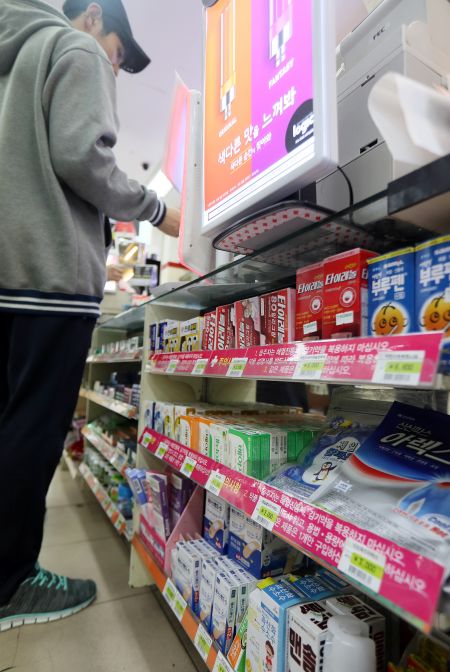
Additionally, civil society voices call for the expansion of convenience store safety over-the-counter medicine items, which have not changed for over 10 years. The Safety Over-the-Counter Medicine Citizen Network announced the results of a perception survey on March 30, emphasizing the need for item expansion and reorganization. In the survey of 1,000 people, 62.1% of respondents who had experience purchasing over-the-counter medicine at convenience stores said, "The number of items is insufficient and needs to be expanded." The citizen network argued, "At this point, with 10 years of accumulated data, if the item expansion and management system under the Pharmaceutical Affairs Act are reorganized, it could create a synergy effect that improves public convenience and reduces unnecessary socioeconomic costs."
However, strong opposition from the pharmacist community continues regarding medicine vending machines and the expansion of convenience store over-the-counter medicines, making the feasibility uncertain at present. The pharmacist community has consistently stated that these systems are forcibly operated under the pretext of alleviating public inconvenience in purchasing medicine and cannot be a fundamental solution. The association's consistent position is that only expanding the operation of public late-night pharmacies can protect both public convenience and safety.
© The Asia Business Daily(www.asiae.co.kr). All rights reserved.



















