The government has presented a semiconductor development policy direction that goes a step further from existing policies to achieve the status of a semiconductor superpower. This includes conducting a preliminary feasibility study worth approximately 1.4 trillion KRW to proactively secure semiconductor technology and providing 2.8 trillion KRW in policy financing to the semiconductor industry over the next five years.
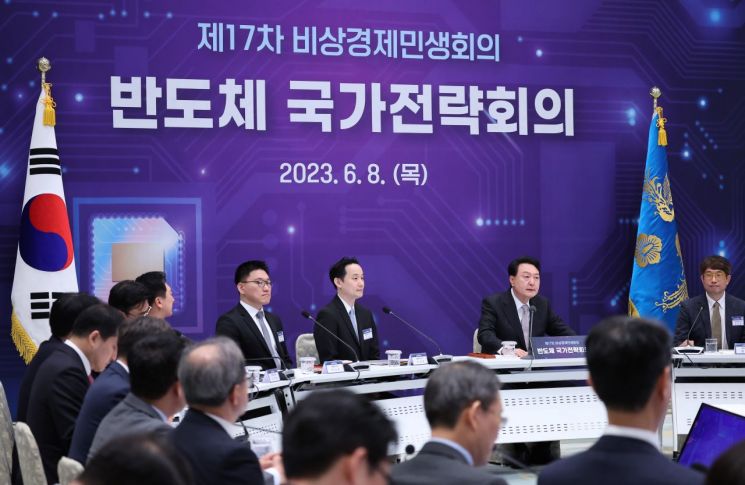
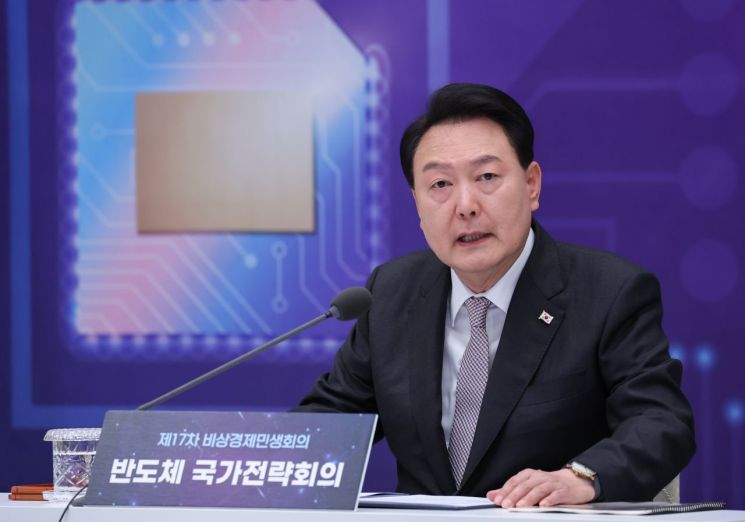
On the 8th, the Ministry of Trade, Industry and Energy discussed the future sustainability of memory's super-gap, strategies to secure competitiveness in system semiconductors, supply chain risk management, and technology and workforce acquisition measures at the National Semiconductor Strategy Meeting, and presented future policy directions for semiconductor development.
First, research and development (R&D) will be expanded to secure promising technologies such as PIM (Processing In Memory), power semiconductors, and advanced packaging. Specifically, from 2022 to 2028, a total of 400 billion KRW will be invested in R&D for PIM design technology and advanced materials, parts, and equipment (SoBuJang) technology development. While steadily progressing the next-generation intelligent semiconductor project, which started in 2020 and will cost a total of 1.0096 trillion KRW by 2029, a preliminary feasibility study worth about 1.4 trillion KRW will also be promoted to proactively secure promising semiconductor technologies such as power semiconductors, automotive semiconductors, and advanced packaging.
Additionally, beyond existing policies such as ▲increasing the tax credit rate (from 8% to 15%) ▲permit timeout system ▲special exceptions for floor area ratio relaxation, policy financing totaling 2.8 trillion KRW will be supported until 2027, starting with about 500 billion KRW this year, to help companies secure investment funds. This is to create an attractive semiconductor investment environment.
The semiconductor value chain centered on memory will be expanded to system semiconductors. To foster a collaborative ecosystem between fabless and foundry companies, as well as between device companies and SoBuJang companies, plans are in place to significantly expand prototype production support for fabless companies in consultation with domestic foundry companies. A semiconductor ecosystem fund worth 300 billion KRW to revitalize investment in SoBuJang and fabless companies will also be launched in the second half of the year.
Furthermore, to minimize supply chain risks, the Advanced Semiconductor Technology Center (ASTC), which will serve as a testbed for new technologies for SoBuJang localization and a forward base for nurturing excellent talent, will be established through a public-private partnership. International cooperation to secure semiconductor competitiveness will also be pursued. In particular, following President Yoon Suk-yeol’s visit to the United States in April, plans to concretize cooperation between the semiconductor technology centers being established by both countries (U.S. NSTC - Korea ASTC) will be advanced.
The number of specialized semiconductor universities (graduate schools) will be expanded to secure workforce, and demand-driven workforce training projects, in which companies and the government will invest 222.8 billion KRW over 10 years until 2032, will continue to be promoted. Core technology protection policies will also be strengthened through amendments to the Industrial Technology Protection Act.
Minister of Trade, Industry and Energy Lee Chang-yang, who attended the meeting, said, “Through this meeting, we have upgraded the previously announced semiconductor policies by comprehensively considering experts’ opinions and the rapidly changing semiconductor industry and technology policy environment. We will lead the leap to become a true semiconductor superpower.”
© The Asia Business Daily(www.asiae.co.kr). All rights reserved.


















