MFDS 'Wastewater-Based' Narcotics Investigation
Estimated Ecstasy Usage Also on the Rise
Recent investigations revealed that methamphetamine, a representative narcotic, was detected in 34 sewage treatment plants nationwide over the past three years. Other narcotics such as ecstasy and cocaine were also identified. This is evidence that drugs have already penetrated deeply into everyday life.
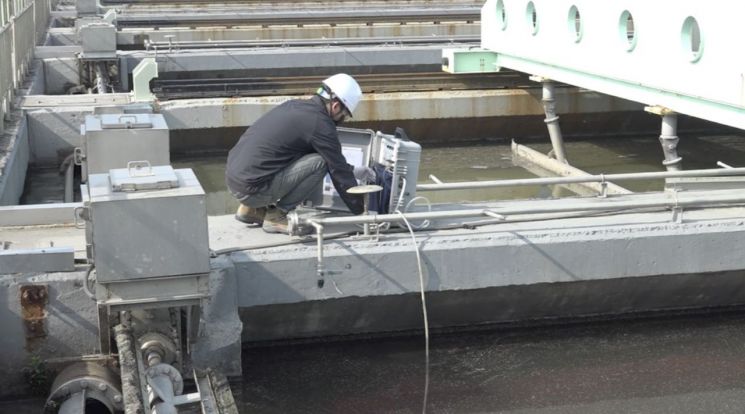 Collecting samples at a wastewater treatment plant to check for narcotics.
 [Photo by Ministry of Food and Drug Safety]
The Ministry of Food and Drug Safety announced on the 8th the results of the "Sewage Epidemiology-Based Illegal Drug Use Behavior" survey conducted from 2020 to 2022. Sewage epidemiology involves collecting samples from sewage treatment plants to analyze the types and amounts of residual narcotics, and measuring drug use per capita by considering sewage flow and the population within the sewage collection area. This method, which can identify the types of narcotics actually used beyond law enforcement detections, is also utilized in Europe, Australia, and other regions.
The Ministry selected sewage treatment plants covering at least one site per 17 metropolitan cities and provinces nationwide, encompassing more than 50% of the total population, to collect sewage samples. A total of 34 sewage treatment plants were selected continuously for three years. The survey targeted seven major illegal narcotics: methamphetamine, amphetamine, ecstasy, cocaine, LSD, methadone, and THC-COOH (a metabolite of cannabis).
As a result, among the 34 sewage treatment plants surveyed for three consecutive years, five out of the seven targeted illegal narcotics were detected at least once. Methamphetamine, a representative narcotic, was detected in all 34 sewage treatment plants. The estimated daily average usage per 1,000 people was approximately 20 mg. Methamphetamine is a powerful central nervous system stimulant that can cause side effects such as anxiety, insomnia, and aggression, and in severe cases, hallucinations, schizophrenia, and coma.
The estimated usage of ecstasy also showed an increasing trend. It rose annually from 1.71 mg in 2020 to 1.99 mg in 2021, and 2.58 mg last year. The number of sewage treatment plants where ecstasy was detected also increased from 19 to 27 during the same period. Additionally, cocaine was detected in seven sewage treatment plants, and LSD in six.
Regionally, estimated usage tended to be relatively high in port cities (Busan, Incheon, Ulsan) and large cities (Seoul, Busan, Daegu, Incheon, Gwangju, Daejeon, Ulsan, Gyeonggi). The region with the highest estimated methamphetamine usage was Incheon (50.82 mg), followed by Gyeonggi (31.52 mg), Gyeongnam (30.47 mg), and Busan (27.50 mg). Comparing port areas and other regions, the figures were 31.63 mg and 18.26 mg respectively, and comparing large cities and other regions, the figures were 26.52 mg and 13.14 mg respectively.
The Ministry of Food and Drug Safety plans to strengthen international cooperation to eradicate illegal narcotics by sharing these survey results with international organizations such as the European Monitoring Centre for Drugs and Drug Addiction (EMCDDA) and providing them to domestic law enforcement agencies. A ministry official stated, "We will effectively utilize this data for policy establishment in illegal drug prevention, education, and rehabilitation," adding, "We plan to continuously survey illegal drug use behavior through sewage at more sewage treatment plants in the future and analyze and announce the results."
© The Asia Business Daily(www.asiae.co.kr). All rights reserved.

















