Professor Kim Chan-hyuk of KAIST... Recipient of This Month's Science and Technology Person Award
Professor Kim Chan-hyuk of the Department of Biological Sciences at the Korea Advanced Institute of Science and Technology (KAIST) received the 'Scientist of the Month Award' for June for developing an Alzheimer's dementia treatment with a new mechanism of action.
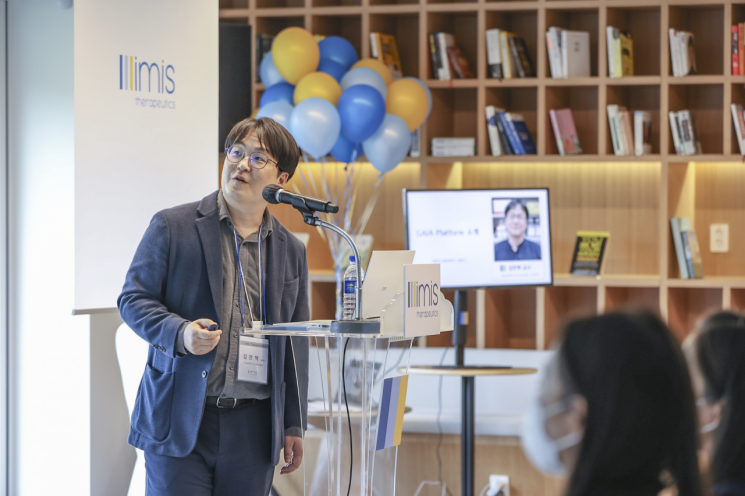 Professor Kim Chan-hyuk, Department of Biological Sciences, KAIST. Photo by Ministry of Science and ICT
The Ministry of Science and ICT and the National Research Foundation announced on the 7th that Professor Kim was selected as the recipient of the Scientist of the Month Award for June. Professor Kim was recognized for developing a novel Alzheimer's treatment using the patient's immune system, providing a breakthrough in the treatment of degenerative brain diseases and enhancing the status of Korean bio-pharmaceutical technology.
Alzheimer's disease is caused by abnormal accumulation of beta-amyloid peptides and tau protein tangles in the brain, which are known to cause synaptic damage, cytotoxicity, and adverse effects on nerve cells.
Recently, antibody therapies that remove beta-amyloid have been approved by the U.S. Food and Drug Administration (FDA). However, due to the nature of antibodies that eliminate pathogens through immune responses, inflammatory side effects in the brain have been induced, which may negatively impact cognitive function recovery, highlighting a limitation.
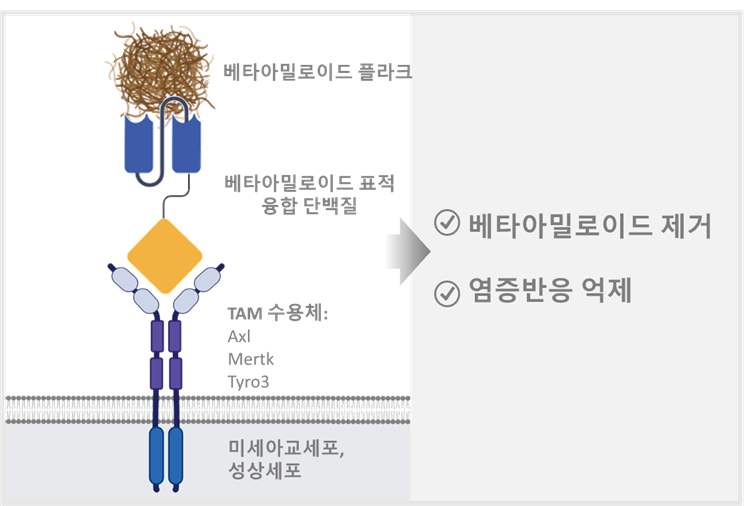 A new principle for treating Alzheimer's dementia discovered by the research team of Professor Kim Chan-hyuk from the Department of Biological Sciences at KAIST. Image source: Provided by the Ministry of Science and ICT
Professor Kim's research team found a clue to solving this problem in the phagocytosis process, where the body's cells continuously die and regenerate, and dead cells are removed. By artificially modifying the protein Gas6 involved in phagocytosis, they developed a new mechanism treatment that removes beta-amyloid instead of dead cells. Experimental results showed that the recombinant protein (anti-Abeta-Gas6) removed beta-amyloid without inflammatory responses and caused almost no side effects such as brain nerve cell death.
Additionally, in mouse model experiments, the recombinant protein was observed to significantly reduce the amount of beta-amyloid accumulated in the brain without inflammatory responses. Impaired cognitive ability and memory were restored to a higher level than with antibody therapy. These research results were published online in the international journal Nature Medicine in August last year.
© The Asia Business Daily(www.asiae.co.kr). All rights reserved.
!["The Woman Who Threw Herself into the Water Clutching a Stolen Dior Bag"...A Grotesque Success Story That Shakes the Korean Psyche [Slate]](https://cwcontent.asiae.co.kr/asiaresize/183/2026021902243444107_1771435474.jpg)

















