7th, 'KDI Focus, Measures to Address the Prolonged Pension Gap'
"Partial Pension System Needed to Allow Early Receipt of Some Basic Pension Amount"
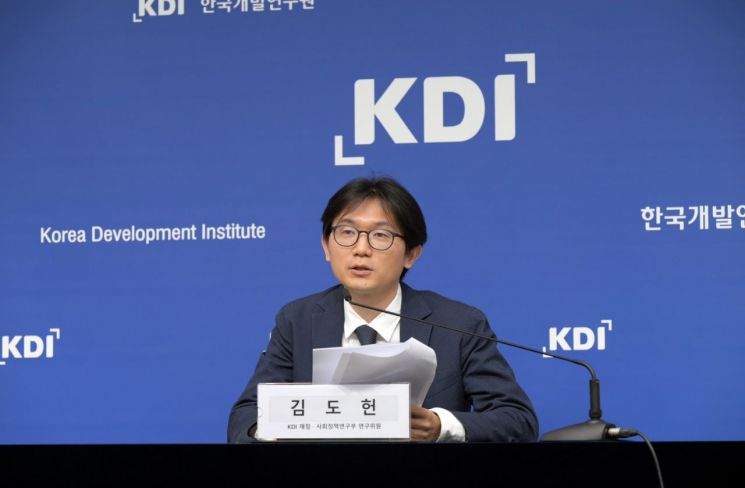
There has been a suggestion that a ‘partial pension system’ is needed as a countermeasure to the increase in the pension eligibility age. Partial pension allows early receipt of a portion of the basic pension amount. It has been found that many middle-aged individuals are coping with the pension gap period through employment, and it is diagnosed that measures should be taken to supplement the inevitable decrease in earned income.
On the 7th, the Korea Development Institute (KDI) released a report titled ‘KDI Focus: Countermeasures for the Lengthening Pension Gap Period’ and made this diagnosis. Korea gradually raised the pension eligibility age over 20 years from 2013 to 2033 as part of the 1998 pension reform, so that by 2033, individuals must be 65 years old to receive the old-age pension. Those born before 1953 can receive pensions from age 60, but those born between 1954 and 1956 can receive it at 61, those born between 1957 and 1960 at 62, those born between 1961 and 1964 at 63, those born between 1965 and 1968 at 64, and those born in 1969 or later can receive the National Pension from age 65. Due to the gap between the pension eligibility age and retirement age, the period without a stable income source, i.e., the pension non-receipt period, is lengthening.
During the pension gap period, middle-aged individuals are responding by increasing earned income. Researcher Kim Do-heon said, “Survey results show that households headed by those born in 1957 (who face a pension gap after retiring from the labor market at age 62) are coping with the gap through earned income, and no increase in poverty rates or decrease in consumption was observed.” However, he added, “According to previous studies, as people age, physical abilities decline and the probability of reemployment in the labor market decreases, so continuous monitoring of the increasing pension gap period (due to the ongoing rise in pension eligibility age) is necessary.”
He also suggested considering the introduction of a partial pension system. He said, “The partial pension system allows early receipt of a portion of the basic pension amount and can be used to supplement income losses when middle-aged individuals reduce working hours toward retirement or move to bridge jobs, which typically result in decreased earned income.” He added, “Such a system supports workers in choosing various work forms according to their physical abilities and preferences in the later stages of economic activity, thereby suppressing incentives for early retirement and helping them remain in the labor market until the pension eligibility age.”
From a corporate perspective, increasing flexibility in managing older workers during economic downturns or business difficulties can reduce labor cost burdens. He added, “Currently, Finland has been raising the pension eligibility age since 2017 and simultaneously introduced a partial pension system to support middle-aged workers in extending their employment with minimal or no income reduction until pension receipt.” Furthermore, he noted, “Considering that the baby boomer generation in Korea, now middle-aged, has higher educational enthusiasm and longer working years compared to previous generations, it is necessary to provide vocational development education suited to the new environment and to track long-term income trends.”
© The Asia Business Daily(www.asiae.co.kr). All rights reserved.

















