"Biden Changes Stance, Says China Strategy Is Correct"
Jamie Dimon, CEO of JPMorgan, stated that "the Biden administration is pursuing the right China strategy." This was a stance opposite to the recent public criticism he faced after visiting China and emphasizing the importance of the Chinese market, which was seen as weakening the anti-China coalition.
On the 6th (local time), Dimon met with reporters in front of the U.S. Capitol and said, "The Biden administration is focusing on national security and cooperating with allied countries and allied companies."
He mentioned senior officials of the Biden administration, including Secretary of State Antony Blinken, saying, "They are talking about the right things," and emphasized, "They are focusing on important national interests and national security such as rare earths and semiconductors, while also working to address (China's) unfair trade practices."
Dimon added, "The Biden administration is communicating with companies about the right way to avoid harming the U.S. and allied companies participating in China sanctions," and said that the China policy will be established on a bipartisan basis and through consultation with allies.
He continued, "It will take time and a lot of effort for the China policy to move in the right direction," but also expressed his belief that "the U.S. China policy should not be simply threatening."
Regarding growing geopolitical concerns ahead of Taiwan's presidential election in January next year, he avoided a direct answer. He replied, "I will leave questions about difficult foreign policies like the Taiwan issue to others."
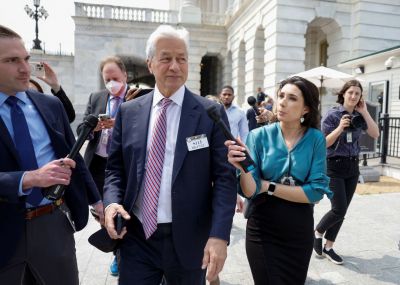
On the same day, Dimon held a private luncheon meeting with the New Democratic Coalition, composed of about 100 moderate Democratic House members, at the Capitol. At this meeting, he said that the U.S. should abolish the policy of setting the debt ceiling through congressional agreement, related to the recently resolved U.S. default crisis. He called the debt ceiling issue a "complete disaster" and urged reforms to prevent recurrence.
He also gave an optimistic assessment of the U.S. economic outlook. Even if the Federal Reserve (Fed) raises the benchmark interest rate by an additional 0.25 percentage points at the monetary policy meeting next week, he believed the impact on the U.S. economy would not be significant. However, he pointed out excessive fiscal spending, quantitative tightening, the Ukraine war, and energy issues as challenges to be addressed going forward.
Recently, Dimon visited China for the first time since the COVID-19 pandemic and emphasized the importance of the Chinese market, warning that "tensions between the U.S. and China are shaking the international order, making the business environment more complex than during the Cold War era." In response, some in the U.S. conservative camp harshly criticized him, saying he is "going against government policy" and "harming national security."
© The Asia Business Daily(www.asiae.co.kr). All rights reserved.

















