With the final acquittal of the executives and corporation operating the vehicle call service 'Tada' by the Supreme Court, attention is turning to whether conflicts involving other startup companies will enter a new phase.
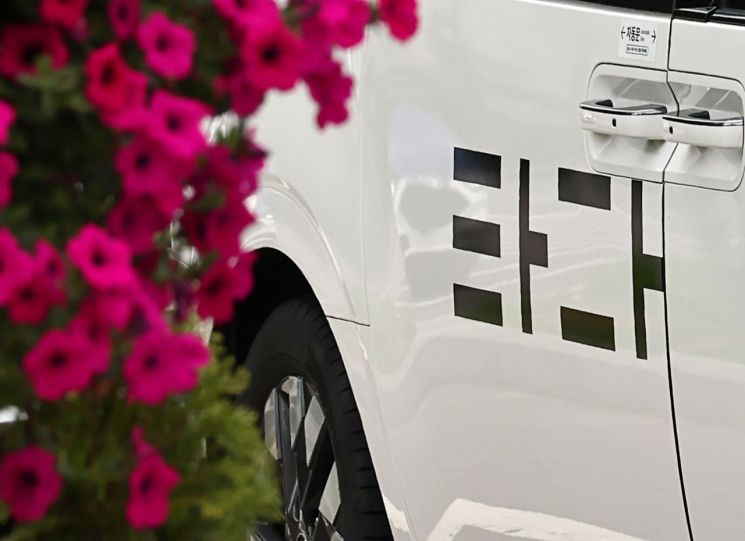
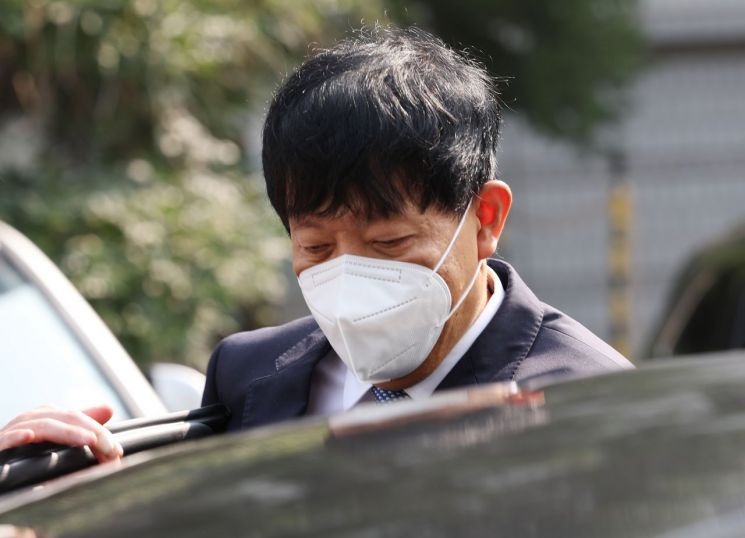
According to the legal community on the 4th, the Supreme Court's 3rd Division (Presiding Justice Oh Seok-jun) confirmed on the 1st the original acquittal verdict for former Socar CEO Lee Jae-woong and former VCNC CEO Park Jae-wook, who were indicted on charges of violating the Passenger Transport Service Act. The corporations Socar and VCNC, which were also tried together, were likewise acquitted.
The Supreme Court judged that the original ruling, which found it difficult to view Tada Basic service as 'illegal call taxi operations' prohibited under the former Passenger Transport Service Act, was not mistaken.
Tada Basic is a service that allows users to rent an 11-seater van with a driver through a smartphone application, and it has been operating since October 2018. The taxi industry opposed Tada, labeling it as an 'illegal call taxi,' and the prosecution accepted this claim, indicting former CEOs Lee and Park without detention in October 2019.
However, the first and second trials determined that Tada's service, which rented vans to specific customers who joined as members and made reservations in advance with driver arrangements, differed from 'paid passenger transport' that involves transporting unspecified passengers by vehicle. The latter is prohibited under Article 34 of the former Passenger Transport Service Act, but Tada was found not to fall under this category.
Furthermore, regarding Socar, which provided the platform for Tada service users, drafted contracts, and handled payments and settlements, the court considered it as a "short-term lease contract." Accordingly, Tada was deemed subject to the exception clause in Enforcement Decree Article 18 of the Passenger Transport Service Act Article 34, which permits driver arrangements for those renting vans with 11 to 15 seats. Ultimately, Tada was recognized not as an 'illegal call taxi' but as a 'rental car service with a driver.' This ruling is interpreted as acknowledging it as a legitimate innovative business.
Following the verdict, the startup community has described it as a "wake-up call ruling." There are voices of welcome that the court has condemned the misguided choices of the political sphere and investigative authorities that blocked Tada's innovative service attempts. It is also expected that this ruling will have a considerable impact on other startups currently in conflict with existing industries beyond Tada.
A representative example of startups currently in conflict, like Tada, is Law&Company, which operates the legal service platform 'Lotoc.' Law&Company is clashing with the Korean Bar Association. Although it received rulings from the Constitutional Court and the Fair Trade Commission in May last year and February this year, related lawsuits have continued for a long time, and industry pressure persists, reportedly leading Lotoc to a state of business deterioration. Additionally, Jarvis & Villains, which operates the tax refund service 'SamzzumSam,' is in conflict with the Korean Association of Tax Accountants; Healing Paper, which runs the plastic surgery information platform 'Gangnam Unni,' with the Korean Medical Association; and Zigbang, a real estate brokerage service platform, with the Korea Association of Realtors. Recently, non-face-to-face medical platforms such as 'Doctor Now' and 'Goodoc' have also been clashing with the Korean Medical Association and the Korean Pharmaceutical Association.
The content of the ruling itself appears to be favorable to startup companies. However, there are also considerable concerns that, despite receiving acquittals, institutional regulations such as prohibitive laws may arise, making it impossible to continue operations, resulting in 'second victims' like Tada.
On the day the Supreme Court ruling was announced, former CEO Lee Jae-woong posted on his social media account, "It has been finally confirmed by the Supreme Court that innovation is not a crime," emphasizing, "Although my innovation has stopped, innovation that creates new jobs and increases public convenience is essential and must continue in our society." He added, "I hope this ruling becomes an opportunity for the next generation and junior innovators to overcome resistance from vested interests and to muster strength and courage to create innovations that are truly necessary for society."
© The Asia Business Daily(www.asiae.co.kr). All rights reserved.


















