Unable to Repay Bonds at Maturity... 'Roll Over' with Other Bonds
Fiscal Strain Worsens Due to Increased Quarantine Costs from 'Zero Corona' Policy
This year, bonds issued by Chinese local governments for refinancing purposes to repay maturing debts increased by 47% compared to last year.
According to the Chinese economic newspaper Caijing on the 2nd, the total amount of local government bonds issued from the beginning of this year until last month reached 3.5 trillion yuan (645 trillion won), a 6.6% increase compared to the same period last year.
Among these, new bonds amounted to 2.26 trillion yuan (417 trillion won), a 7.8% decrease compared to the same period last year, but refinancing bonds reached 1.28 trillion yuan (approximately 236 trillion won), a significant 47% increase. Refinancing bonds are newly issued bonds to repay the principal of maturing bonds. They cannot be used for other purposes such as infrastructure construction.
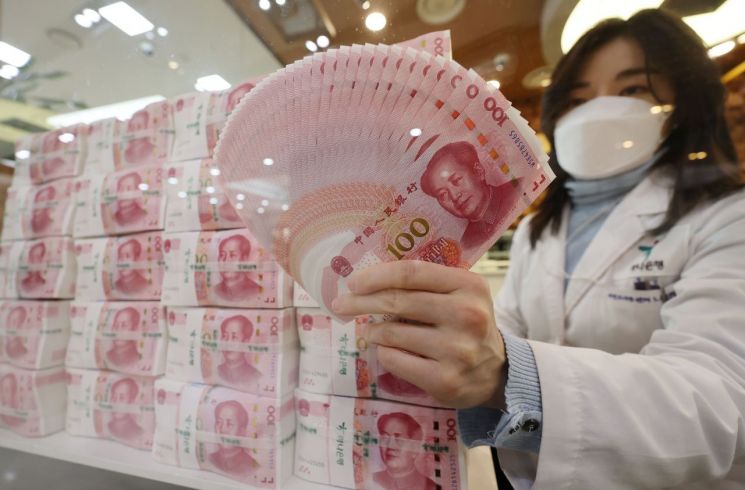
Caijing reported, "The reason for the sharp increase in refinancing bonds is that local governments struggling with fiscal deficits do not have the financial capacity to repay the principal of maturing debts."
The financial situation of Chinese local governments is worsening. As of April, the average remaining maturity of bonds issued by local governments was 8.8 years, double the 4.4 years recorded five years ago in April 2018. This indicates an increasing debt burden on local governments.
Financial experts predict that the issuance of refinancing bonds will increase further this year. According to Anxin Securities Research Center, even in five provinces considered to have high economic development?Guangdong, Shandong, Jiangsu, Sichuan, and Hebei?the amount of local bonds issued from January to May this year exceeded 200 billion yuan (36.9 trillion won).
This fiscal difficulty appears to have worsened due to the COVID-19 pandemic. Local governments suffered financial strain as they poured enormous amounts into epidemic prevention costs to maintain the 'zero COVID' policy.
Last year, China’s fiscal deficit reached 8.96 trillion yuan (approximately 1,652 trillion won), marking a record high.
© The Asia Business Daily(www.asiae.co.kr). All rights reserved.
![Clutching a Stolen Dior Bag, Saying "I Hate Being Poor but Real"... The Grotesque Con of a "Human Knockoff" [Slate]](https://cwcontent.asiae.co.kr/asiaresize/183/2026021902243444107_1771435474.jpg)
















