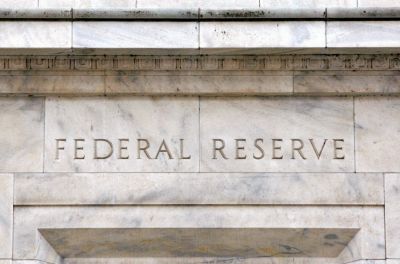
Additional indicators suggesting that the labor market remains resilient despite over a year of tightening by the U.S. Federal Reserve (Fed) have emerged. With opinions divided between further rate hikes and a pause, the Fed's deliberations ahead of this month's Federal Open Market Committee (FOMC) regular meeting are expected to deepen.
According to private employment data firm Automatic Data Processing (ADP) on the 1st (local time), private sector employment in May increased by 278,000 jobs compared to the previous month. Although this is a slowdown from the revised figure of 291,000 jobs in the previous month, it far exceeds the market forecast of 170,000 jobs.
By sector, the leisure and hospitality industry saw an increase of as many as 208,000 jobs. The mining and construction sectors also grew by 94,000 and 64,000 jobs respectively. On the other hand, job losses were confirmed in manufacturing (-48,000 jobs) and finance (-35,000 jobs). Additionally, wage growth eased slightly to 6.5% compared to the previous month, down from 6.7% in April.
Since the ADP private employment figures far exceeded Wall Street expectations, there is analysis that the May employment report to be released the following day could also show strong results. ADP private employment typically serves as a leading indicator to gauge the trend of the May employment report.
The weekly initial jobless claims released on the same day recorded 232,000, an increase of 2,000 from the previous week. This slightly undershot the Wall Street forecast of 235,000 and remained historically low. Continued jobless claims, which count those applying for unemployment benefits for at least two consecutive weeks, rose by 6,000 to 1.8 million.
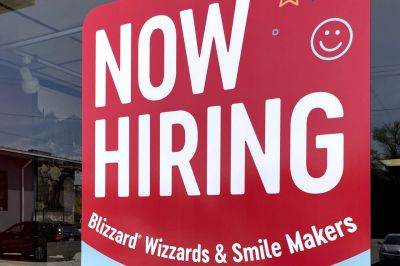
These indicators suggest that the overall labor market remains robust despite the Fed's aggressive tightening. The Job Openings and Labor Turnover Survey (JOLTs) released the previous morning also showed that U.S. job openings in April reached 10.1 million, surpassing market expectations. Since the Fed has cited both inflation and labor market overheating as reasons for further tightening, if the employment report and other data released the following day again exceed expectations, the Fed's tightening outlook is likely to strengthen once more.
Having raised the U.S. benchmark interest rate to 5.0-5.25% through 10 consecutive hikes since March last year, the Fed is preparing for the FOMC regular meeting on June 13-14. Initially, right after last month's FOMC, a rate pause in June was the prevailing view, but policy uncertainty has increased. Even within the Fed, there is a split between hawks (favoring monetary tightening) who argue for continued hikes due to persistent inflation and labor market overheating, and doves (favoring monetary easing) who believe it is time to pause rate hikes and assess the cumulative effects amid concerns about a future recession.
Currently, market expectations favor a pause. This is interpreted as a result of statements made the previous day by Board member Philip Jefferson and Patrick Harker, President of the Federal Reserve Bank of Philadelphia, suggesting the possibility of a June pause. According to the Chicago Mercantile Exchange (CME) FedWatch tool, federal funds futures currently price in about a 72% chance that the Fed will hold rates steady this month. In contrast, the probability of an additional 0.25 percentage point hike stands at around 27%.
The key will be the upcoming data. The Fed is expected to closely monitor indicators and deliberate until just before the FOMC meeting. Harker, who stated his support for a pause the previous day, also added that the employment report released this Friday and the Consumer Price Index (CPI) announced on the first day of the June FOMC will be important, leaving the door open for further tightening depending on the data.
© The Asia Business Daily(www.asiae.co.kr). All rights reserved.
!["The Woman Who Threw Herself into the Water Clutching a Stolen Dior Bag"...A Grotesque Success Story That Shakes the Korean Psyche [Slate]](https://cwcontent.asiae.co.kr/asiaresize/183/2026021902243444107_1771435474.jpg)

















