The Democratic Party's Coin Investigation TF and Civic Groups' Advancement Special Committee
Expand 2030 Outreach and Strengthen Support Base
Opposition Focuses on Securing Representation for the Working Class and Socially Vulnerable
The ruling and opposition parties are continuously launching special committees (special committees) and task forces (TFs) in response to issues that clearly show partisan confrontation. As the general election approaches next year, it is analyzed that they are actively trying to consolidate their support base while aggressively seizing issues to expand their outreach.
According to political circles on the 2nd, since Kim Gi-hyeon took office as the leader of the People Power Party in March this year, a total of eight special committees and TFs have been formed within the party. They have covered a wide range of issues, from livelihood issues such as countermeasures against jeonse fraud to the coin allegations involving lawmaker Kim Nam-guk. It is interpreted that the special committees are compensating for the physical limitation of weak legislative momentum due to the 'minority ruling party' situation.
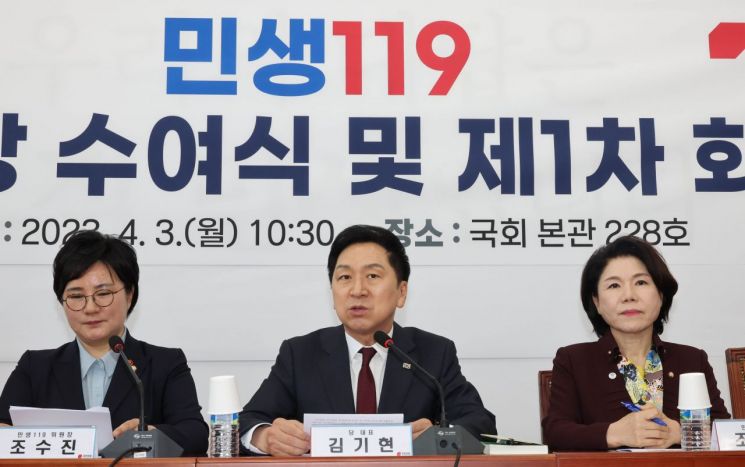
People Power Party Forms 8 Special Committees Within 2 Months of Kim Gi-hyeon’s Inauguration
The first special committee formed under Kim’s leadership was 'Livelihood 119.' Regarding the launch of Livelihood 119, Kim said, "This is not a simple one-time show, but a special committee that will produce concrete results (March 20)," emphasizing the party’s path as a 'livelihood party.' Productive party conflict is about 'livelihood,' and they intend to deliver visible achievements to fulfill the ruling party’s responsibilities.
Livelihood 119 is composed of three subcommittees: the Rural Livelihood Subcommittee, the Local Economy and Small Business Livelihood Subcommittee, and the Real Estate Finance Subcommittee. These subcommittees review the feasibility of policies from a legislative and institutional perspective. Their first tasks included launching a campaign to send bottled water to island regions, discussing energy support measures for small business owners, improving regulations related to convenience store cigarette advertisements, and holding meetings on youth drug addiction countermeasures. Recently, they have sought ways to protect financially vulnerable groups suffering from living difficulties from illegal private loans by raising the small livelihood loan limit from the current 1 million won to 2 million won and lowering interest rates to the 10% range.
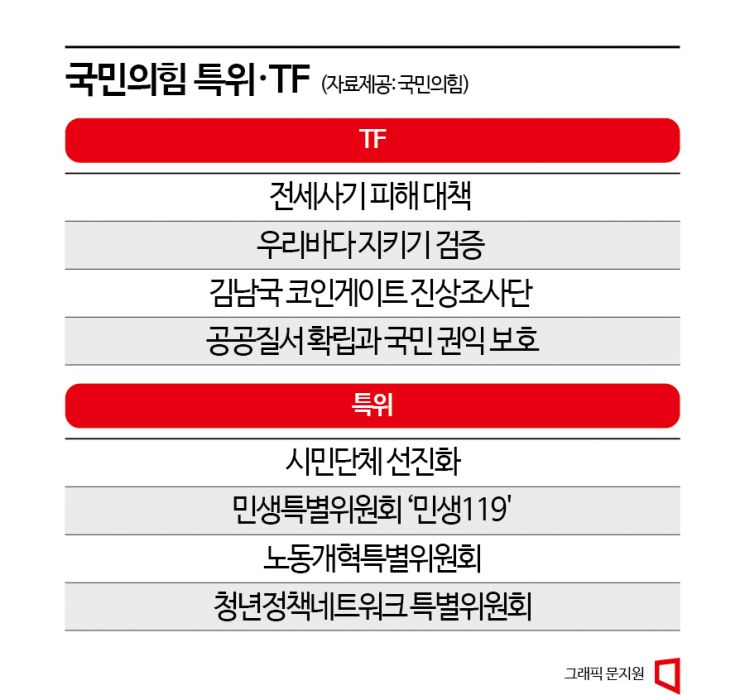
In addition, the People Power Party is actively seizing issues by operating four TFs, including countermeasures against jeonse fraud, verification of protecting our seas, and an investigative team on the Kim Nam-guk coin gate, as well as four special committees such as the Advancement of Civic Groups, the Labor Reform Special Committee, and the Youth Policy Network.
Democratic Party Operating 26 Special Committees and Task Forces
The Democratic Party has also focused on operating special committees and TFs since Lee Jae-myung took office as leader. According to the Democratic Party, there are currently a total of 26 special committees and TFs within the party.
Starting with the Political Innovation Committee, which put 'political reform' at the forefront earlier this year, they have successively launched committees such as the Ultra-Low Birthrate and Population Crisis Countermeasures Committee, the Science and Technology Innovation Special Committee, and the Countermeasures Committee for Japan’s Humiliating Diplomacy. Recently, they established the Fukushima Nuclear Wastewater Marine Dumping Prevention Committee and the Jeonse Fraud Countermeasures Special Committee related to jeonse fraud.
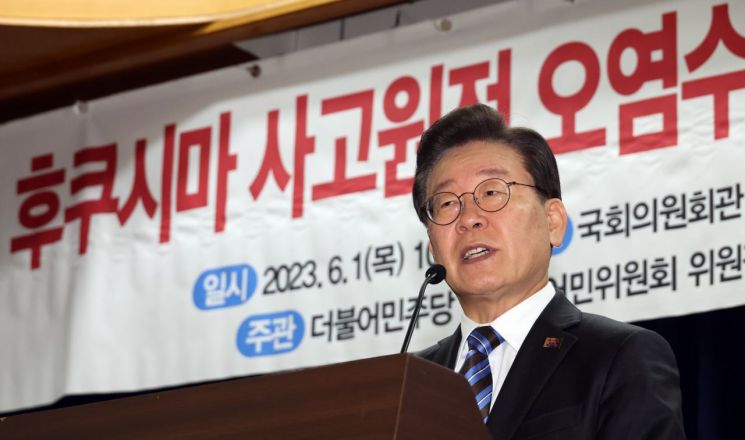
With as many as 20 ad hoc special committees, overlapping activities sometimes occur. The Democratic Party launched the Economic Crisis Response Center (ECC) criticizing the Yoon Seok-yeol administration’s complacent economic perception, but the party already operates the Livelihood Economy Crisis Countermeasures Committee chaired by lawmaker Kim Tae-nyeon. There are also overlaps in activities related to Japan’s Fukushima nuclear wastewater discharge. The Marine Fisheries Special Committee previously condemned this issue, and the recently launched Fukushima Nuclear Wastewater Marine Dumping Prevention Committee is further specifying responses. Additionally, there are opinions to create a 'verification special committee' at the National Assembly level.
Song Ki-heon, the floor deputy leader, proposed the establishment of a 'Fukushima Nuclear Wastewater Discharge Prevention and Verification Special Committee' at a policy coordination meeting the day before, saying, "We must end the public’s anxiety through all possible means in the National Assembly to protect the lives and safety of the people from Fukushima wastewater." After forming the special committee, they plan to hold a National Assembly hearing to objectively verify the information brought by the inspection team. He added, "We will organize verification and special committees centered on standing committees such as the Agriculture, Food, Rural Affairs Committee and the Environment and Labor Committee to respond."
Special Committees Formed According to Issues... Also Criticized as 'For Consolidation'
The problem is that these special committees are formed according to issues and tend to be one-off activities, which can be perceived as 'for party conflict' or 'for consolidating core support bases' by both parties. For example, in the Democratic Party, the frequency of launching special committees and TFs increased from February when Lee Jae-myung’s judicial risks began in earnest, such as the 'Kim Geon-hee Stock Price Manipulation Allegation Investigation TF (February 1),' the 'Kim Gi-hyeon Land Speculation and Local Construction Corruption Allegation Investigation TF (February 26),' and the 'Jeong Soon-shin Personnel Disaster Investigation TF (March 7).'
The Countermeasures Committee for Japan’s Humiliating Diplomacy, formed amid criticism of the government’s announcement of a 'third-party compensation plan' for forced labor victims during the Japanese colonial period, and the Marine Fisheries Special Committee, launched to condemn Japan’s Fukushima nuclear wastewater discharge, are explained in the same context.
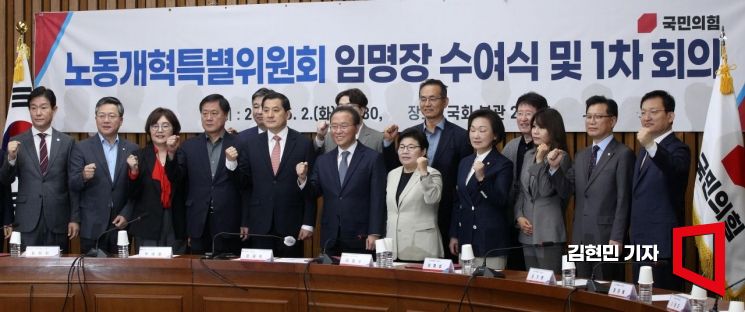 Yoon Jae-ok, floor leader of the People Power Party, is taking a commemorative photo with the appointed committee members at the appointment certificate ceremony and the first meeting of the Special Committee on Labor Reform held at the National Assembly on the 2nd. Photo by Kim Hyun-min kimhyun81@
The People Power Party is no different. Last month, the 'Advancement of Civic Groups' special committee chaired by three-term lawmaker Ha Tae-kyung was launched. This elevated the 'Civic Group Normalization Task Force,' which was established to inspect the operation status of civic groups receiving government subsidies and public donations, to a special committee. The reason is to comprehensively check the situation after controversies arose, such as civic groups supporting forced labor victims demanding part of the compensation from bereaved families. Some criticize that launching a TF to inspect subsidy operations of civic groups following the Labor Reform Special Committee stirs social conflicts by the ruling party. However, despite such criticism, operating special committees and TFs according to issues is understood as an attempt to target votes with issues that can consolidate traditional support bases while expanding outreach through livelihood issues.
Um Kyung-young, director of the Era Spirit Research Institute, analyzed, "With the general election just 10 months away, both parties are setting their own strategic goals and moving accordingly." Um said, "While the Democratic Party is focusing on securing representation for the common people and socially vulnerable groups, the People Power Party seems to be targeting the 2030 generation," referring to the recently launched Advancement of Civic Groups special committee and the Labor Reform Special Committee. He added, "Since the core base related to labor unions and civic groups is in the 40s and 50s age group, focusing on this is interpreted as a strategic measure to secure representation for the 2030 generation."
© The Asia Business Daily(www.asiae.co.kr). All rights reserved.



















