'2022 Survey on Economic Activities of Women with Career Interruptions'
6 out of 10 Women with Career Interruptions Are in Their 30s... "No Alternative for Care"
It was found that 4 out of 10 women in South Korea have experienced career interruption. The average period until reemployment was found to be 8.9 years.
The Ministry of Gender Equality and Family announced the results of the '2022 Survey on the Economic Activities of Women with Career Interruptions' conducted on 8,521 women aged 25 to 54 on the 1st. This survey is a nationally approved statistic submitted every three years under the Act on Women with Career Interruptions.
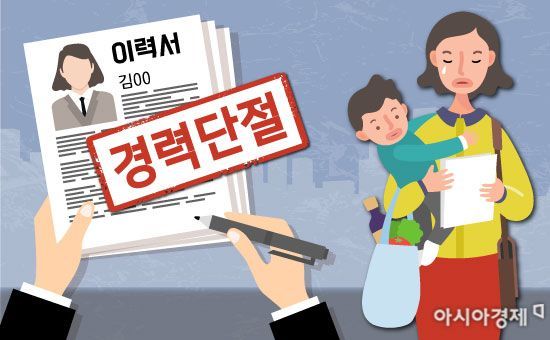
Among women aged 25 to 54, 42.6% reported having experienced career interruption at least once. This is an increase of 7.6 percentage points compared to the 2019 survey (35.0%) conducted before the COVID-19 pandemic.
The time taken to regain employment after career interruption also increased by about one year from 7.8 years three years ago to 8.9 years. The average age at first experience of career interruption was 29.0 years (28.4 years in 2019).
Among women who quit their jobs from March 2020, during the COVID-19 period, to the survey period from August to October 2022, 65.6% were in their 30s. At the time of quitting, 53.9% were employed in service industries with many face-to-face tasks.
As a direct reason for leaving the workplace, about half cited 'lack of response measures in urgent childcare situations' (49.8%). This means there was no one to take care of children staying at home due to online classes in situations where remote work was not possible.
Jobs newly obtained after career interruption were found to have lower wages and employment stability compared to previous jobs.
The proportion of workers in businesses with 1 to 4 employees before career interruption was 20.9%, but this proportion nearly doubled to 45.7% after career interruption. The proportion of workers in businesses with 5 or more employees decreased across the board.
Looking at the status of the first job after career interruption, the number of office workers, professionals, regular employees, and full-time jobs decreased, while sales and service jobs, temporary workers, self-employed, and part-time jobs increased. The average weekly working hours also decreased by 4.3 hours.
The monthly wage for the first job after career interruption (2,143,000 KRW) was 84.5% of the wage before career interruption (2,537,000 KRW), and the current wage of women who experienced career interruption was 84.2% of that of women who did not experience career interruption. This indicates that career interruption causes wage gaps.
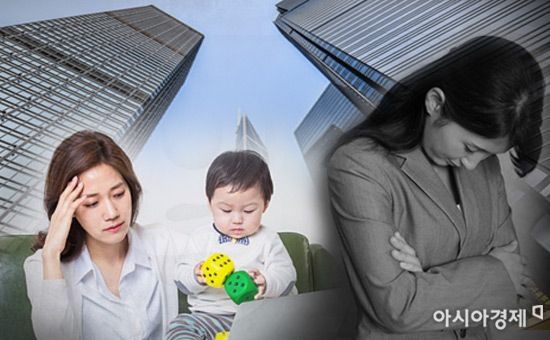
As the phenomenon of career interruption deepened, the utilization of work-family balance systems also increased.
Among women working at workplaces equipped with work-family balance systems, 22.5% worked remotely or from home during career interruption (an increase of 8.7 percentage points), 28.5% used the reduced working hours system during pregnancy (an increase of 2.8 percentage points), 21.1% used the reduced working hours system during childcare (an increase of 2.0 percentage points), and 54.3% returned to work after using parental leave (an increase of 11.1 percentage points) compared to 2019.
The reasons for not returning to work after using parental leave were reported as difficulties in balancing child-rearing and work (39.9%), lack of trusted caregivers (29.7%), and lack of trusted facilities (10.7%), in that order.
Dr. Oh Eun-jin, the lead researcher at the Korean Women's Development Institute, said, "If both men and women do not use work-family balance systems, no matter how good the system is, it will be impossible to prevent women's career interruption."
With labor shortages due to foreign workers and demographic changes, the difficulty in finding jobs has been somewhat alleviated.
Active job-seeking activities to find the first job after career interruption increased by 6.0 percentage points to 38.6% compared to 2019, and the average job-seeking period shortened by 5.5 months to 11 months compared to 2019.
The main purpose of job seeking was to supplement living expenses (39.2%), followed by supporting children's education expenses (24.2%), self-realization and self-development (15.8%), and livelihood responsibility (12.3%). Compared to 2019, the proportion seeking to supplement living expenses decreased by 7.0 percentage points, while support for children's education expenses increased by 7.0 percentage points.
The reasons for being able to continue their careers despite the risk of career interruption were family members' childcare support (43.2%), the belief that the work has future development despite current difficulties (30.7%), and a workplace culture that allows balancing work and childcare (11.6%), in that order.
The difficulties faced when reemployed were lack of job information (16.8%), lack of confidence in social adaptation (13.9%), and lack of job experience and career (13.5%), in that order.
By age group, women aged 25 to 34 cited a lack of jobs with desired working conditions other than wages, those aged 35 to 44 cited lack of time for job seeking due to child-rearing, and those aged 45 to 54 cited lack of confidence and job experience or career as difficulties.
Among women not working at the time of the survey, the most requested was 'expansion of quality part-time jobs' (38.1%), while employed women most requested 'expansion of reliable childcare facilities' (35.6%).
© The Asia Business Daily(www.asiae.co.kr). All rights reserved.
















