Legislative Notice on the Amendment for Improvement of Retirement Pension Operation Regulations
The Financial Services Commission will announce a legislative notice for the improvement plan of the 'Retirement Pension Supervision Regulations' by the 2nd of next month. This improvement plan includes rationalizing operational regulations for each retirement pension system and enabling retirees to receive their retirement pensions in the form of annuities rather than lump sums. Furthermore, it contains measures to strengthen the regulation of unhealthy business practices by operators.
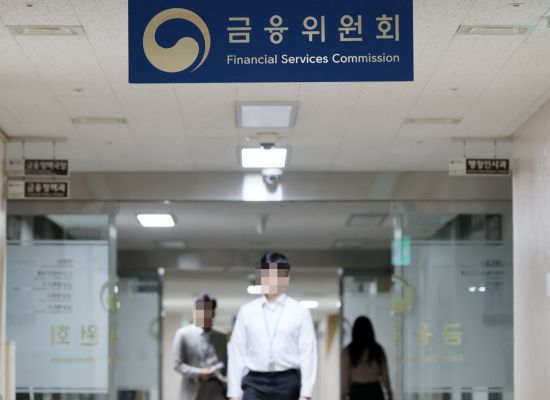 On the 9th, officials were busy moving in the corridor of the Financial Services Commission at the Government Seoul Office in Jongno-gu, Seoul, where financial authorities decided to include mortgage loans (Judaemae) in the 'debt refinancing' infrastructure set to launch in May by the end of the year. Financial authorities explained that the purpose is to reduce the interest burden on mortgage loans by establishing a debt refinancing platform that allows users to compare financial sector loan interest rates at a glance and switch loans easily. Photo by Dongju Yoon doso7@
First, the Financial Services Commission plans to rationalize conflict of interest regulations for defined contribution (DC) and individual retirement pension (IRP) plans, which are directly managed by workers. For example, if employee B of A Automobile Company was previously limited to investing only 10% of their IRP account in corporate bonds issued by company A due to conflict of interest regulations, this limit will now increase to 30%. Considering that DC plans are not completely free from operator influence, the limit is set at 20%. For defined benefit (DB) plans, since the employer directly manages the funds, the inclusion of securities issued by affiliated companies has been restricted.
In DB plans, the limit for investing in special bonds issued by the same issuer and local government bonds will be raised from the current 30% of the reserve fund to 50%. This is based on the judgment that it is important to match the cash flows of future retirement benefits to be paid and the retirement pension reserve funds, as the level of retirement benefits payable to workers is predetermined. Youngho Ko, Director of Asset Management at the Financial Services Commission, explained, “In major pension-advanced countries such as the U.S. and the U.K., DB-type retirement pensions include nearly 50% bonds and operate based on Asset Liability Management (ALM), but in Korea, the focus has been on insurance products and equity-linked bonds (ELB) that guarantee principal and interest. This measure will enable the inclusion of high-quality long-term bonds to utilize ALM operation strategies.”
Additionally, the range of products eligible for 100% investment of retirement pension reserves will be expanded. Currently, only 'principal-guaranteed products' and 'products with reduced investment risk' under the Enforcement Decree of the Worker Retirement Benefit Guarantee Act are allowed to invest 100% of the reserves. Going forward, the scope of products with reduced investment risk will include ▲overnight repurchase agreements (repos) secured by government bonds and monetary stabilization bonds, and ▲short-term money market funds (MMFs). The stock inclusion limit in bond-mixed funds will also be raised from the current 40% to less than 50%.
In IRP, a ‘guaranteed-type variable insurance’ will be introduced to allow retired workers to withdraw their reserves in the form of annuities. This is because many retirees currently receive their retirement pensions as lump sums, with only 7.1% receiving them as annuities. Director Ko stated, “It is important to have a steady cash inflow during retirement, so policy incentives are needed to encourage workers to receive pensions in annuity form. The concept is to operate the paid insurance premiums as variable products, and if operational profits occur, to pay additional annuities based on performance.” Even if operational losses occur, a minimum level is guaranteed to ensure a certain amount. Unlike similar variable annuities, no administrative fees are charged, and fees are lower than those for variable insurance.
Unhealthy business practices in the principal-guaranteed product market will also be reformed. Disclosure obligations, which previously applied only to retirement pension operators, will now also apply to non-retirement pension operators (those who only sell products) for principal-guaranteed products. According to the improvement plan, non-retirement pension operators must disclose the interest rates applicable from the following month at least three business days before the 1st of each month.
The provision of disguised high-interest principal-guaranteed products using fees will also be prohibited. Until now, some retirement pension operators have used fees as subsidies to create high-interest deposits and provided them exclusively to some large corporations’ DB-type retirement pensions. However, since these products are offered only to certain companies and the returns accrue to the employer rather than the worker, such practices will be banned going forward.
Regulations related to ELBs will also be strengthened. Some securities firms have used ELBs to evade principal-guaranteed product regulations, effectively providing principal-guaranteed products that are not classified as such under supervisory regulations. Currently, if a product is classified as a principal-guaranteed product under supervisory regulations, disclosure obligations, fee prohibitions, and restrictions on selling proprietary products apply. Accordingly, private placement derivative-linked bonds will be completely banned, and principal-guaranteed derivative-linked bonds will be subject to the same regulations as principal-guaranteed products.
The Financial Services Commission will collect opinions on the amendment until the 2nd of next month and, after resolutions by the Securities and Futures Commission and the Financial Services Commission, plans to implement the improvement plan in the third quarter.
© The Asia Business Daily(www.asiae.co.kr). All rights reserved.

















