Remarks suggesting a 'June rate pause' have come from officials including Philip Jefferson, nominated as Vice Chair of the U.S. Federal Reserve (Fed), and Patrick Harker, President of the Philadelphia Federal Reserve Bank. The Fed's economic report, the 'Beige Book,' also diagnosed signs of cooling as U.S. employment and inflation slightly eased over recent weeks. Amid growing uncertainty surrounding the monetary policy path, market expectations for a rate pause have surged sharply.
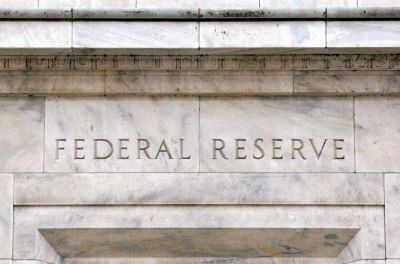
At a conference held in Washington DC on the 31st (local time), Director Jefferson stated, "The decision to keep policy rates steady at the upcoming meeting should not be interpreted as having reached the peak rate in this tightening cycle." He explained, "Skipping a rate hike at the upcoming meeting (June FOMC) will allow us to review more data before making a decision on further policy firming."
Harker, who holds a voting right at this year's FOMC, also supported a rate pause in a speech on the same day. He said, "We are really thinking about skipping (a rate hike)," adding, "We need to reach a point where we believe monetary policy is restrictive, and even if not right now, we are close to that point." This is interpreted as meaning that after more than a year of high-intensity tightening, it is time to pause and assess the effects of the policy. Since March last year, the Fed has raised the U.S. benchmark interest rate ten consecutive times, bringing it to 5.0?5.25%.
Accordingly, market expectations for a pause at the June FOMC have risen sharply. According to the Chicago Mercantile Exchange (CME) FedWatch, the federal funds futures market currently reflects about a 72% chance that the Fed will hold rates steady in June. This is a sharp rise from the 33% level seen just earlier that morning and the previous day. Conversely, expectations for an additional 0.25 percentage point hike have dropped from the mid-60% range to around 27%.
The key lies in upcoming economic indicators. Even within the Fed, there is a division of opinion over whether to raise rates further in June or to pause. Harker, who has expressed a stance in favor of a pause, added that the employment report to be released this Friday and the Consumer Price Index (CPI) announced on the first day of the June FOMC will be important, leaving room for further tightening depending on the data.
Persistently high inflation remains a concern. On this day, Fed Governor Michelle Bowman mentioned the rebound in the U.S. housing market, reiterating inflation worries. The background to recent hawkish remarks, including those by James Bullard, President of the St. Louis Fed, calling for two more hikes this year, is the presence of high inflation.
Since the Fed has cited inflation and labor market overheating as reasons for further tightening, if upcoming reports such as this week's employment data exceed expectations, the Fed's tightening outlook is likely to strengthen again. According to the Job Openings and Labor Turnover Survey (JOLTs) released this morning, job openings in April reached 10.1 million, surpassing market forecasts. The Personal Consumption Expenditures (PCE) price index announced last week also recorded a larger-than-expected increase.
However, the Beige Book released this afternoon included a diagnosis that U.S. employment and inflation have slightly eased over recent weeks, showing signs of cooling. The Beige Book stated, "Employment increased at a slower pace than in the previous report in most districts," and "Prices also rose at a slower rate in many districts." It also reported that many companies are halting hiring or reducing staff due to growing uncertainty about economic prospects.
This assessment covers economic conditions from late April to May 22 across 12 Federal Reserve districts and will be used as foundational material at the June FOMC regular meeting. The Beige Book evaluated that there has been little change in overall economic activity in the U.S. over recent weeks. Four districts saw slight increases in economic activity, six districts saw no change, and two districts experienced slight declines.
© The Asia Business Daily(www.asiae.co.kr). All rights reserved.
![From Bar Hostess to Organ Seller to High Society... The Grotesque Con of a "Human Counterfeit" [Slate]](https://cwcontent.asiae.co.kr/asiaresize/183/2026021902243444107_1771435474.jpg)
















