"China’s era of rapid growth is over."
The optimistic outlook on China, which was expected to serve as a catalyst for global economic recovery, is fading. More than five months have passed since the end of the zero-COVID policy, but the Chinese economy has yet to regain the pre-pandemic level of economic vitality, instead exposing fundamental and structural problems that have accumulated over several years.
The U.S. Wall Street Journal (WSJ) highlighted these issues and their causes in an online article on the 30th (local time), stating that "China’s economy is facing serious and structural problems." WSJ pointed out that China’s rapid annual growth rate of 6-8% has halted, and a low growth rate of 2-3% is becoming entrenched, citing soaring government debt, sluggish consumer recovery, and trade tensions with the U.S. as the main reasons.
Alongside the U.S., China is one of the two pillars of the global economy. China’s government debt increased by $37 trillion (approximately 48,800 trillion KRW) over ten years from 2012 to 2022. This far exceeds the increase in U.S. federal government debt during the same period, which was $25 trillion.
According to statistics from the Bank for International Settlements (BIS), as of the end of September last year, China’s debt-to-GDP ratio was 295%, higher than the U.S. at 257%. Nicholas Bost, China economist at Seafar Capital Partners, analyzed that "as of the end of June 2022, China’s government debt was about $52 trillion, exceeding the combined debt of all emerging countries."
The exodus of companies from China due to worsening U.S.-China tensions is also hampering China’s economic growth. The biggest topics for U.S. companies last year and this year have been reshoring?bringing factories back from China to their home countries?and "friendshoring," which involves strengthening alliances amid escalating U.S.-China confrontations, all part of the trend of moving away from China.
In particular, to address supply chain and trade issues, the U.S. has taken the lead in launching cooperative frameworks such as the Indo-Pacific Economic Framework (IPEF) and the Critical Minerals Security Partnership (MS) in sectors like semiconductors and minerals, intensifying pressure on China.
Signs of deterioration are also observed in investment and foreign trade. Foreign direct investment (FDI) in China dropped sharply by 48% to $180 billion last year compared to the previous year. Consequently, the share of FDI in GDP fell below 2%.
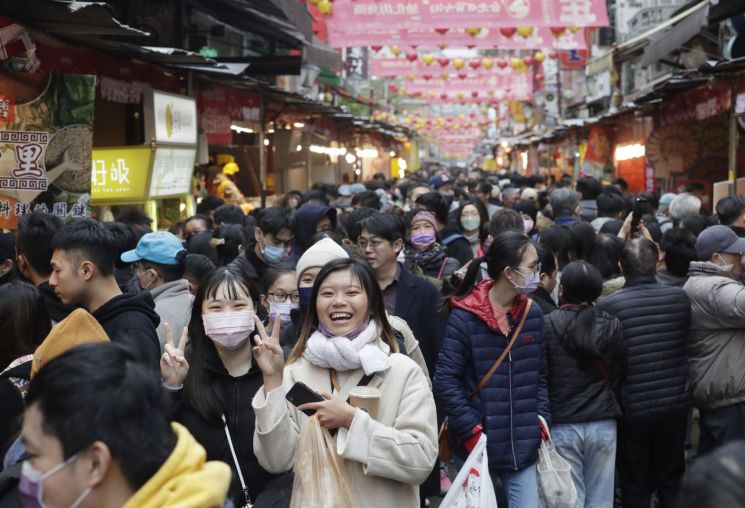
WSJ also pointed to labor force decline due to aging as a background factor deepening China’s structural economic problems. According to China’s National Bureau of Statistics, China’s population declined last year for the first time since 1961, and youth unemployment has reached a serious level since the zero-COVID policy ended. In April, the youth (ages 16-24) unemployment rate in China exceeded 20% for the first time since related statistics began in 2018. This means one in five young people is unemployed.
Leading Chinese companies such as Alibaba and JD.com all reported poor earnings in the first quarter of this year, and as a result, the Hang Seng Index, led by Chinese companies in Hong Kong, fell 5.2% compared to the beginning of the year. The yuan’s weakness trend continues as well. The yuan-to-dollar exchange rate rose nearly 3% compared to the end of last year, surpassing the 7-yuan-per-dollar mark (closing price on the 30th was 7.08 yuan per dollar). Frederick Neumann, HSBC’s chief Asia economist, pointed out that "the recent disappointing recovery suggests that structural obstacles in China’s economy are already at work."
© The Asia Business Daily(www.asiae.co.kr). All rights reserved.
![Clutching a Stolen Dior Bag, Saying "I Hate Being Poor but Real"... The Grotesque Con of a "Human Knockoff" [Slate]](https://cwcontent.asiae.co.kr/asiaresize/183/2026021902243444107_1771435474.jpg)
















