Ministry of Science and ICT-KARI Announced on the 30th
Among the CubeSats onboard the third Nuri rocket launch on the 25th, the success of the Toyosat-3 satellite was uncertain, and it is estimated that it was not deployed.
The Ministry of Science and ICT and the Korea Aerospace Research Institute (KARI) announced that this conclusion was reached after analyzing the initial data from the third Nuri launch.
The Nuri rocket was launched precisely at 6:24 PM and flew normally, performing first stage separation, fairing separation, second stage separation, separation of the Next-Generation Small Satellite 2 (ChaSoHyeong 2), and CubeSat separation. The target altitude of 550 km and target injection velocity of 7.58 km/s (actual altitude 550.6 km, velocity 7.58 km/s) were accurately achieved.
Currently, ChaSoHyeong 2 has completed verification of satellite attitude control functions after deploying its synthetic aperture radar antenna. The secondary payload satellite Toyosat-3 has completed communication with the ground station and is undergoing satellite function checks. Among the industry satellites, KSAT3U (Kairospace) succeeded in communicating with the ground station and is confirmed to have normal power system status. LUMIR-T1 (LUMIR) has successfully received satellite signals and is attempting communication with the ground station. The remaining satellite continues attempts to receive signals through the ground station.
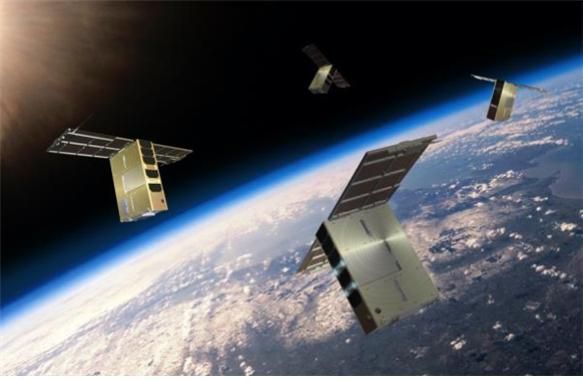
However, Toyosat-3 is estimated not to have been deployed, as no signals for the deployment tube door opening and closing or acceleration measurements from the third stage were detected. There are a total of four Toyosat satellites, developed by the Korea Astronomy and Space Science Institute (KASI) with an investment of 10 billion KRW for space weather observation. Originally, they were scheduled to be launched into orbit last year aboard a Russian Soyuz launch vehicle, but the launch was delayed due to the Russia-Ukraine war and were instead carried on the third Nuri launch. They were planned to demonstrate small satellite swarm operation technology for the first time. KASI maintains that normal operation is possible with just three satellites.
KARI has immediately begun detailed analysis of remote reception data throughout the entire launch process to identify the cause and plans to hold discussions with satellite and control experts over the next one to two months.
Chosunhak, Director of the Large Public Research Policy Division at the Ministry of Science and ICT, stated, “CubeSats sometimes fail to deploy during launches on foreign launch vehicles due to exposure to various extreme environments during the launch process. We will focus on supporting ChaSoHyeong 2 and the CubeSats to successfully carry out their missions in the space environment.”
© The Asia Business Daily(www.asiae.co.kr). All rights reserved.
![Clutching a Stolen Dior Bag, Saying "I Hate Being Poor but Real"... The Grotesque Con of a "Human Knockoff" [Slate]](https://cwcontent.asiae.co.kr/asiaresize/183/2026021902243444107_1771435474.jpg)











