As non-face-to-face medical consultations will be limited to follow-up visits and primarily at clinic-level medical institutions starting next month, an on-site doctor expressed the opinion that "non-face-to-face consultations are most desirable when received by patients who have undergone face-to-face treatment and are in the recovery phase just before complete healing."
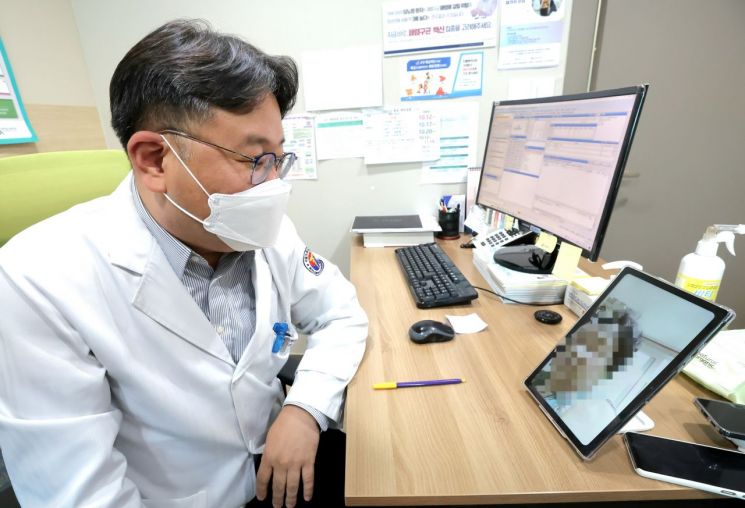
At 12:30 PM on the 30th, at a family medicine clinic in Dobong-gu, Seoul, Director Baek Jae-wook (family medicine specialist) was consulting patients via a tablet PC. This was during the last two days before the temporary allowance of non-face-to-face consultations without distinction between initial and follow-up visits, which had been permitted since 2020 under the Infectious Disease Control and Prevention Act, ended. Starting next month, non-face-to-face consultations will transition to a pilot project, allowing follow-up visits only except for residents in remote mountainous areas, those with mobility difficulties, disabled persons, and confirmed infectious disease patients.
Director Baek conducted non-face-to-face consultations for five patients over about an hour that day. Four were follow-up patients, and one was an initial patient. The first patient, Mr. A (81), received a non-face-to-face consultation to monitor progress after visiting the clinic due to inflammation in his left shoulder following a pneumonia vaccination on the 17th. When Director Baek asked the patient to "show the shoulder" to check symptoms, there were moments when the patient had difficulty understanding or adjusting the camera angle. Mr. B (60), who came for a follow-up visit to check the progression of inflammation on his left chest, showed his resident registration card to verify his identity, but due to image quality and lighting issues, verification was sometimes difficult.
There were also moments when the advantages of non-face-to-face consultations were evident. The oldest patient, Mr. C (90), was a follow-up case for shingles. Since he was bedridden and had difficulty visiting the clinic, the caregiver expressed high satisfaction. The fourth patient, Mr. D (63), who was seen for the first time due to pressure ulcer symptoms, suffered from brain lesions, making the availability of non-face-to-face consultation essential.
The last patient, Mr. E (80), requested a follow-up consultation due to a burn on his hand. However, video consultation was difficult, so the consultation was conducted via phone call. The Ministry of Health and Welfare allowed exceptions for patients who have difficulty using video in the pilot project, permitting consultations via voice calls.
Director Baek expressed concern, saying, "If we only focus on patient convenience through non-face-to-face consultations, the fundamental purpose of medical treatment could be forgotten." For this reason, he emphasized that it is natural to directly examine patients through face-to-face consultations in the early stages of illness. He also suggested, "If possible, non-face-to-face consultations should be used only for patients without prescriptions." However, Director Baek noted, "In practice, since doctors have limitations in distinguishing whether a patient is an initial or follow-up case, there should be a function to manage this."
© The Asia Business Daily(www.asiae.co.kr). All rights reserved.

















