After the Monetary Policy Committee, Treasury Bond Yields Rise Simultaneously
Weakened Expectations for Rate Cuts Due to 'Hawkish' Bank of Korea
US Fed's Possibility of Additional Rate Hike in June Also Increases
However, Experts Forecast 'Rate Cuts' Within the Year
Despite the Bank of Korea's three consecutive freezes on the base interest rate, expectations for a continued 'tightening stance' have grown, leading to a simultaneous rise in government bond yields. Short-term bond yields, which were well below the base rate (annual 3.5%) earlier this month, have already surpassed 3.5%, and yields on 3-, 5-, and 10-year government bonds continue to rise. This is interpreted as the market's diminished expectation for a rate cut within the year due to the possibility of additional tightening in both the U.S. and Korea, which has pushed up government bond yields.
However, experts predict that this trend is unlikely to continue. Although the possibility of maintaining a tightening stance in the U.S. and Korea has increased, considering the slowing inflation and concerns about economic recession, further rate hikes are unlikely. There is also analysis that if expectations for a rate cut within the year revive, government bond yields will retreat again.
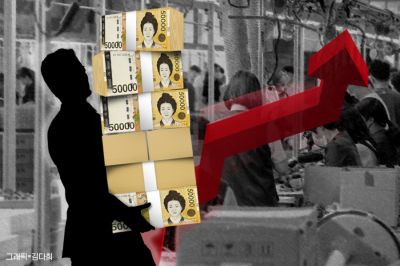
Government Bond Yields Rise Further After BOK's 'Freeze'
According to the Korea Financial Investment Association on the 31st, government bond yields have mostly risen since the Monetary Policy Committee's decision to freeze the base rate on the 25th.
The 1-year government bond yield rose 3.1 basis points (bp, 1bp=0.01 percentage point) from the previous trading day to 3.569% per annum, while the 3-year (3.560%), 5-year (3.582%), 10-year (3.651%), 20-year (3.702%), and 30-year (3.682%) bonds also increased by 3.6bp, 3.2bp, 1.2bp, 3.2bp, and 2.3bp respectively.
Typically, ultra-short-term bond yields are similar to the base rate, and government bonds with longer maturities such as 3-, 5-, 10-, and 30-year bonds have higher yields reflecting repayment risk. However, over the past two months, an unusual phenomenon occurred where not only long-term but also ultra-short-term bond yields fell below the base rate due to growing market expectations of a rate cut within the year.
For example, the 3-year government bond yield, which is a basic investment return benchmark, normally exceeds the base rate by 20 to 30bp, but earlier this month it dropped significantly to 3.229%, well below the base rate. Particularly, despite the rise in short-term yields such as the 91-day negotiable certificates of deposit (CD) and 91-day monetary stabilization bonds due to additional issuance by the Bank of Korea, the 3-year government bond yield remained below the base rate, raising concerns about a 'negative carry.'
Bond investors generally borrow funds through low-yield short-term bonds and invest in relatively longer-term, higher-yield bonds to earn profits from the interest rate spread. Therefore, when short-term bond yields exceed long-term bond yields, a 'negative carry' situation can occur where funding costs exceed investment returns.
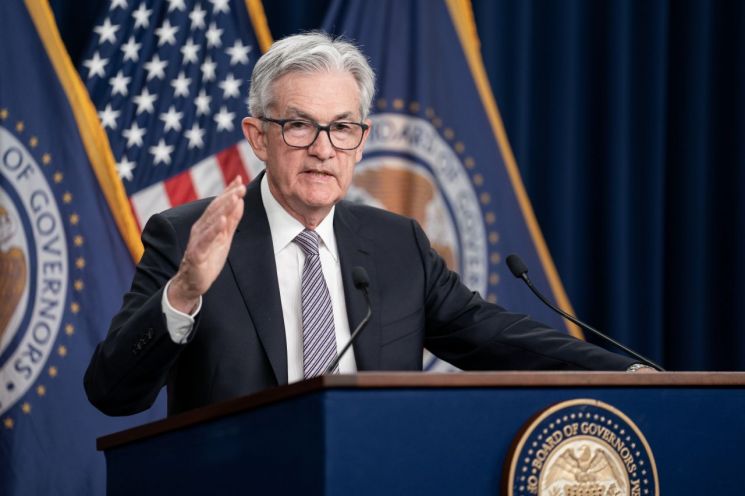
'Hawkish' Korea and U.S. Reduce Expectations for Rate Cuts
The simultaneous rise in government bond yields following last week's Bank of Korea Monetary Policy Committee meeting indicates that market expectations for a rate cut within the year have weakened. Gong Dong-rak, a researcher at Daishin Securities, explained, "At last week's MPC, Governor Lee Chang-yong strongly stated not to expect a rate cut, which seems to have dampened the market's 'pivot' (policy shift toward rate cuts) expectations. This burden is reflected in the rise of government bond yields."
In fact, although the MPC decided to freeze the base rate at 3.5% for the third consecutive time last week, Governor Lee immediately showed a somewhat hawkish stance during the subsequent press conference, saying, "All six MPC members have left open the possibility of raising the final rate to 3.75%. It is premature to consider a rate cut." He also said, "Please do not assume that the Bank of Korea will never raise rates."
Recently, the possibility of a rate hike by the U.S. Federal Reserve in June has increased, which raises the likelihood of additional tightening by the Bank of Korea. According to the CME Group's FedWatch on the 19th (local time), the probability of a Fed rate hike in June rose from just 17.4% when Fed Chair Jerome Powell hinted at a 'rate pause' during a Washington DC talk to 56.1% currently.
If the Fed raises the base rate by another 0.25 percentage points next month, the interest rate gap between Korea and the U.S. could widen to a maximum of 2 percentage points, forcing the Bank of Korea to consider additional hikes. Although the Bank of Korea officially states that the Korea-U.S. rate gap itself is not significant, additional tightening in the U.S. is a burden. Governor Lee also said regarding the possibility of a rate hike, "We need to watch whether the Fed will stop or continue raising rates."
Expectations for Rate Cuts Within the Year Remain... "Government Bond Yields Will Fall Again"
However, experts predict that the recent rise in government bond yields is unlikely to continue as a trend. Although concerns about tightening in the U.S. and Korea have increased recently, they still see a high possibility of a pivot within the year. Im Jae-kyun, a researcher at KB Securities, explained, "Most major U.S. inflation indicators are below the base rate, and Chair Powell is cautious about additional hikes. The likelihood of the Fed implementing further hikes is low."
An Ye-ha, a researcher at Kiwoom Securities, said, "Although government bond yields are normalizing by exceeding the base rate, I do not see this as a directional change. I still expect the Bank of Korea to return to a rate cut stance within the year, and if that happens, government bond yields could fall below the base rate again."
© The Asia Business Daily(www.asiae.co.kr). All rights reserved.



















