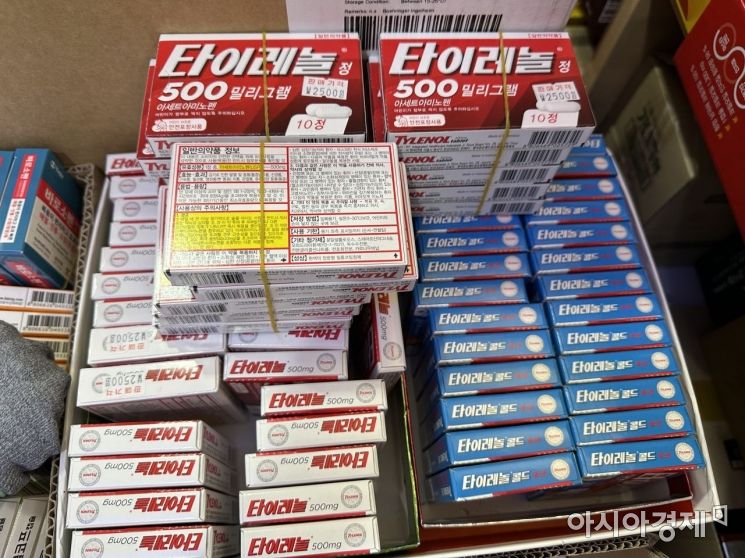
There is a growing call among consumer groups to increase the variety of convenience store medicines beyond just cold remedies and painkillers. With the spread of so-called ‘self-medication’ as people have taken more responsibility for their own health during the COVID-19 pandemic, it is time to meet consumer demand for medicines. On the other hand, pharmacist organizations maintain their stance that this cannot be allowed as it could lead to the misuse and overuse of medicines.
The Safe Over-the-Counter Medicine Citizens Network on the 30th released the results of a “National Demand Survey on Safe Over-the-Counter Medicines at Convenience Stores,” arguing that “the list of safe over-the-counter medicines, currently limited to 13 items, should be expanded.” According to a survey of 1,000 Korean citizens, 4 out of 10 users (41.3%) said they still could not purchase all the medicines they needed. 6 out of 10 (62.1%) said “the number of items is insufficient and needs to be expanded.” Lee Myeong-ju, Secretary General of the Consumer Public Interest Network, explained, “As in previous studies, this survey showed that consumers most frequently requested that antidiarrheal medicines be included in the list of safe over-the-counter medicines,” adding, “Recently, with increased demand for safe over-the-counter medicines for infants and toddlers, there have also been requests for pediatric cold medicines.”
The safe over-the-counter medicine system has been in place since 2012 to alleviate the inconvenience of purchasing medicines outside pharmacy business hours. According to the Pharmaceutical Affairs Act, safe over-the-counter medicines refer to medicines sold at convenience stores, etc., designated and announced by the Minister of Health and Welfare within a limit of 20 items, considering the ingredients, side effects, and dosages of the items. When the law was first enacted, a total of 13 items were designated, including five types of antipyretic analgesics, two types of cold medicines, four types of digestive medicines, and two types of patches, and no adjustments to the list have been made since. Consumer groups say there is no reason to hesitate to expand the list now that the system has been in place for over 10 years and the incidence of side effects has been very low.
Pharmacist organizations oppose expanding the list of safe over-the-counter medicines due to concerns about misuse. In 2017?2018, the Ministry of Health and Welfare’s Safe Over-the-Counter Medicine Designation Review Committee discussed adjusting the list to include antacids and antidiarrheals, but the proposal was scrapped due to opposition from pharmacist groups. Since then, the committee has not convened, especially after the COVID-19 pandemic.
There are voices calling for an immediate expansion to the legal maximum of 20 items. Professor Lee Ju-yeol of Namseoul University’s Department of Health Administration said, “Discussions about installing safe over-the-counter medicine vending machines and medicine delivery are also underway, but these require legal amendments,” adding, “The Safe Over-the-Counter Medicine Designation Review Committee should be resumed, and if there are no safety issues, the number of items should be increased up to the legally permitted limit.” However, the Korea Pharmaceutical Association believes that issues of medicine accessibility can be addressed by expanding public late-night pharmacies, which currently have low pharmacist participation. A representative of the Korea Pharmaceutical Association said, “If the list of safe over-the-counter medicines is expanded, the problem of medicine misuse among the public will also increase accordingly.”
© The Asia Business Daily(www.asiae.co.kr). All rights reserved.
![From Bar Hostess to Organ Seller to High Society... The Grotesque Con of a "Human Counterfeit" [Slate]](https://cwcontent.asiae.co.kr/asiaresize/183/2026021902243444107_1771435474.jpg)
















