Principle Applies Only to Returning Patients
Limited Permission for Islands, Remote Areas, and Disabled
30% Fee Increase for Medical Institutions and Pharmacies
The final implementation plan for the pilot project of non-face-to-face medical treatment, which will be enforced from the 1st of next month, has been confirmed. Non-face-to-face consultations for children and adolescents during vulnerable times such as weekends and nights are allowed, but prescriptions are not permitted. Medication delivery is allowed only for certain groups such as those with mobility difficulties, subject to agreement between the pharmacist and the patient. A 30% management fee will be paid on top of the non-face-to-face medical treatment fee, but the number of non-face-to-face medical treatments and prescriptions will each be limited to 30% per month.
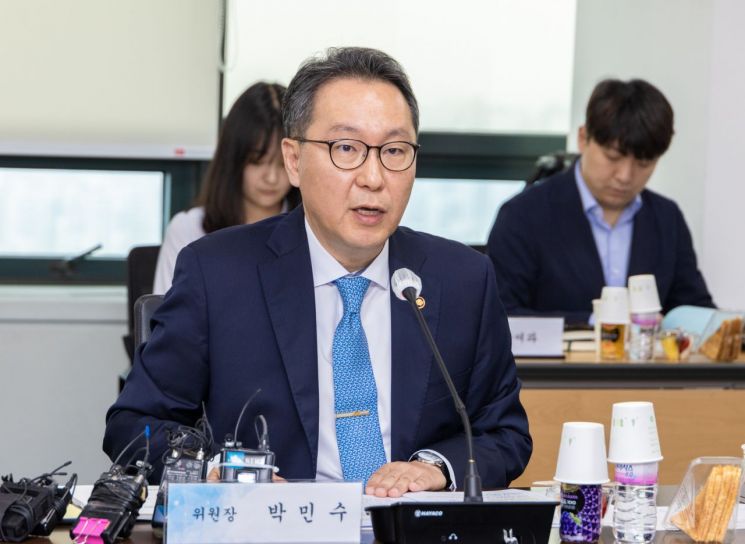 Park Min-su, the 2nd Vice Minister of Health and Welfare, is presiding over the Health Insurance Policy Deliberation Committee meeting held on the 30th at the International Electronics Center in Seocho-gu, Seoul. On this day, the committee discussed the promotion plan for the pilot project of non-face-to-face medical treatment.
 [Photo by Ministry of Health and Welfare]
On the morning of the 30th, the Ministry of Health and Welfare finalized the implementation plan for the non-face-to-face medical treatment pilot project at the ‘9th Health Insurance Policy Deliberation Committee’ meeting.
The principle of ‘revisit-centered’ was clearly established for the targeted patients. Only revisit patients who have had at least one face-to-face consultation for the relevant disease at the medical institution (within one year for chronic disease patients and within 30 days for other patients) can, in principle, receive non-face-to-face medical treatment.
However, first-time consultations are allowed on a limited basis for patients living on islands or remote areas, elderly people aged 65 or older who have been certified for long-term care, registered disabled persons under the Disability Welfare Act, and infectious disease confirmed patients in isolation. Non-face-to-face medical treatment is primarily conducted at clinic-level medical institutions, with hospital-level institutions allowed as an exception. Hospital-level institutions can provide non-face-to-face medical treatment only for patients with prior face-to-face experience who have rare diseases (within one year) or require continuous management after surgery or treatment (within 30 days).
For pediatric and adolescent patients (under 18 years old), non-face-to-face medical consultations are allowed during holidays and nighttime even without prior face-to-face consultation records. However, since prescriptions are not allowed, patients must endure the inconvenience of receiving face-to-face treatment after consultation. The Ministry of Health and Welfare explained, "The scope of eligible patients was determined by comprehensively considering various opinions under the principle of promoting public health."
The method of conducting non-face-to-face medical treatment is similar to before. When a patient requests non-face-to-face treatment, the doctor may proceed based on safety judgment and recommend a visit if face-to-face treatment is necessary. Video consultation is the principle, but in cases where video consultation is impossible, such as when the patient does not have or cannot use a smartphone, voice calls are allowed as an exception. After the consultation, prescriptions can be issued if necessary and sent via fax or email to the pharmacy designated by the patient.
Regarding the controversial issue of medication delivery, the pharmacist and patient can agree on the method of receiving medication, such as personal pickup, proxy pickup, or home delivery. However, home delivery will be allowed only for patients who have difficulty receiving medication directly, such as those living on islands or remote areas, those with mobility difficulties, infectious disease confirmed patients, and patients with rare diseases. The fee increase was finalized at 30%.
Considering additional tasks due to the nature of the non-face-to-face medical treatment pilot project, management fees for the pilot project will be additionally paid to medical institutions and pharmacies. For example, for medical institutions, a management fee for the non-face-to-face medical treatment pilot project (about 30% of the consultation fee) will be added to the consultation fee. Furthermore, the ratio of non-face-to-face medical treatments at medical institutions and non-face-to-face prescriptions at pharmacies will be limited to 30% per month to prevent the operation of institutions dedicated solely to non-face-to-face treatment.
The Ministry of Health and Welfare announced the final pilot project plan on the 30th, reflecting the results of the Health Insurance Policy Deliberation Committee discussions, and decided to provide a three-month guidance period from June 1st for patients and medical institutions to adapt to the pilot project. Cho Kyu-hong, Minister of Health and Welfare, said, "The non-face-to-face medical treatment pilot project is an unavoidable policy conducted within a limited scope to promote public health and improve medical accessibility in a situation where the Medical Service Act has not been amended. We will periodically evaluate the pilot project’s outcomes through discussions with the medical community and experts, supplement and improve any shortcomings, and prepare a stable institutionalization plan."
© The Asia Business Daily(www.asiae.co.kr). All rights reserved.
![User Who Sold Erroneously Deposited Bitcoins to Repay Debt and Fund Entertainment... What Did the Supreme Court Decide in 2021? [Legal Issue Check]](https://cwcontent.asiae.co.kr/asiaresize/183/2026020910431234020_1770601391.png)
















