Difficult Conditions for Young Adults "Burden of Maintaining for 5 Years"
Authorities Reviewing Measures to Minimize Early Termination
# Park Ki-young (34), a member of the investment-savvy generation, is keeping an eye on the government’s soon-to-be-launched ‘Cheongnyeon Doyak Account’ as a follow-up product for his 1-year fixed deposit savings account, which he joined last year during the high-interest rate period. With market interest rates recently falling and savings products’ rates dropping to around 3-4% annually, the policy product is expected to offer relatively higher interest rates. Tax exemption benefits are an added bonus.
# Son Young-jun (32), who recently moved to a new job, is waiting for the Cheongnyeon Doyak Account to save a lump sum but feels hesitant. Although the payment amount has slightly increased, maintaining monthly contributions of 400,000 to 700,000 KRW for five years is burdensome on his monthly salary of about 3 million KRW, which must cover loan repayments and living expenses. He said, “I don’t know when I might have to take a break from work, so five years feels like a long commitment.”
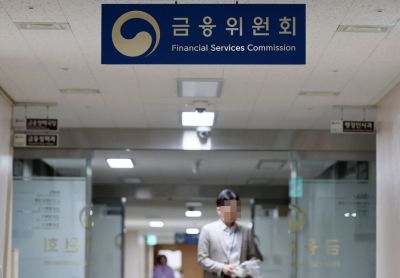 On the 9th, officials were busy moving in the corridor of the Financial Services Commission at the Government Seoul Office in Jongno-gu, Seoul, where the financial authorities decided to include mortgage loans (Judaemae) in the 'debt refinancing' infrastructure scheduled to be launched in May by the end of the year. The financial authorities explained that they aim to reduce the interest burden on mortgage loans by establishing a debt refinancing platform that allows users to compare financial sector loan interest rates at a glance and switch loans easily. Photo by Dongju Yoon doso7@
Attention is focused on the ‘Cheongnyeon Doyak Account’ that financial authorities will launch next month. Since it is a product that returns up to 50 million KRW after contributing up to 700,000 KRW monthly for five years, it is gaining interest mainly among young adults who are considering saving a lump sum.
However, some concerns have been raised that the effectiveness may be limited, as many young people are struggling to maintain monthly savings contributions of 400,000 to 700,000 KRW for five years amid tightened financial conditions. Authorities are also reviewing measures to prevent early withdrawal.
According to the financial sector on the 30th, the Financial Services Commission and banks are working on designing the Cheongnyeon Doyak Account, aiming for a launch next month. The Cheongnyeon Doyak Account is a savings product where the government matches contributions proportional to the subscriber’s payments and provides tax exemption benefits on interest income. The government allocated a budget of 367.8 billion KRW for this product this year.
Since the goal is asset formation for young people, the target group is youth aged 19 to 34, and those who meet the condition of household and individual income below 180% of the median can subscribe. The contribution amount can be freely chosen up to 700,000 KRW per month, and the maturity period is five years. By contributing 700,000 KRW monthly, subscribers can accumulate about 50 million KRW through matching contributions and tax exemption benefits, which is a major advantage.
The matching contributions and tax exemption benefits vary depending on income level. Young people with an individual income of 60 million KRW or less can receive both matching contributions and tax exemption benefits. The contribution limit (400,000 to 700,000 KRW per month) and matching ratio (3.0 to 6.0%) are set according to income level. For example, subscribers with an individual income of 24 million KRW or less have a contribution limit of 400,000 KRW per month and a matching ratio of 6.0%, so the maximum monthly matching contribution is 24,000 KRW. Those with an individual income between 60 million and 75 million KRW do not receive matching contributions but can enjoy tax exemption benefits on the interest income earned.
However, ongoing base rate hikes and worsening economic conditions since last year have tightened young people’s finances, raising concerns about the product’s effectiveness.
According to a recent report by the Korea Development Institute (KDI), borrowers are expected to reduce annual consumption by 132,000 KRW for every 1 percentage point increase in the base interest rate. Considering that the base rate has risen by 3 percentage points from 2021 to this year, it is estimated that people in their 20s have reduced consumption by 896,000 KRW (4.0%) annually, and those in their 30s by 613,000 KRW (2.4%).
Previously, the Youth Hope Savings, introduced by the Moon Jae-in administration, saw about 15% (approximately 450,000) of its 2.86 million subscribers cancel within a year as of the end of last year. The Youth Hope Savings offered up to 9.3% annual interest, had a 2-year maturity, and a maximum monthly contribution of 500,000 KRW. Concerns about the Cheongnyeon Doyak Account arise because it has a longer maturity (5 years) and a higher contribution burden (400,000 to 700,000 KRW) compared to the Youth Hope Savings.
A financial industry official said, “Since there was considerable dropout even with the relatively short maturity of the Youth Hope Savings, a similar situation could occur with the Cheongnyeon Doyak Account. There needs to be clear merits such as interest rate levels and measures related to early withdrawal.”
Authorities have also started preparing measures to minimize early withdrawals. They have commissioned related research and are reportedly considering adjusting the additional interest rates on savings-secured loans using the Cheongnyeon Doyak Account as collateral in cooperation with banks and other related institutions.
The National Assembly Budget Office also advised in a report published last month that “whether the account is maintained until maturity will likely be a key factor in evaluating the project’s success,” and recommended that “support measures for account maintenance should be carefully reviewed and established.”
© The Asia Business Daily(www.asiae.co.kr). All rights reserved.

















