Unexpected Victory for Erdogan... Vote Share 52.13%
Economic Collapse and Lira Value Plunge to Continue?
Turkiye Citizens Choose Geopolitical Influence Over Economy
Likely to Maintain Anti-Western, Pro-Russian Stance
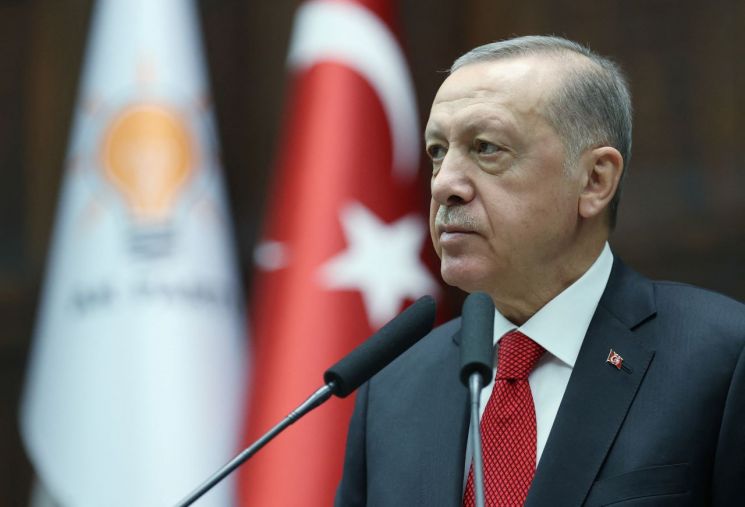
President Recep Tayyip Erdogan of Turkiye, who has been in power for 20 years and is called the '21st-century Sultan,' won the presidential runoff election. With this successful re-election, President Erdogan can challenge the longest tenure in office until 2033 since his first term began in 2003. Foreign media analyzed that the louder cheers were for Turkiye's expansionism and anti-Western attempts to expand geopolitical influence rather than the economic collapse caused by unorthodox economic policies and the democratic crisis due to iron-fisted rule.
Erdogan Opens Path for 30 Years of Long-Term Rule
On the 28th (local time), Turkiye's Supreme Election Council (YSK) announced that with over 99% of the votes counted, President Erdogan won with 52.13% of the vote, defeating opposition leader Kemal Kılı?daro?lu, who received 47.87%.
In his victory speech held in Istanbul that evening, President Erdogan said, "We have opened the door to Turkiye's century together without any concessions on our democracy, development, or goals," adding, "What did I say? We will be together until the grave."
President Erdogan has been in long-term power for 20 years, starting as prime minister in 2003 under a parliamentary system and then transitioning to a presidential system. Since he failed to secure a majority in the first round of voting held on the 14th, a runoff was held on this day. With this victory, President Erdogan will remain in power for another five years until 2028, and if an early election is held during his term and he wins, he can serve an additional five years, potentially extending his rule until 2033. This would mark a 30-year tenure. With this re-election success, it is expected that President Erdogan will accelerate his authoritarian rule under the imperial presidential system and formally prepare for an ultra-long-term rule of 30 years.
The opposition immediately expressed concern, saying, "Erdogan's additional five years in power will push Turkiye down an irreversible path that steadily erodes democracy and human rights." After the unofficial results were announced, opposition leader Kılı?daro?lu emphasized, "We will continue to fight until true democracy comes to our country," and "Despite all the pressure in this election, the people's will to change the authoritarian government was confirmed."
Will Economic Collapse and Lira Depreciation Continue?
President Erdogan's re-election was an unexpected result before the election. This was because the near-collapse of Turkiye's economy and the government's poor response to the massive earthquake in February had raised calls for regime change. In particular, President Erdogan is criticized for ruining Turkiye's economy with unorthodox economic policies such as low-interest rates and interference with the central bank. Turkiye's inflation soared to 85% as of October last year.
Accordingly, the value of the lira against the dollar plummeted, and there has been continued selling of Turkiye's government bonds. The lira's value has dropped about 6% against the dollar since the beginning of the year, and over the past decade, it has fallen more than 90%. On the 26th, it hit an all-time low of 20.06 lira per dollar. Even after President Erdogan's re-election, the lira's value has traded above 20.00 lira per dollar, remaining near the 26th's lowest point.
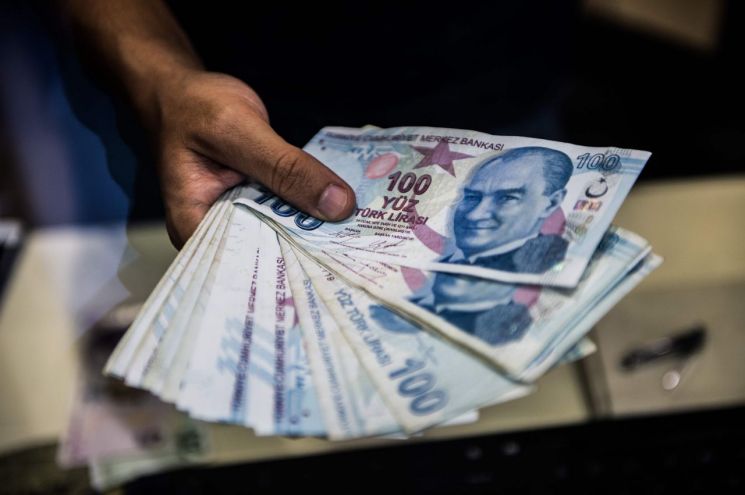
In his victory speech that day, President Erdogan said that solving inflation is an urgent issue but noted that since the benchmark interest rate has fallen from 19% to 8.5% over the past two years, the inflation rate will also stabilize. However, experts are skeptical about the possibility that President Erdogan, who has adhered to unorthodox economic policies, will make significant changes to economic policy.
Wolfango Piccoli, co-CEO of consultancy Teneo, said, "Erdogan does not seem likely to adopt orthodox economic methods," but predicted, "However, he may adopt some adjustments to the current unorthodox approach to buy time ahead of the local elections in March 2024." Tim Ash of BlueBay Asset Management explained, "The current situation is unsustainable," adding, "With limited foreign exchange reserves and huge real negative interest rates, pressure on the lira is significant."
There is also talk of the possibility that foreign exchange reserves could run out. Experts and economists have expressed concern that Turkiye's foreign exchange reserves had significantly decreased even before the first round of elections.
Turkiye's People Choose Geopolitical Influence Over Economy... Likely to Maintain Anti-Western, Pro-Russian Line
Analysts say this election will significantly impact not only Turkiye but also the international political landscape between the West and anti-Western forces. President Erdogan has accelerated expansionism aimed at a strong Turkiye. Despite the Ukraine war, he has taken a pro-Russian stance and opposed Sweden's NATO membership within the North Atlantic Treaty Organization (NATO), taking an independent path that has put the West, including the United States, in a difficult position. With Erdogan's successful re-election, Turkiye's expansionism, pro-Russian stance, and uneasy relations with the West are expected to continue. It is also anticipated that President Erdogan will further assert Turkiye's presence by playing a more active mediator role in the Ukraine war.
Russian President Vladimir Putin immediately sent a congratulatory message to President Erdogan on his election. He said, "This victory is a natural result of Erdogan's selfless efforts as the leader of Turkiye," adding, "It is clear evidence of the people's support for Erdogan's independent foreign policy." He also emphasized, "We highly appreciate Erdogan's personal contribution to enhancing friendly relations between our two countries. We are ready to continue constructive dialogue on current issues."
Selim Koru, a political analyst at Ankara-based think tank TESEV, said, "This election proved that Turkiye's geopolitical position is so solid that (for the people) living standards do not matter," adding, "Geopolitical competition is the core of Erdogan's regime. Life within the country is secondary." The U.S. Wall Street Journal (WSJ) also diagnosed, "For some voters, pride in Turkiye's position in the world outweighed concerns about Erdogan's economic policies that made them poorer."
© The Asia Business Daily(www.asiae.co.kr). All rights reserved.
![Clutching a Stolen Dior Bag, Saying "I Hate Being Poor but Real"... The Grotesque Con of a "Human Knockoff" [Slate]](https://cwcontent.asiae.co.kr/asiaresize/183/2026021902243444107_1771435474.jpg)

















