Dismissed in 1980 Due to New Military Regime's Press Suppression
Former Chairman of the Dismissed Journalists Association and President of the Korean Writers' Association
Veteran journalist and novelist Choi Il-nam passed away on the 28th due to old age. He was 91 years old.
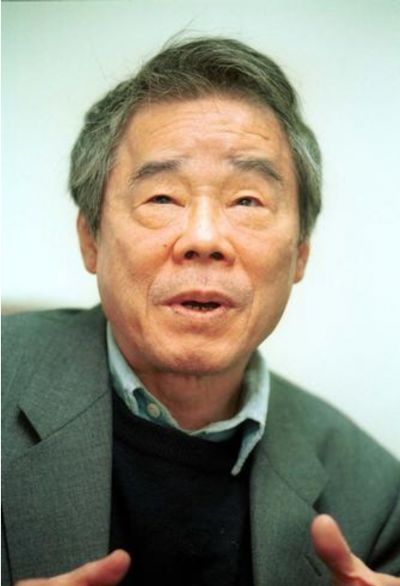 Korea National Academy of Arts_ Choi Il-nam_ Member. [Photo provided by Korea National Academy of Arts]
The National Academy of Arts of Korea announced that Choi's health deteriorated on the 26th of this month, and he passed away around 12:57 a.m. while receiving treatment at a hospital.
Born in 1932 in Jeonju, Jeonbuk, the late Choi graduated from Jeonju Normal School and then Seoul National University with a degree in Korean literature. He debuted in 1953 with the short story "Ssuk Iyagi" published in the magazine Munye, and in 1956 his work "Payang" (爬痒) was finally recommended by the magazine Hyundae Munhak.
After joining the Kyunghyang Shinmun as a reporter in 1962, he did not produce literary works for a while but began publishing again from 1966, becoming prolific especially in the 1970s.
In his works, he gained fame by vividly portraying the hardships of rural people who moved to urban areas and the shadows of industrialization, using rich local dialects and a distinctive writing style.
Although a writer, Choi Il-nam lived his life as a journalist. After being dismissed from The Dong-A Ilbo in 1980 due to the new military regime's press suppression, he was reinstated in 1984. From 1988 to 1991, he served as a senior editorial advisor for Hankyoreh Shinmun. He was also active as the chairman of the Association of Dismissed Journalists in 1980 and as a director of the Broadcasting Culture Promotion Foundation.
Drawing from his experience of dismissal, he published critical realist novels such as The Fountain Pen and Papyrus and The Flowing Drum, satirizing the hypocrisy and tyranny of power and the corruption of intellectuals against the backdrop of media companies and politics, thereby establishing a new literary world.
Through these works, he was praised for expressing sharp social criticism with humorous and distinctive prose.
His collections include Seoul People (1975), Taryeong (1977), The Shaking Castle (1977), The Sound of Flapping (1981), The Sacred Shade (1982), My Sister's Winter (1984), And the Shaking Boat (1984), The Intruder (1987), Hitler or Azalea (1991), White Hands (1994), The Fountain Pen and Papyrus (1997), A Very Slow Time (2000), and Pomegranate (2004).
He also left behind interview collections such as Is That Really So? (1983), essay collections including In Search of Joy and Melancholy (1985), No Bouquet for Honest People (1993), One Day, Suddenly Looking at My Hands (2006), and The Depth of Scenery, The Depth of People (2010), as well as a socio-political critique collection The Greatness of the Small Man, The Smallness of the Great Man (1991).
During his lifetime, Choi received numerous literary awards such as the Woltan Literary Award, Hankook Ilbo Literary Award, Yi Sang Literary Award, Inchon Cultural Award, Han Mu-sook Literary Award, and Kim Dong-ri Literary Award, proving his literary excellence. In 2001, he was awarded the Silver Crown Order of Cultural Merit by the government. He became a member of the National Academy of Arts of Korea in 2002 and served as chairman of the Korean Writers' Association from 2008 to 2010.
He is survived by one son, one daughter, a son-in-law, and a daughter-in-law. The funeral is being held at Seoul National University Bundang Hospital Funeral Hall, Room 13, with the funeral procession scheduled for 9 a.m. on the 30th.
© The Asia Business Daily(www.asiae.co.kr). All rights reserved.

















