According to the Special Act on Enterprise City Development, if an enterprise city developed jointly by a local government and a co-developer advertises land sales benefits such as acquisition tax and property tax reductions to resident companies without any special conditions, but the companies do not receive such tax benefits contrary to the advertisement, the Supreme Court has ruled that the developer must compensate the companies for their losses.
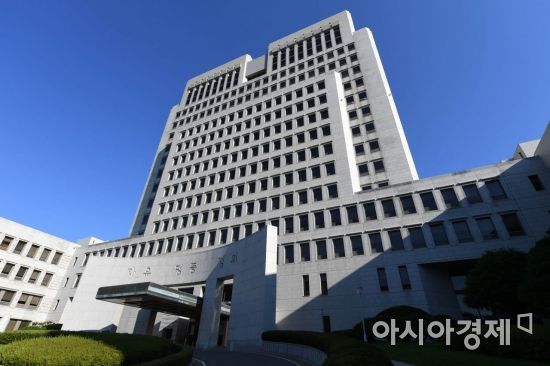
On the 28th, according to the legal community, the Supreme Court's Second Division (Presiding Justice Cheon Dae-yeop) overturned the lower court's ruling that dismissed A's claim for damages against Wonju Enterprise City Co., Ltd., and remanded the case to the Seoul High Court.
A, who operated a factory in the Kaesong Industrial Complex but withdrew due to the deterioration of inter-Korean relations, planned to relocate the factory in 2016. In October of the same year, A signed a contract to purchase approximately 13,000 square meters of factory land in Jijeong-myeon, Wonju City, from Wonju Enterprise City, which was jointly implementing the project with Wonju City, for 2.4 billion KRW.
At that time, the brochure for knowledge industry land sales prepared and distributed by Wonju Enterprise City stated that resident companies would receive corporate tax reductions, and newly established or startup companies would receive '100% reduction for 3 years, 50% reduction for 2 years,' while companies relocating from densely regulated areas would receive '100% reduction for 5 years, 50% reduction for 2 years.'
Regarding acquisition tax and property tax reductions, the brochure indicated without distinguishing between newly established/startup companies and relocating companies that acquisition tax would be reduced by '100% for 15 years' and property tax by '100% for 5 years + 50% for 3 years.'
However, at the time the brochure was distributed, the Special Act on Enterprise City Development allowed local governments to reduce local taxes for companies moving into development zones, but the pre-amendment Local Tax Special Cases Act stipulated that acquisition tax and property tax reductions applied only to companies that established startups or new business sites in enterprise city development zones by December 31, 2016. Companies relocating existing business sites were excluded from acquisition and property tax reductions.
From March 2018, when A completed the registration of ownership transfer for the purchased land, until September 2020, A paid nearly 230 million KRW in taxes including acquisition tax, property tax, local education tax, and special rural tax on the land and newly constructed buildings. Consequently, A filed a lawsuit against Wonju Enterprise City demanding a refund of the taxes paid, arguing that the tax burden was contrary to the advertisement.
In court, A claimed that the contents of the brochure were incorporated into the contract according to the sales agreement. Therefore, the defendant had an obligation to ensure acquisition and property tax reductions as advertised but failed to fulfill this obligation, causing damages equivalent to the taxes paid.
In particular, A argued that the advertisement in the brochure constituted unfair labeling and advertising under the Act on Labeling and Advertising, and thus, under Article 10 of the Act, the defendant should pay the taxes A paid along with delay damages.
The first trial court accepted A's claims.
Similar to corporate tax, acquisition and property tax reductions apply only to newly established or startup companies among relocating companies. Advertising that companies relocating from other regions could receive tax reductions without restrictions was deemed deceptive labeling and advertising, and the defendant was held liable for compensating A's damages.
The court stated that since the damages were recognized under the Act on Labeling and Advertising, it would not separately consider claims of breach of contract or tort liability raised by A.
However, the second trial court reversed the decision.
The appellate court acknowledged, as in the first trial, that the contents of the brochure were incorporated into the sales contract.
But the court held, "The tax reduction information was merely a guide to legal support systems and policies provided by the defendant, and this alone does not imply that the defendant guaranteed acquisition tax reductions or agreed to compensate the plaintiff if such reductions were not granted due to legal restrictions."
The court reasoned that under the principle of legality in taxation, tax reductions must be made according to legal requirements and procedures, and a private company defendant cannot arbitrarily reduce taxes.
Furthermore, the court found no damages caused by the defendant.
To establish damages under tort law or the Act on Labeling and Advertising, there must be a difference between the hypothetical property state without the wrongful act and the current property state. The court found this was not the case here.
Even without false advertising by Wonju Enterprise City, A would have had to pay taxes, and A did not relocate the business solely because of tax benefits, so imposing compensation liability was deemed unfair.
The court stated, "The acquisition tax and other taxes paid by the plaintiff are taxes that the plaintiff was legally obligated to pay to acquire the land and buildings in this case."
In other words, even if it had been properly explained that acquisition and property tax reductions do not apply to relocating companies, these were taxes that would have been borne anyway.
The court also concluded, "Although the plaintiff claims that he would not have purchased the land if he had known that acquisition tax reductions would not apply, when purchasing factory land like this, factors such as sale price, complex scale, and surrounding environment are comprehensively considered, so it is difficult to conclude that the plaintiff entered into the contract solely based on tax benefits."
However, the Supreme Court overturned the appellate court's conclusion once again.
The court pointed out, "The brochure consists of six pages, and the content regarding acquisition and property tax reductions is on the first substantive page excluding the cover, explained prominently ahead of other promotional content such as subsidies for resident companies, land use plans, and metropolitan transportation networks."
"It is clear that the defendant emphasized acquisition and property tax reduction benefits as a main promotional point to attract resident companies, which would have been a significant consideration for companies like the plaintiff when selecting land and deciding whether to enter into the sales contract," the court stated.
Furthermore, the court judged, "Considering the form of the law, the amendment process, and its content, it is highly likely that a non-legal expert party would trust the advertisement by the defendant, which is co-listed as a co-developer with the local government, Wonju City, a trusted public entity. Unless the plaintiff had doubts about the brochure or separately inquired with the competent authorities, it would have been difficult to know that the relevant laws set conditions for acquisition and property tax reductions different from the advertisement."
For these reasons, the court concluded, "The defendant made deceptive labeling and advertising likely to cause misunderstanding that acquisition and property tax reductions apply to all companies, including relocating companies, unlike corporate tax. The plaintiff relied on the brochure's contents and misunderstood that such tax reductions would apply, leading to the purchase of the land in question."
The court stated, "The lower court erred in recognizing the causal relationship and calculating damages under the Act on Labeling and Advertising, failing to conduct necessary investigations, which affected the judgment."
© The Asia Business Daily(www.asiae.co.kr). All rights reserved.

















