The Supreme Court has made its first ruling that even if the victim does not answer the phone call and the call is not connected, causing the victim's phone to ring or leaving a 'missed call' text message itself should be considered stalking behavior.
Previously, the Supreme Court ruled in a case involving a violation of the Information and Communications Network Act that "the ringing sound of a phone is not a sound transmitted to the other party," but this ruling indicates that the use of information and communication networks under the Information and Communications Network Act and the use of phones or information and communication networks under the Stalking Punishment Act should be viewed differently.
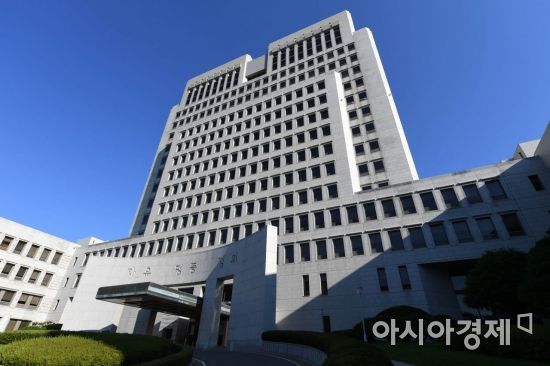
According to the legal community on the 29th, the Supreme Court's 3rd Division (Presiding Justice Lee Heung-gu) overturned the lower court's ruling that sentenced Mr. A to four months in prison by acquitting him of some charges of violating the Stalking Punishment Act in his appeal trial for charges of violating the Information and Communications Network Act and the Stalking Punishment Act, and remanded the case to the Busan District Court.
Mr. A was prosecuted on charges of repeatedly sending threatening messages or photos of the victim's family to victim Ms. B (45, female), who had been his partner since 1998, via mobile text messages, or calling Ms. B using his own or others' mobile phones after she rejected his request to lend 10 million won for business funds and blocked his contact information in early October 2021.
The first trial court found all charges against Mr. A guilty, sentenced him to four months in prison, and ordered him to complete 40 hours of a stalking treatment program.
On the other hand, the second trial court acquitted Mr. A of some charges of violating the Stalking Punishment Act.
The court ruled that it was difficult to consider the following as stalking acts under the Stalking Punishment Act: ▲ Mr. A, whose number was blocked by Ms. B, made one phone call using someone else's mobile phone but the content of the call was not revealed; ▲ Mr. A called Ms. B after hiding the caller's identity, but Ms. B did not answer; ▲ Mr. A called Ms. B from his own phone, but Ms. B did not answer, so the call was not connected.
Regarding the first case, the court explained the reason for acquittal, stating, "Unless the content of the call is revealed, it is difficult to recognize that the defendant caused anxiety or fear to the victim simply because the defendant, knowing that the victim blocked his phone number, made one phone call using another person's mobile phone."
Regarding the second and third cases, the court stated, "The defendant called the victim, but the victim did not answer. Simply calling the victim does not mean the defendant sent 'sound' to the victim through the information and communication network, and even if a 'missed call' is displayed on the victim's phone, this is merely a display function of the phone itself and cannot be considered as 'text' or 'code'."
It concluded, "Therefore, these acts cannot be considered 'stalking acts' as defined in Article 2, Paragraph 1, Subparagraph (d) of the Stalking Punishment Act."
Article 2 (Definitions) Paragraph 1 Subparagraph (d) of the Stalking Punishment Act includes "acts of delivering objects, texts, words, codes, sounds, pictures, videos, or images through mail, telephone, fax, or information and communication networks under the Information and Communications Network Act" as stalking acts.
However, the court did not reduce Mr. A's sentence compared to the first trial.
The court stated that while strict punishment was appropriate, it considered factors such as the fact that Mr. A and Ms. B had been in a relationship for over 20 years and the incident occurred during the process of Ms. B trying to end the relationship due to economic issues, and that Mr. A had no prior criminal record for similar offenses.
However, the Supreme Court's judgment was different.
The court judged that all three cases acquitted by the second trial could be considered stalking acts under the Stalking Punishment Act.
The court stated, "Considering the wording and legislative purpose of the Stalking Punishment Act, acts where the defendant makes a phone call causing the victim's mobile phone to ring or display a missed call message, thereby causing anxiety or fear to the other party, can be considered stalking acts regardless of whether an actual phone conversation took place."
The court added, "Excluding stalking acts simply because the victim did not answer the call would make the punishment dependent on chance circumstances and excessively narrow the scope of punishment, which is unfair."
It also stated, "The contested provision and Article 65 Paragraph 1 Subparagraph 3 of the former Information and Communications Network Act have different elements, so the Supreme Court's rulings on the interpretation of the former Information and Communications Network Act cannot be directly applied to the interpretation of the contested provision."
Previously, in a 2005 case involving a violation of the Information and Communications Network Act, the Supreme Court ruled that "the ringing sound of the phone when calling the other party is not a sound transmitted through the information and communication network, and even if repeated ringing causes fear or anxiety, it does not constitute a violation of the provision."
However, the court explained that "Article 65 Paragraph 1 Subparagraph 3 of the former Information and Communications Network Act required that the sound transmitted through the information and communication network itself must cause fear or anxiety, but the stalking act under the contested provision only requires that words, sounds, texts, etc., be delivered using telephone or information and communication networks, without requiring that the delivered sounds or texts cause fear or anxiety to the victim," thus the two cases should be viewed differently.
If the perpetrator makes a phone call transmitting information that he wants to talk to the victim, and this information is received by the victim's mobile phone through base stations or exchanges, then transformed into ringing sounds, caller ID display, or missed call messages appearing on the victim's phone, it can be considered that the information reached the victim's phone.
The court also noted that victims who experience repeated stalking acts and increased anxiety or fear are more likely not to answer calls. From the perpetrator's perspective, even if the call is not connected, they know that the victim's phone rings or vibrates or displays a missed call message, and they consent to such outcomes, which can be recognized as 'dolus eventualis' (conditional intent) for the stalking crime.
The court pointed out, "The defendant's acts of calling the victim and causing the victim's phone to ring or display 'no caller ID' or missed call messages are highly likely to constitute stalking acts. Therefore, the lower court should have examined and judged whether these acts were continuously or repeatedly committed against the victim's will without justifiable reason, constituting stalking crimes."
It added, "However, the lower court acquitted the defendant of the contested charges simply because the content of the phone calls between the defendant and the victim was not revealed or because the ringing sound and missed call display on the victim's phone did not reach the victim through the information and communication network. This is a misinterpretation of the legal principles regarding the interpretation of Article 2 Paragraph 1 Subparagraph (d) of the Stalking Punishment Act, which affected the judgment, and thus the case is remanded."
A Supreme Court official explained, "This ruling is the first to state that acts causing the victim's mobile phone to ring or display missed call messages by making a phone call, thereby causing anxiety or fear to the other party, constitute stalking acts under the Stalking Punishment Act regardless of whether an actual phone conversation took place."
© The Asia Business Daily(www.asiae.co.kr). All rights reserved.

















