EU "Gas Reduction of 60bcm Expected This Year"
Supply Sufficient Even If Russian Gas Imports Stop This Year
The European Union (EU) is reducing its energy dependence on Russia following the war in Ukraine. There are observations within the EU that the scale of gas consumption reduction this year will be comparable to the amount of gas imported from Russia.
On the 25th (local time), major foreign media outlets reported, citing an EU Commission document, that the 27 EU member countries are expected to reduce gas consumption by about 60 bcm (1 bcm equals 1 billion cubic meters) compared to the average usage over the past five years. This is similar in scale to the projected reduction in gas imports from Russia this year (63.6 bcm). The volume of gas the EU imports from Russia is expected to decrease from 150.2 bcm in 2021 and 74.4 bcm in 2022 to 10.8 bcm this year.
The EU report stated, "The reductions in both pipeline and liquefied natural gas (LNG) exceed the amount of gas expected to be imported from Russia this year," adding, "This is 8 bcm more than the reduction in the EU region when the energy crisis peaked last year."
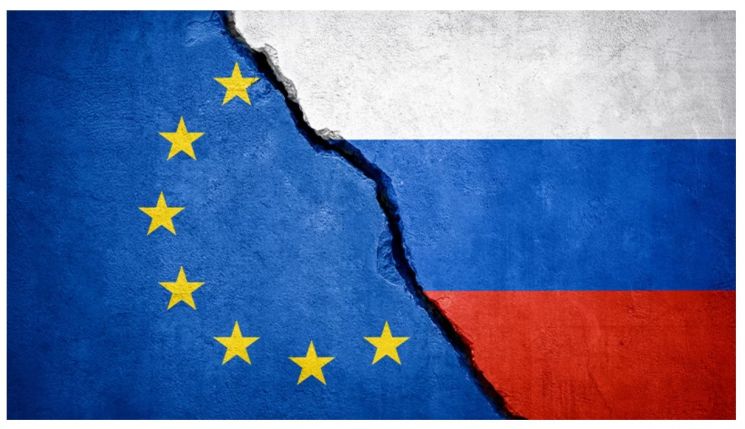
EU countries voluntarily agreed to reduce gas consumption by 15% this year and have already achieved this target in the first half of the year. An EU energy policy official evaluated, "The scale of reduction is quite significant," and added, "Russia has lost its gas influence over Europe."
Before the reduction, the EU's dependence on Russian gas was very high. One-fifth of gas imports were supplied by Russia. However, after the war in Ukraine, Russia reduced gas exports to pressure the EU, and the EU diversified its supply chains, lowering its dependence on Russian gas. The amount of gas the EU imported from Russia in March also decreased by 74% compared to March 2021, before the war in Ukraine. The gas payments the EU had to make to Russia also dropped significantly to 2.7 billion euros in the same month, compared to 21.4 billion euros in March last year.
This is expected to further lower the recently stabilized gas prices in Europe. Currently, European gas prices are trading at the low 30-dollar range per megawatt-hour (MWh), about half the level compared to the record high last summer. Henning Gloystein, Energy Director at Eurasia Group, a global energy consulting firm, predicted, "If the EU bloc meets the EU Commission's expectation to reduce demand by 60 bcm, a significant price drop will occur."
However, some argue that it is difficult to say that the EU's dependence on Russian gas has decreased. They point out that last year’s mild winter in Europe led to very low gas demand, and the sharp rise in gas prices caused energy-intensive industries to cut production, artificially saving gas consumption.
© The Asia Business Daily(www.asiae.co.kr). All rights reserved.












