Earlier this month, U.S. Federal Reserve (Fed) officials unanimously raised the benchmark interest rate, but they showed divided opinions on whether to raise it further or hold steady in June. However, it appears that more participants leaned toward a 'hold.' They also kept the 'option' open for additional rate hikes at any time.
According to the minutes of the May Federal Open Market Committee (FOMC) meeting released by the Fed on the 24th (local time), participants unanimously decided on a baby step (a 0.25 percentage point increase in the benchmark interest rate) but showed differing views on future policy moves. The minutes stated, "Several participants noted that with the U.S. economy showing signs of slowing growth, no further increases would be necessary if the outlook remains as expected after this (May) meeting," while "other participants viewed progress toward returning inflation to the 2% target as potentially 'unacceptably slow,'" reflecting a divided atmosphere.
This sharply divided the hawks (who favor monetary tightening and believe rates should be raised further considering high inflation) and the doves (who prefer monetary easing and suggest pausing rate hikes to assess the cumulative effects of policy). Accordingly, a vote was held on whether to remove the phrase 'additional policy firming may be appropriate' from the May monetary policy statement. The removal of this phrase was interpreted by the market as a signal that the rate hike cycle, which had lasted for about a year, was nearing its end. Currently, the U.S. benchmark interest rate stands at 5?5.25%, reaching the year-end median rate forecast of 5.1% presented earlier by the Fed in the March dot plot.
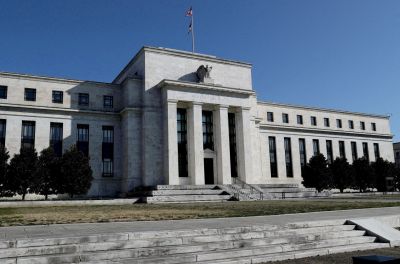
However, the minutes did not specify exactly how many members supported which opinions. Instead, expressions such as 'some' and 'several' were used. Economic media outlet CNBC noted that, based on typical Fed terminology, 'several' is considered a larger number than 'some,' suggesting that those supporting the rate hold scenario were in the majority. MarketWatch also analyzed that the majority favored a hold in June.
Most participants expressed concerns at the May FOMC about high inflation far exceeding targets and a tight labor market. They assessed that upside risks to inflation forecasts would be a key factor shaping monetary policy outlooks. Additionally, they noted that credit conditions tightened further following the collapse of Silicon Valley Bank (SVB), increasing downside economic risks and unemployment concerns.
They agreed that there is significant uncertainty regarding future economic conditions and the path of monetary policy. This is why Fed Chair Jerome Powell repeatedly emphasized the importance of incoming data for future policy decisions during the post-May FOMC press conference. The minutes stated, "Many participants expressed high uncertainty about how much additional tightening would be appropriate" and "emphasized the need to keep 'options' open for future meetings." This aligns with Minneapolis Fed President Neel Kashkari’s earlier warning that "skipping a rate hike in June does not mean the tightening cycle is over." The Fed can resume hikes anytime depending on inflation and economic conditions.
Furthermore, the minutes added, "Considering the risks to the dual goals of maximum employment and price stability, participants agreed on the importance of closely monitoring incoming information and assessing its implications for monetary policy."
Currently, market expectations favor a rate hold in June. According to the Chicago Mercantile Exchange (CME) FedWatch tool, as of the afternoon of the day, federal funds futures markets priced in about a 65% probability that the Fed will hold rates steady in June. The probability of an additional baby step increase stands at around 34%. Later this week, economic data watched by the Fed will be released, including the April Personal Consumption Expenditures (PCE) price index (on the 26th) and the revised first-quarter GDP growth rate (on the 25th). The April core PCE, to be announced on the 26th, is forecasted to rise 4.5% year-over-year and 0.3% month-over-month.
Meanwhile, Fed Governor Christopher Waller stated that "flexibility is necessary to make the best decision in June," emphasizing that data released over the next three weeks will be crucial. However, he added, "I do not expect the data over the coming months to clearly indicate that we have reached the terminal rate," signaling a likelihood of further rate hikes.
© The Asia Business Daily(www.asiae.co.kr). All rights reserved.

















