It has been found that the invasive white termites discovered in a house in Gangnam-gu, Seoul, are believed to have been introduced at least 5 years ago through imported construction materials (estimated). Additionally, it was confirmed that the termites have not spread beyond the household (house) where they were found.
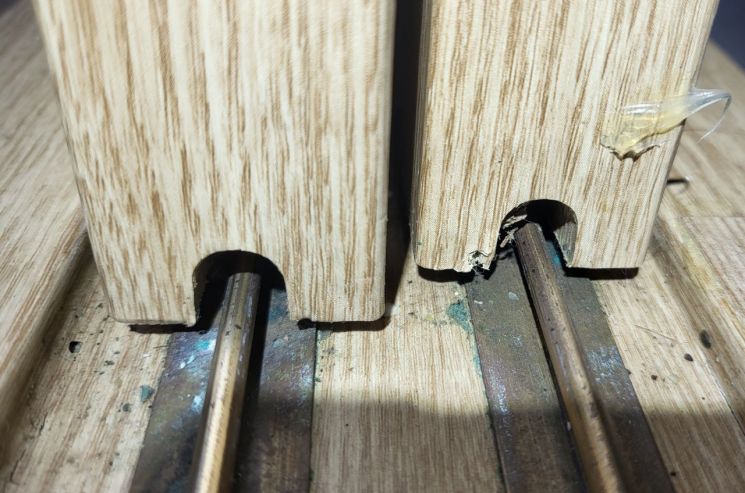 It has been confirmed that invasive termites have inhabited a house in Gangnam-gu, Seoul for several years. Termite movement pathways and suspected traces found on the window frame. Source=Yonhap News
The government announced the results of the joint epidemiological investigation on the 24th.
The joint investigation was conducted over two days starting from the 22nd, involving the Animal and Plant Quarantine Agency, Ministry of Environment (National Institute of Ecology, National Institute of Biological Resources, Hangang River Basin Environmental Office), Cultural Heritage Administration (National Research Institute of Cultural Heritage), Korea Forest Service (National Institute of Forest Science), Gangnam-gu Office, and Gyeongsang National University (Professor Lee Won-hoon). The investigation focused on the affected household, neighboring households, and surrounding areas.
As a result, in addition to the initial 94 white termites reported in the affected household, a total colony of 159 termites was confirmed, including 100 reproductive individuals such as queen termites found in the indoor door frame identified as their habitat.
The government completely eradicated the colony discovered during the investigation. It was also confirmed that the occurrence of the invasive white termites was limited to the affected household and had not spread to the surrounding areas.
Experts participating in the joint investigation agree that, due to the ecological characteristics of the genus Cryptotermes termites, the likelihood of them escaping outside the building and establishing themselves in the outdoor environment is very low.
The invasive white termites found are tentatively named Cryptotermes domesticus. Considering their ecological characteristics and the situation of occurrence, it is estimated that they were introduced at least 5 years ago through wood construction materials or furniture infected with termites at the time of construction and have survived indoors in a warm environment since then.
Choi Yong-seok, a researcher at the National Institute of Forest Science who participated in the joint investigation, said, “If additional white termites are found in other houses around the affected area or in new locations, please report them without fail.” He added, “The Korea Forest Service and the National Institute of Forest Science will continue to cooperate with related agencies to prevent the domestic introduction of invasive white termites and other foreign pests and diseases.”
© The Asia Business Daily(www.asiae.co.kr). All rights reserved.

















