Increase in Numbers Due to Environmental Deterioration and COVID-19
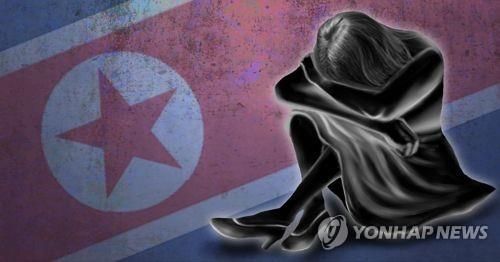
It was revealed that one out of every ten people in North Korea lives as a 'modern-day slave.'
On the 23rd (local time), according to foreign media including the US CNN, the Australian human rights organization Walk Free Foundation (WFF) released the '2023 Global Slavery Index' report, which showed that North Korea has 2,696,000 'modern-day slaves,' equating to 104.6 people per 1,000 population. This is the highest figure among the 160 countries surveyed by the organization, and North Korea also had the highest global slavery index in the 2018 report.
Suffering from violence and coercion... worsened by COVID-19 and other factors
The organization evaluated countries based on data from 2021 and published the report. The estimated number of 'modern-day slaves' in the 160 countries surveyed this year is 49.6 million, which is about 10 million more than the previous survey conducted in 2016, five years earlier.
Following North Korea, Eritrea had 90.3 people per 1,000 population, followed by Mauritania (32), Saudi Arabia (21.3), and T?rkiye (15.6).
'Modern-day slaves' refers to individuals who cannot refuse exploitative situations due to threats, violence, coercion, deception, and similar factors. This includes forced labor, forced marriage, coerced prostitution, and child trafficking. One in four 'modern-day slaves' is a child, and 54% are women.
The organization analyzed that the increase in 'modern-day slaves' is due to rising armed conflicts, widespread environmental degradation, and the impact of the COVID-19 pandemic.
The report explained, "Countries estimated to have the highest prevalence of 'modern-day slavery' tend to be affected by conflict, have state complicity, and exhibit weak governance."
G20 strongly responds to human trafficking issues, but imports of forced labor products are 'increasing'
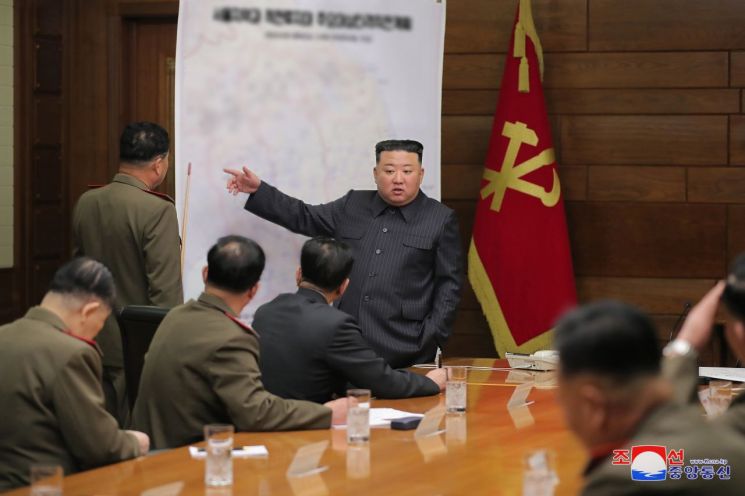 It was reported by the Korean Central News Agency that on April 10, Chairman Kim Jong-un presided over an expanded meeting of the Central Military Commission of the Workers' Party, discussing measures for the offensive expansion of 'war deterrence capability.'
 [Image source=Yonhap News]
Conversely, countries with almost no 'modern-day slaves' have strong governance and respond firmly to such human trafficking issues.
Switzerland and Norway had the lowest indices among the 160 countries, with 0.5 people per 1,000 population each, followed by Germany, the Netherlands, Sweden, and Denmark at around 0.6. South Korea ranked 44th among the 160 countries with 3.5 people per 1,000 population (a total of 180,000), although this is an increase from the previous survey's 1.95.
The report pointed out, "Forced labor is frequent in underdeveloped countries," and "this is closely linked to the demand from wealthier countries." Two-thirds of such forced labor is connected to global supply chains.
According to the report, the import value of goods potentially produced by forced labor in the Group of Twenty (G20) countries is $468 billion (approximately 617 trillion KRW), a significant increase from the previous report's $354 billion (approximately 467 trillion KRW).
© The Asia Business Daily(www.asiae.co.kr). All rights reserved.
![Clutching a Stolen Dior Bag, Saying "I Hate Being Poor but Real"... The Grotesque Con of a "Human Knockoff" [Slate]](https://cwcontent.asiae.co.kr/asiaresize/183/2026021902243444107_1771435474.jpg)

















