Invasive Species Damaging Wooden Furniture and Houses
Mandatory Inspection Before Real Estate Transactions in the US
Recently, an invasive species of termite known for gnawing on wood was discovered in a house in Gangnam-gu, Seoul, sparking significant controversy. The Ministry of Environment and related agencies have initiated on-site investigations and pest control measures. The dangers of termites are already well-known in countries such as the United States, Canada, and Australia. In particular, the U.S., where many wooden buildings exist, has experienced numerous incidents of houses collapsing due to termites, with related costs reaching trillions of won annually.
Earlier, on the 19th, the Ministry of Environment announced that, based on detailed microscopic examination, the termites found in Gangnam were confirmed to be an invasive species classified under the family Kalotermitidae and genus Cryptotermes.
Genetic analysis is currently underway and is expected to take several more days to complete. The termite species discovered this time does not pose significant harm to humans but has the characteristic of feeding on dry wood. Because of this, it can cause severe damage to wooden buildings, furniture, old houses, and cultural heritage sites.
Dry Wood as Main Food... House Collapse Incidents in the U.S.
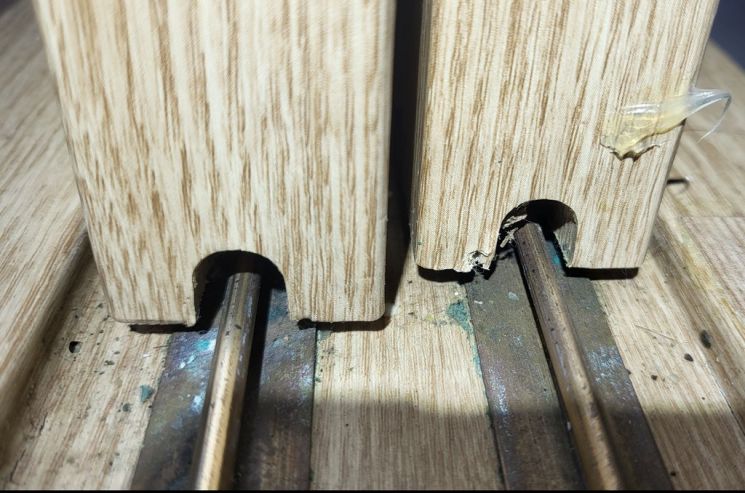
The primary habitats of this termite species are North America, including the U.S. and Canada, Australia, and Southeast Asia. Unlike native termites that inhabit moist environments and feed only on wood with moisture content above 30%, this termite primarily consumes dry wood without moisture.
In the U.S., where many detached houses use wooden frames, damage caused by termites is considerable. According to data from the U.S. Department of Agriculture, the annual cost of repairing homes damaged by termites reaches $5 billion (approximately 6.5 trillion KRW).
There are also frequent incidents of termites causing houses to collapse. For example, in 2019, in New Orleans, Louisiana, the interior of a house under repair suddenly collapsed, injuring two workers. Investigations revealed that the house had already been extensively gnawed by termite colonies.
 Termite sighting reported to the Ministry of Environment [Photo courtesy of the Ministry of Environment] [Image courtesy of Yonhap News]
Termites are a headache not only for households but also for construction companies and governments. In the U.S., building codes require the application of termite repellents between walls when constructing new buildings. Since these repellents typically volatilize after three years, experts must be called every five years thereafter to reapply the treatment.
Termites have also become a significant factor affecting real estate transactions. In the U.S., a 'termite inspection' is mandatory before selling a house. This is a professional service and is known to cost between $100 and $270 (approximately 130,000 to 350,000 KRW), depending on the structure and size of the house.
Outdoor Habitation Possible When Average January Temperature Exceeds 10°C
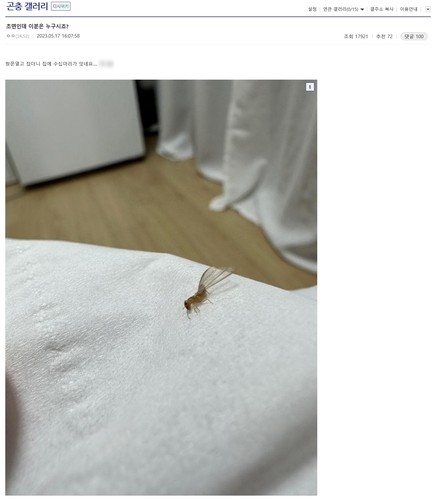 Online community post reporting the first termite sighting on the 17th [Image source=Online Community]
Termites of the genus Cryptotermes are mainly known to inhabit subtropical regions. However, with climate change gradually raising temperatures in Korea, some analyses suggest that the country has become a suitable environment for the proliferation of invasive termite species. The northern limit of outdoor distribution for this termite is the 'average January temperature of 10°C' line.
Currently, the Ministry of Environment has found no evidence that this termite species was introduced from outside and estimates that it is living and moving indoors, such as in door frames (sashes). A detailed epidemiological investigation will be conducted in the future to trace the domestic entry routes of the termites.
© The Asia Business Daily(www.asiae.co.kr). All rights reserved.



















