Semiconductor Factory in Southern China Relies on Hydropower
Semiconductor Water Supply Also Depletes if Reservoir Evaporates
This year, the abnormal heatwave scorching southern China and Southeast Asia is drawing attention due to concerns that it could also negatively impact the 'semiconductor industry.' This is because the semiconductor industrial complexes in southern China, which rely on hydropower for industrial electricity, may experience power shortages. Additionally, semiconductor manufacturing processes use large amounts of water, and if reservoirs dry up, production could be disrupted.
On the 22nd, Hyundai Motor Securities mentioned recent abnormal weather events such as heatwaves and heavy rains in China in their daily report. Analyst Jeong Jinsu explained, "Around this time every year, abnormal weather events like heatwaves and heavy rains repeatedly occur in China," adding, "These have a significant impact on daily life, but more importantly, their effects on the economy and financial markets are variables that cannot be ignored."
Already, the dry season in southern China has lasted about three months longer than usual. As a result, drought conditions have emerged, causing a sharp decline in hydropower generation. Southern China relies on hydropower, including the Three Gorges Dam, for industrial electricity, and the region is home to industrial complexes that manufacture semiconductors for solar panels.
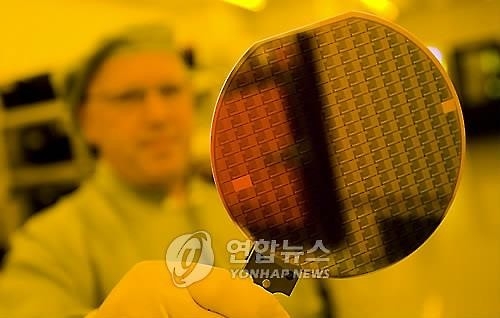
The report identified industries affected by the heatwave as not only heavy industries with high power demand but also agriculture and semiconductors. Analyst Jeong emphasized, "Agricultural products are the most sensitive commodities to climate change, and the Chinese semiconductor industry has already experienced a power shortage once," stressing, "Close monitoring of semiconductor operations in Sichuan Province, where power supply is in emergency, is necessary."
Power is not the only concern. If the heatwave continues and reservoirs dry up, semiconductor factories risk halting operations due to lack of water supply.
Semiconductor factories performing ultra-fine processes at the nanometer (nm) scale?only as thick as a human hair?can suffer fatal defects from even a single particle of dust. Therefore, water is purified into ultrapure water and used repeatedly to clean substrates, and the amount of water used in this process is enormous.
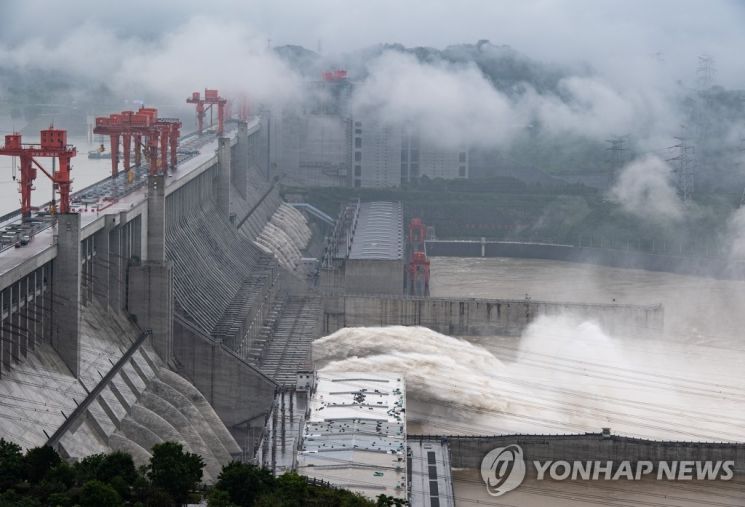 The Three Gorges Dam located on the upper reaches of the Yangtze River in Hubei Province, China [Image source=Yonhap News]
Drought has already become a major risk factor in the semiconductor supply chain. Taiwan, home to TSMC, the world's largest foundry (contract manufacturer), experienced its worst drought in 2021, nearly causing a significant drop in factory operating rates.
This year, rainfall in Taiwan's major industrial complexes is predicted to fall to the lowest levels in 30 years, and currently, the Taiwanese government and TSMC are implementing stringent water conservation policies.
Meanwhile, due to the recurrence of the El Ni?o phenomenon this year, the likelihood of abnormal heatwaves around the globe is increasing. The World Meteorological Organization (WMO) stated in a report on the 3rd (local time), "Although La Ni?a temporarily slowed global temperature rise over the past three years, we have experienced the warmest eight years on record," adding, "When El Ni?o occurs, warming accelerates, and global temperatures are likely to break records."
© The Asia Business Daily(www.asiae.co.kr). All rights reserved.
![From Hostess to Organ Seller to High Society... The Grotesque Scam of a "Human Counterfeit" Shaking the Korean Psyche [Slate]](https://cwcontent.asiae.co.kr/asiaresize/183/2026021902243444107_1771435474.jpg)

















