Increased interest in improving citizens' quality of life to the extent that words like work-life balance and small but certain happiness have emerged
Creating healing spaces where people can comfortably walk right in front of their homes, chat, and reflect
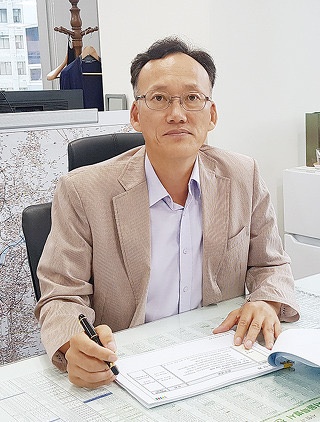
"We have started the 'Seoul-style Waterfront Sensibility City' project for the happy life of Seoul citizens."
Kwon Wan-taek, Director of the Water Circulation Safety Bureau of Seoul, said this about why the 'Seoul-style Waterfront Sensibility City' project was initiated.
Director Kwon emphasized, “These days, words like ‘work-life balance’ and ‘small but certain happiness’ have emerged, showing that citizens have a high interest in improving their quality of life and healing. If a healing space is created where people can comfortably walk right in front of their homes, chat, and immerse themselves in reflection, this is truly a way to enhance the quality of life.”
He continued, “Seoul is a beautiful city with 332 km of waterways including the Han River running through the city center, small streams, and rivulets flowing throughout neighborhoods. However, until now, the focus has been more on managing water rather than utilizing it. It is very regrettable that despite having such abundant natural resources, they have not been utilized. If beautiful waterfront spaces are created throughout Seoul through this project, the city's dignity will be elevated to a new level,” and added, “I believe this impact will directly return to the citizens and surely contribute to creating a happy life.”
Below is the interview with Director Kwon.
- What kind of project is the ‘Seoul-style Waterfront Sensibility City’?
▲ It is a project to create ‘waterfront vitality hubs’ along waterways such as rivers and streams flowing throughout Seoul. The term ‘waterfront vitality hub’ literally means to invigorate the area through the waterfront. It goes beyond conventional river maintenance to create new types of waterfront spaces that incorporate the characteristics of the area, enabling culture, economy, rest, and leisure.
- What is the current status of the project?
▲ Since announcing in April last year that pilot projects would be conducted at four locations?middle and upper Hongjecheon Stream, Dorimcheon Stream, and Jeongneungcheon Stream?Seoul first introduced the city’s first waterfront open-air cafe, the ‘Hongjecheon Waterfront Terrace Cafe,’ at the middle section of Hongjecheon Stream. About a year after the project started, it has been significantly expanded to 24 locations. Last year was a period of laying the foundation; now is the time for the ‘Waterfront Sensibility City’ to spread throughout Seoul. From the end of this year, citizens will be able to see the changes one by one.
- Please introduce the projects to be completed this year.
▲ By the end of this year, five new waterfront attractions with various themes such as historical landmarks, economic, and community types will be unveiled. These are being promoted in Jongno-gu’s upper Hongjecheon Stream, Gwanak-gu’s Dorimcheon Stream, Gangnam-gu’s Segokcheon Stream, Dongjak-gu’s Dorimcheon Stream, and Seodaemun-gu’s Bulgwangcheon Stream. All designs have been completed, and construction will begin by June, with plans to open to the public within the year. The remaining 18 projects will complete design by this year, aiming to finish construction by next year as much as budget conditions allow. “By the end of 2024, all citizens will be able to feel the changed appearance of Seoul’s tributaries to some extent.”
- What are the future plans?
▲ We plan to create a total of 30 locations by 2025, with at least one location in each autonomous district, so that all Seoul citizens can ‘evenly’ and ‘quickly’ experience the transformed Seoul as a waterfront sensibility city.
Additionally, waterfront vitality hubs can only truly thrive if supported by a pleasant basic river environment. We will continue projects such as restoring covered streams, improving water quantity and quality, and addressing river odor and safety issues.
- Do you have a personal philosophy regarding the ‘Seoul-style Waterfront Sensibility City’?
▲ I was in charge of the Cheonggyecheon restoration project completed in 2005 and led the overall project. Until the 1980s, the river passing through the city center was covered and turned into a ‘road passing through the city’ under the pretext of road expansion, becoming a symbol of urban development. We removed the concrete from Cheonggyecheon and beautifully restored it, turning it into Seoul’s representative river visited by 10 million people annually. Through this experience, I am a citizen who deeply understands the importance of walkable living area rivers. Now, reflecting citizens’ increased expectations and leisure demands, we will steadily attempt new changes to the rivers.
- Lastly, any final remarks?
▲ Through the ‘Seoul-style Waterfront Sensibility City’ and the ‘Great Han River Project’ announced last March, we expect the city’s charm and competitiveness centered on the waterfront to improve. We will steadily carry out plans so that the quality of life of Seoul citizens and the city’s attractiveness can leap forward to the next level through the waterfront.
© The Asia Business Daily(www.asiae.co.kr). All rights reserved.

















