Joint First Memorial Visit to Korean Atomic Bomb Victims Monument
Courageous Decision by Korean and Japanese Leaders to Make History
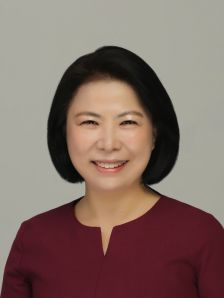 Song Kyung-jin, Former Director of the World Economic Research Institute
Last weekend, the Group of Seven (G7) summit was held in Hiroshima, Japan. Due to the enormous challenges and uncertainties facing humanity and the international community?such as the war in Ukraine, US-China tensions, climate change, and economic security?this G7 summit attracted the most international attention among those held in recent years.
To offset the diminished influence of the G7 compared to the past, the G7 has invited countries that can contribute to solving global issues as guest participants. President Yoon Seok-yeol’s attendance at the Hiroshima G7 summit is an expression of the international community’s recognition and expectations of South Korea’s elevated national status and role. This year’s Hiroshima G7 invited eight heads of state, including South Korea, India (this year’s G20 chair), Brazil (next year’s G20 chair), Indonesia, and Australia, as well as leaders of eight related international organizations.
In addition to the three expanded sessions involving invited country leaders?covering food, health, development, gender, climate, energy, environment, and diplomacy and security?President Yoon attended numerous bilateral and multilateral meetings. He shared several contribution plans for developing countries, including establishing a K-Rice Belt and securing food security for seven African countries, donating $24 million to the Coalition for Epidemic Preparedness Innovations, and contributing to green growth in developing countries. To this end, South Korea plans to steadily increase the scale of its Official Development Assistance (ODA), including green ODA. Furthermore, South Korea intends to actively participate in the G7 Climate Club, which is scheduled to be established this year. As the G7 leaders agreed to mainstream gender in all related policies, future major summits are expected to feature gender-related remarks from the South Korean president. The upcoming G20 summit in New Delhi this September will be a good opportunity to express these views.
The first bilateral meeting between President Yoon and Indian Prime Minister Narendra Modi on the 20th in Hiroshima was belated but meaningful, considering India’s strategic and economic importance. The cooperation agreements in areas with great potential for joint development and mutual benefit?such as defense industry, digital technology, biohealth, and space?on the occasion of the 50th anniversary of diplomatic relations this year will provide practical support for strengthening Korea-India relations in the future.
During the Hiroshima G7 summit, what the author found most meaningful was the first joint visit by the Korean and Japanese leaders to the memorial for Korean victims of the atomic bombing. The courageous and decisive actions of the two leaders will be highly appreciated and will serve as another symbolic stepping stone for the future, peace, and prosperity of Korea and Japan. This spirit of peace aligns with the “G7 Hiroshima Vision on Nuclear Disarmament.” Humanitarian and non-lethal weapon support for Ukraine is also an effort toward peace.
Moreover, one of the current concerns of all countries is securing a smooth supply chain for critical minerals. Therefore, cooperation with Australia will inevitably become even more important. Western Australia holds the largest deposits of critical minerals in Australia. This is why high-level officials such as heads of state and ministers from major countries visiting Australia often visit Perth, the capital of Western Australia. Although the total population of Western Australia is only 2.8 million, many countries operate various forms of diplomatic missions in Perth. The role of diplomatic missions is also very important in becoming a solid global hub country.
Currently, a total of 34 countries, including the United States, China, Japan, India, and the United Kingdom, operate various forms of diplomatic missions, including consulates general. The largest investor company in Western Australia is the Korean company POSCO. Nevertheless, the South Korean government hesitates to open a diplomatic mission, citing the small number of Korean residents. This is a mindset that diverges from the government’s emphasis on the importance of critical mineral supply chains. A swift change in thinking is hoped for.
President Yoon Seok-yeol’s attendance at the Hiroshima G7 summit likely increased public understanding of the G7. Strong contributions and leadership from South Korea are also expected at the upcoming G20 summit. This is the path to solidifying South Korea’s firm status as a global hub country.
Song Kyung-jin, Former President of the World Economy Research Institute
© The Asia Business Daily(www.asiae.co.kr). All rights reserved.
!["I'd Rather Live as a Glamorous Fake Than as a Poor Real Me"...A Grotesque Success Story Shaking the Korean Psyche [Slate]](https://cwcontent.asiae.co.kr/asiaresize/183/2026021902243444107_1771435474.jpg)















