Visit to the Archive and Memorial Stone Flowering Led by Prime Minister Kishida
Intended to Curb China and Russia Calling for Nuclear Use and Augmentation
The Group of Seven (G7) summit opened on the 19th in Hiroshima, Japan, where the leaders, guided by Japanese Prime Minister Fumio Kishida, visited the Hiroshima Peace Memorial Museum. This visit aims to show the world the devastation caused by the atomic bombing in Hiroshima while simultaneously signaling a firm stance against Russia and China, who are vocally advocating for the use and enhancement of nuclear weapons.
On the same day, the Nihon Keizai Shimbun (Nikkei) reported that Prime Minister Kishida and the G7 leaders planned to visit the Hiroshima Peace Memorial Park, tour the museum, and lay flowers at the memorial monument for atomic bomb victims within the park. The Peace Memorial Park houses the "Atomic Bomb Dome," the remains of a building left standing after the atomic bombing. This is the first time that G7 leaders have gathered in one place to inspect the museum.
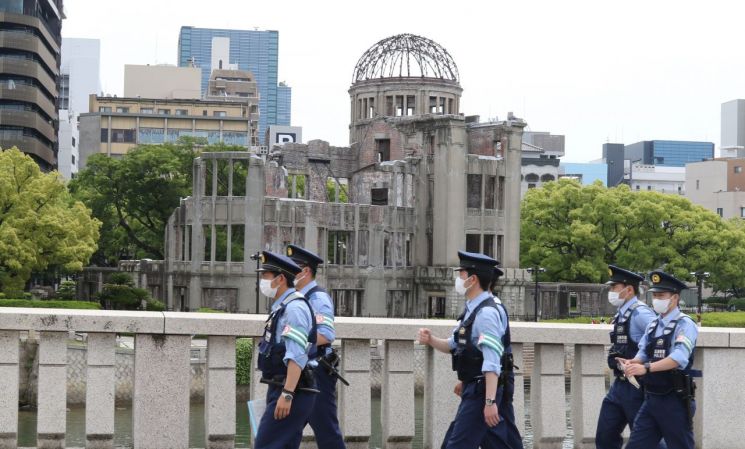
This G7 summit is focusing on nuclear disarmament and non-proliferation as key agenda items, fitting for the host location. This is effectively aimed at Russia and China. Russia has hinted at the use of nuclear weapons in Ukraine, and China has mentioned invading Taiwan while enhancing its nuclear arsenal. The leaders are expected to discuss sanctions against Russia and seek ways to firmly restrain both countries. Nikkei reported, "They will appeal to Russia to refrain from using nuclear weapons and demand increased transparency from China, including disclosure of the number of nuclear warheads it possesses."
Above all, since Japan is the only G7 country to have suffered atomic bombing, showing the devastation of the bombing site itself sends a powerful message about denuclearization. A Japanese government official told Nikkei, "It is highly significant for leaders of nuclear-armed countries such as the United States, the United Kingdom, and France to see firsthand the damage caused by nuclear weapons."
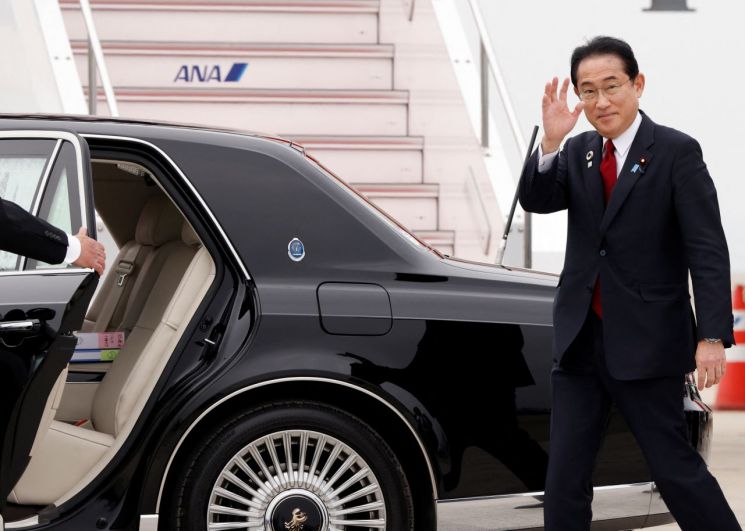
Prime Minister Kishida also reiterated the importance of the first day’s schedule. Before the G7 opening, he told reporters, "Since this summit is held in Hiroshima, the site of the atomic bombing, I want to use this opportunity to share the vision of a world without nuclear weapons with the leaders of each country," adding, "I want this to be a turning point to reinvigorate the momentum toward that ideal, which has been retreating."
Kishida is also expected to emphasize his key policy, the "Hiroshima Action Plan." Announced last year, this plan includes opposition to nuclear weapon use and continued efforts toward nuclear disarmament. Nikkei stated, "Prime Minister Kishida plans to explain this plan and gain the agreement of the G7 leaders." After visiting the museum, the G7 leaders will discuss related matters during a working dinner in the evening and plan to include content on nuclear disarmament and non-proliferation in their joint statement.
© The Asia Business Daily(www.asiae.co.kr). All rights reserved.
![User Who Sold Erroneously Deposited Bitcoins to Repay Debt and Fund Entertainment... What Did the Supreme Court Decide in 2021? [Legal Issue Check]](https://cwcontent.asiae.co.kr/asiaresize/183/2026020910431234020_1770601391.png)