Moody's "First Decline Since 2011"
Rising Vacancy Rates Due to Remote Work... Increased Financing Costs from Interest Rate Hikes
"Bank Loan Reduction → Real Estate Decline → Credit Crunch Vicious Cycle"
U.S. commercial real estate prices have declined for the first time in 12 years. With office vacancy rates surpassing those during the financial crisis, signs of a collapse in the U.S. commercial real estate market are emerging, raising concerns that it could become another trigger for a banking crisis.
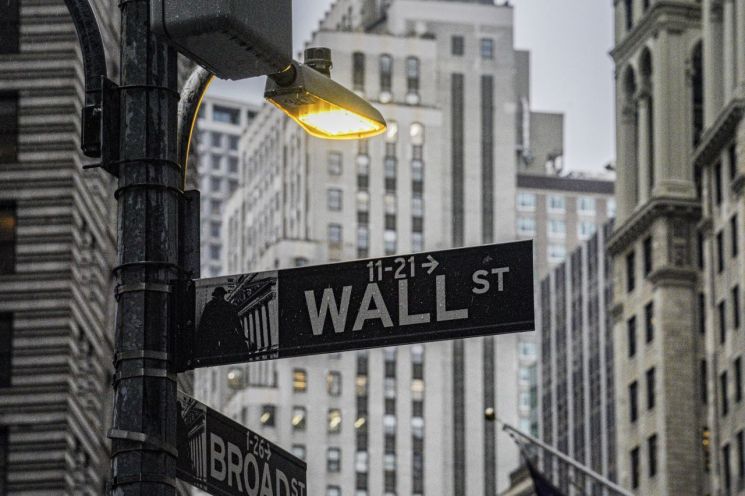
On the 17th (local time), Bloomberg News cited Moody's Analytics, a subsidiary of the international credit rating agency Moody's, reporting that the repeat sales index for U.S. commercial real estate prices in the first quarter of this year stood at 286.4, down 2.2 points (0.8%) from 288.6 a year earlier. This marks the first decline in commercial real estate prices since 2011, after 12 years.
The price decline in office buildings led the weakness in commercial real estate prices. For example, real estate investment manager Post Brothers recently purchased an office building in Washington for $67 million (approximately 89 billion KRW). As recently as fall 2019, the building's value was $92.5 million (approximately 123 billion KRW), meaning the price dropped 27.6% in less than four years. As of mid-last month, the S&P 500 Office REITs index also plummeted about 50% compared to early last year.
Since the COVID-19 pandemic, the increase in remote work has reduced demand for office space, and the rapid rise in interest rates has increased financing costs, delivering a direct blow to the commercial real estate market. According to market research firm CoStar Group, the U.S. office vacancy rate in the first quarter of this year was 12.9%, exceeding the level during the 2008 financial crisis. Mark Zandi, chief economist at Moody's Analytics, said, "More price declines are coming."
The commercial real estate downturn has emerged as the biggest source of anxiety for the banking sector, which suffered from the collapse of Silicon Valley Bank (SVB) in March. According to the Federal Reserve's semiannual Financial Stability Report released last week, U.S. commercial real estate loans, excluding farm and residential real estate, total $3.6 trillion (approximately 4,800 trillion KRW), with bank loans accounting for more than 60% of this amount. In particular, small and medium-sized banks had a large share of commercial real estate loans.
However, with the increased burden of loan repayments due to rising interest rates and banks tightening lending standards after the SVB incident, the likelihood of delinquencies and defaults in commercial real estate has increased. This could again escalate into a banking crisis.
The Fed is also cautious about this. Michael Barr, Vice Chair of the Fed, told Congress the day before, "We are paying close attention to the risks in commercial real estate," adding, "We are especially strengthening supervision of financial institutions with large exposures."
Some also believe that the deterioration in U.S. commercial real estate loans is already surfacing. According to Goldman Sachs, the delinquency rate on U.S. commercial mortgage-backed securities (CMBS) rose from 1.58% in December last year to 2.38% in February this year, an increase of 0.8 percentage points. This rise is ten times the 0.08 percentage point increase in the overall CMBS delinquency rate during the same period.
Paul Ashworth, chief North American economist at Capital Economics, expressed concern that "the reduction in bank lending is deepening the decline in commercial real estate prices, increasing the risk of a vicious cycle that triggers further credit tightening." Zandi, the chief economist, said, "If the U.S. avoids a recession, real estate prices will fall by 10%, but if not, the decline could be much greater," adding, "We are precariously balanced on the razor's edge."
© The Asia Business Daily(www.asiae.co.kr). All rights reserved.

















