Project Launch Linked to Caviar Production Areas and Universities
Developing Proprietary Technology Through Challenging Sturgeon Farming
SoftBank, led by Chairman Masayoshi Son, announced that it will enter the caviar farming industry by utilizing its own artificial intelligence (AI) and Internet of Things (IoT) technologies, drawing attention. The goal is to standardize caviar quality through proprietary technology that combines AI and IoT with the challenging sturgeon farming process.
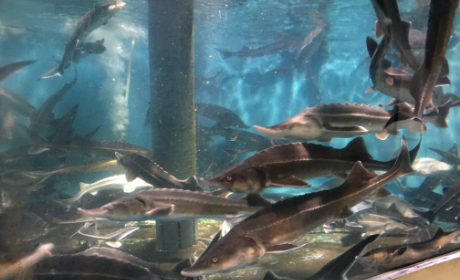
According to the Nihon Keizai Shimbun (Nikkei) on the 17th, SoftBank signed an industry-academia partnership agreement at the end of March with Bifuka Town in Hokkaido and Hokkaido University for sturgeon farming. SoftBank is currently researching land-based sturgeon farming technology for caviar production together with Hokkaido University.
SoftBank plans to identify the characteristics of "elite sturgeons," which grow quickly and produce many eggs, through its own AI technology and find the optimal breeding methods.
Bifuka Town is an area where sturgeon farming is actively conducted. In 1983, as part of a breeding experiment, 300 hybrid sturgeons were released into a lake within the town to begin farming. Currently, about 10,000 sturgeons are farmed across five facilities in the town, and last year they succeeded in producing 12 kg of caviar. However, for 40 years, most of the farming technology has relied heavily on experience. Tetsuya Konno, the promotion manager in charge of the farming business in Bifuka Town, expressed expectations, saying, “You cannot know the quality of caviar without opening the belly. It would be great to know how to produce good caviar and the optimal feeding methods.”
SoftBank’s AI technology is expected to significantly reduce the risks involved in the highly difficult sturgeon farming. Sturgeons require more than six years of breeding before caviar shipment, and if environmental pollution occurs even momentarily after the caviar begins to develop, it greatly affects the quality. SoftBank also plans to gain clues to more broadly commercialize IoT and AI technologies through the challenging sturgeon farming.
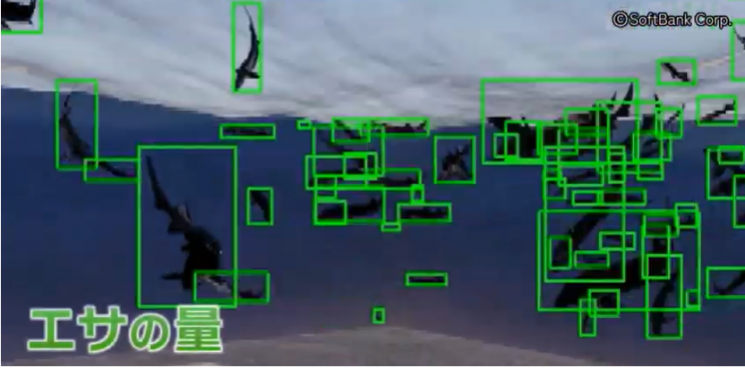
SoftBank intends to use three-dimensional computer graphics and AI-based image analysis technology. Based on data from Hokkaido University obtained by dissecting sturgeons?including skeletons, muscles, and internal organs?they will create 3D graphic data of model sturgeons. If sturgeons that produce many eggs can be reproduced in CG, it will be possible to visually identify elite sturgeons.
Kazuto Suda, head of SoftBank Advanced Technology Promotion Office, emphasized about the development of this technology, “We do not plan to drag this out for more than three years.” A person responsible for the actual research also expressed expectations, saying, “If we understand the physical characteristics, we will also be able to understand mechanisms such as how they digest feed.”
SoftBank plans to increase the annual caviar production from 12 kg as of last year to 100 kg by 2027. Suda said, “By establishing farming technology utilizing AI and realizing an intellectual property (IP) business to sell externally, we can also contribute to corporate profits.”
© The Asia Business Daily(www.asiae.co.kr). All rights reserved.


















