Gyeonggi and Incheon Also See Increase in Actual Transaction Index
Top Areas with Large Price Increases Include Bongcheon-dong, Dongjak-dong, and Amsa-dong
The Seoul apartment actual transaction price index has risen for three consecutive months. This is interpreted as a result of increased transaction volume due to the government's real estate regulation easing and the drop in loan interest rates promoted earlier this year. In particular, transactions with prices higher than the previous reported highest price have occurred regardless of whether it is the central or outer areas of Seoul.
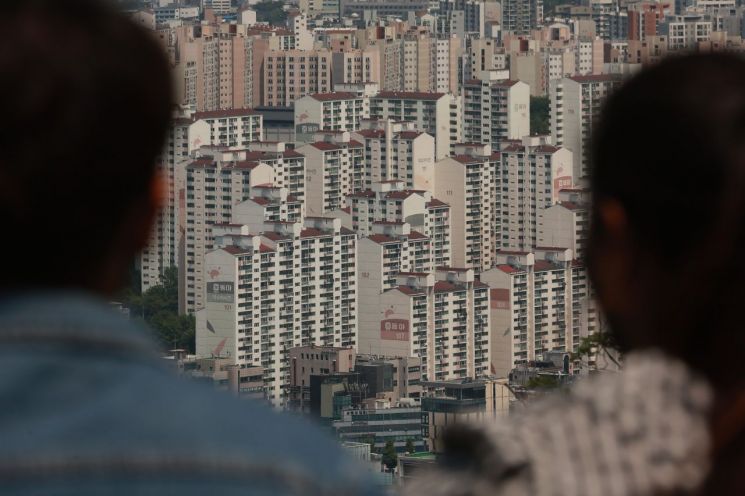
According to the Korea Real Estate Board on the 16th, the Seoul apartment actual transaction price index in March rose by 1.61% compared to the previous month. Following increases of 1.1% in January and 1.95% in February, the upward trend has continued for three consecutive months. The actual transaction price index only aggregates price changes of apartments that were actually traded, making it a statistic that sensitively reflects recent market conditions.
By region, the Southeast area, which includes the Gangnam 3 districts (Gangnam, Seocho, Songpa), rose the most at 3.22%. This was the highest increase in 2 years and 8 months since July 2020 (4.49%). The Northeast area, which includes 'No-Do-Gang' (Nowon, Dobong, Gangbuk districts), followed with 1.16%, then the Southwest area (1.13%), and the Northwest area (0.92%) in order of increase.
On the other hand, the downtown area, which includes Yongsan, Jongno, and Jung districts, fell by 0.54%, marking a decline for four consecutive months. The overall Seoul metropolitan area actual transaction price index (1.67%) rose for two consecutive months. Apartment actual transaction price indices in Gyeonggi (1.68%) and Incheon (1.9%) also continued their upward trend for two months. Among the 17 cities and provinces nationwide, Sejong City (2.58%) showed the highest increase. The nationwide actual transaction price index rose by 1.16%, continuing its upward trend for two consecutive months.
Seoul apartment transaction volume has exceeded 2,000 cases for three consecutive months, and following the deregulation measures, pent-up demand has flowed in, creating an atmosphere where quick-sale properties are rapidly being depleted. Looking at the top complexes with the largest increase in reported highest prices over the past year identified by Zigbang, in March, large-scale apartment complexes with recognition in the Gangnam area of Seoul or major areas in Gyeonggi Province showed large increases in reported highest prices, while in April, transactions setting new highest prices occurred across all regions of Seoul, including Seongsu-dong, Yeonhui-dong, Bongcheon-dong, Dongjak-dong, and Amsa-dong.
In particular, it is notable that large-sized units are being sold out even in complexes where transactions were previously scarce. In fact, the apartment with the largest increase in reported highest price nationwide over the past year was Doosan We've in Seongsu-dong, Seongdong-gu, with a 131㎡ unit. It was brokered last month for 1.52 billion KRW, rising by 720 million KRW compared to the previous highest price of 800 million KRW for the same area in 2009. The second place was Gyeonghyang Villart in Yeonhui-dong, Seodaemun-gu, with a 154㎡ unit sold last month for 1.27 billion KRW. The highest price within the past year was 710 million KRW, traded in March 2016. The third largest increase was for a 159㎡ unit in Acro Seoul Forest, Seongdong-gu, which was traded last month for 6.75 billion KRW, rising by 550 million KRW in one month.
Other complexes with large increases in reported highest prices include Yangji Kumho 1st in Sunae-dong, Bundang-gu, Seongnam City (193㎡), Saejin 7th in Bongcheon-dong, Gwanak-gu (104㎡), Isu Hillstate in Dongjak-dong, Dongjak-gu (84㎡), Gyeongji River Castle in Amsa-dong, Gangdong-gu (142㎡), Yeouido Xi in Yeouido-dong, Yeongdeungpo-gu (125㎡), and Jinju in Yeouido-dong, Yeongdeungpo-gu (72㎡).
© The Asia Business Daily(www.asiae.co.kr). All rights reserved.

















