Seoul Grand Park Reports 709 Animal Deaths Over 5 Years
52.8% Due to Illness, 23.8% Caused by Trauma
"Committed to Establishing a Systematic Medical and Health Care System"
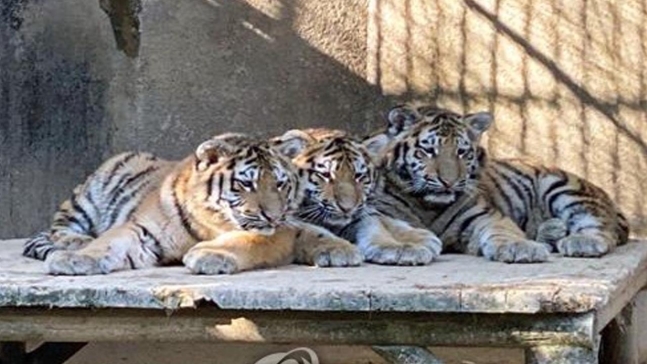
Last month, a Siberian tiger named 'Parang' at Seoul Grand Park, who had just celebrated her first birthday, died from an illness. It was revealed that half of the animals that died at the zoo passed away due to diseases.
According to data received by Lim Ho-seon, a member of the Democratic Party of Korea, from the Seoul Metropolitan Government on the 16th, a total of 709 animals died at Seoul Grand Park over five years from 2019. The causes were disease in 374 animals (52.8%), trauma in 169 animals (23.8%), and natural death in 166 animals (23.4%). This means that more than half of the animals died from diseases.
Among the deceased animals, 48.9% were endangered species, and only 205 animals (28.9%) lived beyond their average lifespan.
In fact, on the 4th, the female Siberian tiger Parang died after being infected with 'Feline Panleukopenia.' Feline Panleukopenia is a viral infectious disease that occurs in felids, causing a rapid decrease in white blood cells upon infection. It is a fatal contagious disease for young individuals with weak immune systems.
Parang was one of the purebred Siberian tiger triplets in Korea. These Siberian tigers are classified as Grade 1 endangered wild animals, with an estimated 350 remaining in the wild. 'Haerang' and 'Sarang,' who lived in the same enclosure as Parang, are also reported to be infected with the same disease and are currently receiving treatment.
Meanwhile, in September last year, bovine tuberculosis, a zoonotic disease, spread for over a year, leading to large-scale euthanasia of animals. Bovine tuberculosis primarily occurs in cattle but can also be transmitted to humans. It is classified as a legally designated second-class livestock infectious disease.
Bovine tuberculosis was first detected in Seoul Grand Park in May 2021, and over 50 animals, including the endangered 'American Tapir,' were euthanized. As the disease spread, the South America Pavilion was closed to visitors for over a year.
Regarding this, Representative Lim emphasized, "Establishing a systematic medical and health system should be the top priority to protect and conserve endangered animals."
© The Asia Business Daily(www.asiae.co.kr). All rights reserved.